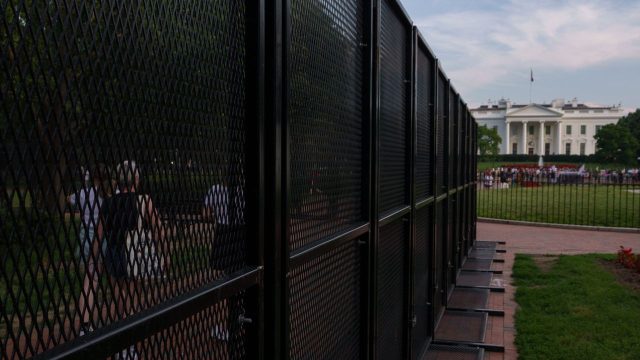
‘The White House is the new Green Zone’
Matt Viser at The Atlantic
The White House “can be thought of as the new Green Zone,” says Matt Viser, referring to Baghdad’s protected governmental area. The American capital’s centerpiece is “laced with fencing, sensors, jammers, cameras, armed guards, bunkers, drone interceptors, and surface-to-air missiles — all of which speak to how we now protect, and isolate, our leaders.” Iraq’s Green Zone “created a false sense of tranquility,” while the White House “still has a modicum of openness” but “only because of all the security protections that a visiting tourist can’t necessarily see.”
‘A ceasefire alone won’t solve Lebanon’s mental health crisis’
Kelly Razzouk at Time
May was “Mental Health Awareness Month — and the Lebanese people have gone unnoticed,” says Kelly Razzouk. A “ceasefire would bring desperately needed peace and stability, but it will not heal the invisible wounds left behind or erase the trauma that so many in Lebanon now carry.” As in “all humanitarian crises, children pay the highest cost.” Governments “must ensure that people in conflict zones are not abandoned at the exact moment psychological trauma becomes most acute.”
‘Kash Patel wrongly takes credit for falling crime rates’
John Pfaff at MS NOW
Falling crime rates “are unequivocally good news,” says John Pfaff. But FBI Director Kash Patel “found it necessary to include the overwrought self-aggrandizing commentary that characterizes announcements from this administration.” But the agency, no “matter its director or the presidential administration, has never been a major driver of crime trends.” The FBI “has never been large enough to exert a significant effect on crime rates, and under Trump and Patel, it has become smaller still and less focused on crime.”
‘Rideshare win could bring big changes’
David Madland at The Progressive
Uber and Lyft drivers in Massachusetts “recently secured a major breakthrough in the struggle for union representation of rideshare drivers,” says David Madland. Similar laws “have spread to California and could soon be adopted in Illinois,” and “these laws would create a model of unionization that could improve other kinds of jobs and revive the labor movement.” While “rideshare companies have developed an industry in which it is particularly difficult to create good jobs, the new laws hold promise.”
Opinion, comment and editorials of the day