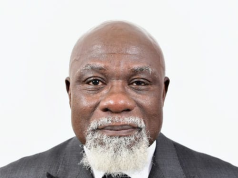
In 2021, as South Africa emerged from the strictest grip of Covid-19 restrictions, with some limits in place, Kolping Mbumba sat down for lunch to meet the woman who would later employ him.
They spoke about gender-based violence (GBV), an issue that grew in urgency during the pandemic amid high levels of economic stress, social isolation and disruptions to support services for survivors of abuse. Years later, GBV would be classified a national disaster in South Africa.
At the time, however, reports of violence against women and children had reached crisis levels, described then as a “second pandemic”.
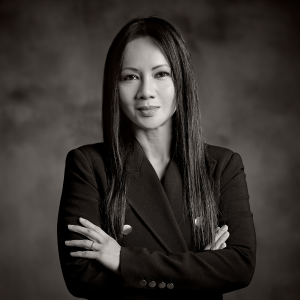
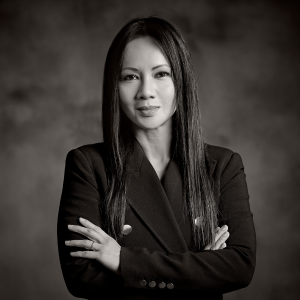
When Mbumba arrived at the meeting with businesswoman Warawadee Sukonpongpao-Harbich, he did not know that she was recruiting him into a hyper-local fight against GBV.
Sukonpongpao-Harbich had recently founded and was financing Heroes Academy, an NGO aimed at driving social change in townships affected by high levels of GBV.
Her approach was to pair boys with positive male role models, helping them navigate adolescence in Cape Town’s townships, where many grow up without biological fathers and hypermasculinity often defines social norms.
The goal was to reshape what it means to be “a good man”.
Mbumba was sold on the idea. It hit close to home. He was nine years old when his father died, hastening a move from his homestead in the Eastern Cape to the shacks of Cape Town’s townships.
Although his mother gave her all to protect him from the harshness of his new environment, life forced him to grow up fast. He saw first-hand how street gangs in Nyanga recruited boys into rival factions, constantly at war over turf.
In his teen years, he was one of them — not out of choice but necessity. To avoid getting beaten up while walking home from school, he sought the protection of one gang against the bullies of another.
Inevitably, school took a backseat to gang activities. If his mother had not enrolled him in a new school in the suburbs, his life would not have taken a different turn, one that led to Heroes Academy.

From the outset, the NGO’s mission was the prevention of GBV: shaping boys into non-violent men and, in turn, safer communities for women and girls. But by the end of its six-month pilot, that objective had evolved. The focus on boys’ development was no longer a means to an end — it became the end itself.
At the core of the mentorship programme is building socio-emotional skills, so-called “soft skills”, which helps them form meaningful relationships and focus on school.
Boys are offered the language, skills and support they need to affirm their agency, worth and sense of belonging and they are encouraged to dream of a future unencumbered by the limits of township life.
Mbumba understood from experience that teenage boys in the environments are shaped by structural forces that determine their life chances, from spatial inequality and underdevelopment to overcrowded schools, limited psychosocial support, high levels of crime and substance abuse and few pathways to mobility.
Against this backdrop, Mbumba, now the director of operations, and the rest of the Heroes Academy team offer an alternative narrative: one rooted in possibility rather than despair.
The mentorship programme
The team of 13 facilitators or mentors, led by three head facilitators, operates in four schools where they hold weekly workshops across grades 8 to 11. They also hold weekly sessions at a community centre in Langa, serving participants from a mix of schools.
Over 23 weeks for grade 8s and 17 weeks for grade 9s, each two-hour session follows a structured curriculum built around values such as integrity, responsibility, honesty, optimism and accountability.
This is done in a low-stakes setting — a sharing circle — that promotes participation, followed by a game of soccer. In addition to socio-emotional learning and psychosocial support, the NGO has added academic support to its offering, providing a rounded approach to the development of boys.
Mbumba’s story, of loss, adaptation and survival, makes him relatable to the boys. That relatability, he believes, is central to building trust.
When mentors are relatable — when they look and sound like the participants — they are more likely to earn their trust and confidence. Without that trust, boys would be less likely to disclose grief, substance abuse or abuse at home.
That is where Siyabonga Ntozini, the head of the NGO’s emergency response team, comes in. He relies on both open conversations and discreet reporting tools, including “top-secret cards” — a youth-friendly mechanism allowing learners to flag sensitive issues they cannot share aloud. These are reviewed weekly.
The boys’ stories
Lukhanyo,* a 17-year-old learner at Inkwenkwezi High School in Dunoon who started with Heroes Academy in grade 8, recalls using his top-secret card to ask for help with a family conflict that had been taking its toll. He loves his mother but their relationship was strained from constant bickering. He felt misunderstood and needed advice.
“The coach [mentor] advised me to speak to my mother about how I’m feeling and to listen, really listen to what she had to say,” he recalls.
He followed through and listened to his mother’s perspective. To his surprise, the conversation allowed him to see things from a new angle, paving the way for reconciliation.
Empathy, emotional regulation and communication are recurring themes in the programme. Boys are taught to recognise the consequences of unmanaged emotion and to practice conflict resolution.
The traits were put to practice when Lukhanyo took the first step towards mending his relationship with his mother.
Now in grade 11, Lukhanyo is engaging with a new curriculum that helps learners improve their public speaking skills, teaches them about civic responsibilities and as they are on the cusp of adulthood, also covers financial literacy and the emotional, financial and societal responsibilities of fatherhood.
The age-appropriate modules also cover sexual and reproductive health, consent and practical life skills such as condom use, delivered in a safe environment designed to remove stigma and discomfort.
Lukhanyo and his peers are participating in a programme that is cultivating positive behaviours that can guide their decisions and attitude as they move into adulthood.
It also enables the boys to dream about a better future by introducing them to black men who are excelling in their fields, from mountaineer Sibusiso Vilane to entertainers like Siv Ngesi, whom the NGO recruits as ambassadors to inspire boys to find their passions and pursue them.
Lukhanyo ranks among the top learners in his grade. By his own account, he is a brainy guy who wants to study electrical engineering. But he’d need financial aid or bursaries to make that happen and his mentors are on hand to guide him through the application process.
The Heroes Academy programme also ignited 16-year-old Khanyiso’s* passion for art and his desire to pursue a career in animation, despite initially being too shy to share his drawings with anyone.

At Inkwenkwezi High School, Khanyiso’s mentors made sure he had art supplies to hone his skills and took him on an excursion to an art fair in Cape Town to introduce him to new places, ideas and people.
“Before Heroes Academy, our dreams were the typical ‘kasi dreams’, like moving from a shack to the suburbs. They were not big dreams like becoming a world-famous artist,” Khanyiso says.
Khanyiso lives with his father, whose turbulent past saw him incarcerated and separated from his children until five years ago. There is emotional distance between father and son. This gave rise to feelings of anger and resentment — feelings he’s learnt to work through with the help of his mentors.
“What needs to be told more boldly is the story of these young men’s transformation — not as passive recipients of support but as agents in their own lives,” says Mbumba.
The changes have not gone unnoticed by the participants’ parents, who at the start of each year complete a qualitative baseline assessment of behaviour, followed by a second assessment at the end of the programme.
The parental feedback sessions are frank and uninhibited; they share how seemingly minor changes in behaviour carry immense significance, easing the emotional weight of strained relationships.
“We see first-hand how boys are reimagining what it means to be men in environments where harmful stereotypes of masculinity are deeply entrenched. They are actively pushing against patterns of violence, substance dependence, crime and disempowerment,” says Mbumba.
In Philippi, boys in the programme are reporting incidents of GBV to their parents or the Heroes Academy team when they see it in their communities; in Nyanga, they have taken their own initiative to create safe spaces for their peers to talk about mental health; and in Dunoon, they are mentoring younger learners about what they’ve learnt during their Heroes Academy sessions.
The developments are not driven by policy or politics but by the courage of boys charting a different path.
*Name has been changed to protect privacy
Rahima Essop is the communications director at the DG Murray Trust, which invests in NGOs across South Africa.
A Cape Town NGO, Heroes Academy, is using mentorship, socio-emotional learning and life skills to reshape boys’ understanding of masculinity and help prevent gender-based violence in township communities