If you’ve ever found yourself stuck in traffic between the glass towers of Sandton and the trendy pavements of Rosebank, you’ve passed through Melrose. It’s an upmarket pocket of Jozi that feels like a deep breath of fresh air and it turns out, we have a Scotsman named Henry Brown Marshall to thank for that.
Before Johannesburg was even a glint in a gold miner’s eye, Marshall was running a transport business between Durban and the Highveld. By 1886, he was buying land.
He acquired a portion of Turffontein and later established what became Marshalltown in the Johannesburg CBD. But his real legacy was further north.
By 1893, he decided to head north and bought 700 acres (about 280 hectares) of a farm called Cyferfontein. He built a family home and more importantly for us today, planted the massive oak trees that give the suburb its signature leafy canopy. The land would later become what we know today as Melrose.
If you’ve ever driven down Glenhove Road, you’re driving through a piece of Marshall’s homesickness — it’s named after his birthplace in Scotland.
Marshall didn’t stay long; he was sent back to Scotland in 1897 after getting caught up in the Jameson Raid. But in just four years, he set the tone for the area that has lasted for more than a century: an emphasis on space, greenery and a sense of permanence.
Fast forward to today and the real game-changer arrived in the late ’90s: Melrose Arch.
This 170 000m2 mixed-use precinct was something of a catalyst for the suburb and proved that Jozi residents were hungry for a pedestrian-friendly lifestyle where you could walk from your office to a gym and then grab a world-class coffee and croissant on your way home.
Melrose Arch is a blend of flats, hotels, restaurants and offices.
The precinct turned Melrose into a magnet for international tenants and corporate high-fliers who want convenience without the sterile feel of a standard office park.
For a long time, Melrose was the domain of the “grand old lady” free-standing homes. There are about 200 of those beauties left. But over the past few years, the energy has been all about sectional titles.
While the suburb has always been known for having limited “For Sale” signs, developments are popping up to cater to young professionals (mid-20s to 40s) who want to be close to the action but away from the noise. We aren’t seeing an oversupply yet, so the market remains healthy.

The Price of Admission (2025 Average Asking Prices according to Property24):
• One-bedroom: Approximately R1.299 million.
• Two-bedrooms: Around R2.17m.
• Three-bedrooms: Around R4.2m.
Studios are rare across both the current stock and the development pipeline.
The demand bias clearly favours one- to three-bedroom apartments and townhouses. Melrose consistently outperforms many other Johannesburg suburbs and it has done so for years.
When a development launches here, the obvious question is: Is it overpriced?
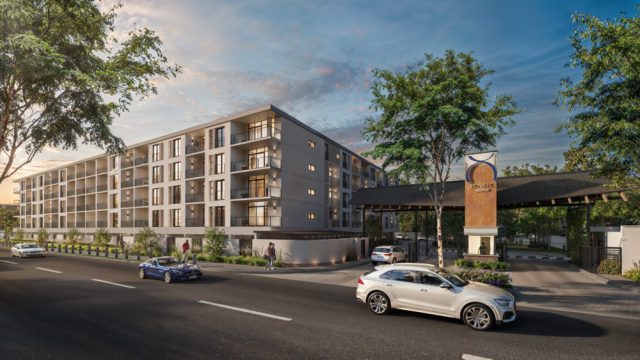
I recently reviewed a sectional title development called Iconic by Craft Homes. It sits on a site bordered by Dunkeld, Melrose, Illovo and Rosebank. For starters, great location.
The Iconic will consist of 219 flats across two four-storey buildings in two phases. Some units come with their own lock-up garages and storerooms. Studio units start at R1.259m, two-bedroom flats at R2.145m and three-bedroom flats at R3.180m.
For a secure, contemporary new build in this node, the pricing is impressive. In fact, it undercuts some older three-bedroom stock while offering brand-new construction, eight floor plan options, four finish palettes and no immediate maintenance concerns. If anything, the pricing feels conservative for a new build in this location.
When you compare the pricing of their smaller units, it sits comfortably in line with the two- and three-bedroom units, without any price shock.
I say this often: I love reviewing a development where the numbers make sense. Where there is no emotional pricing and where the developer has read the market.
When I spoke to Lubbe Kruger, the development manager at Craft Homes, he explained that they deliberately moved away from the traditional apartment block formula of narrow passages and long, dimly lit corridors. Instead, they introduced a central atrium.
The atrium draws natural light deep into the building and creates space for greenery and trees at ground level, shifting the feel from enclosed to expansive.
The materials used in its construction also allow the building to operate about 2% cooler, a subtle but meaningful efficiency gain for long-term investors.
Beyond the atrium sits a landscaped deck with a gym, a semi-serviced coffee shop and a clubhouse. Picture running on a treadmill while overlooking planted gardens rather than a blank wall. The design borrows inspiration from high-end retail environments, where volume and openness shape the experience.
There are fewer internal passages, which makes spaces feel larger and allows air to circulate more freely. As Kruger put it: “We do not want the development to look like a cookie-cutter hotel.”
Just as Henry Brown Marshall planted oaks that define the suburb more than a century later, the developer has also made a conscious decision to retain certain heritage trees on site. It is a small but deliberate nod to Melrose’s DNA.
Beyond Iconic, Melrose continues to evolve. One on Whiteley strengthens the residential presence around Melrose Arch. Boutique retail and corporate headquarters line landscaped streets.
Across the area and into Melrose Estate, smaller luxury offerings continue to come online.
It’s refreshing to see no rapid overdevelopment. Rather, we are seeing careful densification in a proven node. Melrose is holding its value.
You have Melrose Arch and Blu Bird Shopping Centre for retail. The Wanderers Cricket Stadium on Corlett Drive is for major sporting moments. The Inanda Club for equestrian and social heritage. Schools like Pridwin Preparatory and Jeppe High Schools are anchoring long-term family appeal.
Rosebank is five minutes away. Sandton is 10. Everything else is essentially on your doorstep.
Whether you’re there for the history of Henry Marshall’s oaks or the hum of the more modern sectional title developments, Melrose remains one of those rare suburbs that manages to feel both historic and perfectly ahead of the curve. A fine blend of healthy hype and heritage.
The Johannesburg suburb remains one of those rare ones that feel historic and perfectly ahead of the curve