
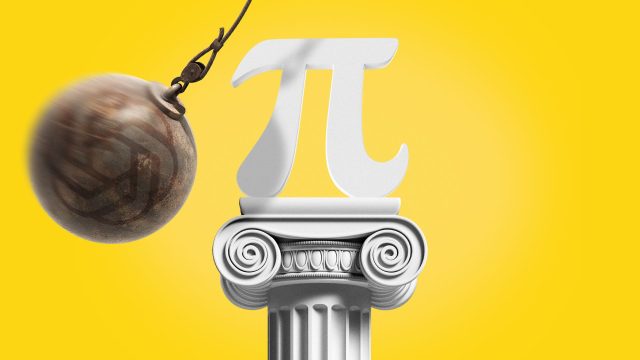
Tuesday “may go down as one of the most consequential days in the history of mathematics,” said The Economist. Less than a month after astonishing the world with its solution to the long-standing Navier-Stokes problem, OpenAI has released 722 maths papers, proving or disproving problems across numerous fields from algebraic geometry to number theory. OpenAI said it had consulted extensively with mathematicians about publishing the results but the news seems to have stunned maths world. How they react to this “mathspocalypse”, and the panic it’s inducing, could determine if there’s any human-led maths at all in 50 years’ time.
What did the commentators say?
“If you want some sense of what things feel like now in maths, imagine a hunter-gatherer who’s spent his entire life learning to survive deep in an unforgiving rainforest, then a giant resort hotel springs up right next to him with a helipad and heated pools and Airbnbs,” wrote Scott Aaronson, chair of computer science at the University of Texas at Austin, according to Sky News.
This is “heartbreaking” for our community, said Jordana Cepelewicz, maths editor at Quanta Magazine. In mathematics, “problems are posed not so much because their answers will be practical and important, but because they represent interesting journeys”. As we “struggle to solve a problem” we might “come up with intriguing tools and connections, stumble on novel ideas and directions, take fruitful detours, and answer new questions” no one’s ever thought to ask. AI models “just skip to the end”.
AI was already changing maths. Researchers have stopped positing open conjectures at the end of their paper, so they’re not “scraped by bots”. Others are publishing their papers prematurely, to avoid getting “scooped” by AI. There is now widespread fear that new blood will no longer be “attracted to this remade discipline”, resulting in a “whole lost generation”.
“Releasing over 700 files at once is not a demonstration of scholarship, but a demonstration of power,” said the Association for Human Mathematics in a statement. “We urge mathematicians to discontinue their work with OpenAI and to return to a vision of science that centres human understanding.”
The “floodgates are open”, said Joseph Howlett in Scientific American. This is without question the “biggest maths breakthrough in two decades”. But such is the speed of advancement, there are concerns the movement may be “coming too fast” even for the AI labs themselves. Not that they plan on slowing the tools down; they’re aiming to make them as powerful as possible to “show that their AI is really getting smarter”. The “consequences of this race are becoming harder and harder to predict”.
This could also have dangerous implications for cybersecurity, said Anthony Cuthbertson in The Independent. Cryptography forms the backbone of online encryption, used in web browsers, secure messaging and online banking. It also relies on “mathematical problems that are currently too difficult to solve efficiently”. There is no evidence that AI models have come close to breaking them but these latest advances could “lead to new algorithms capable of cracking them”, and reduce the time available to develop adequate protections.
What next?
It will take years to verify Open AI’s breakthroughs, said The Economist. Many of the papers are more than 100 pages long, only 127 of them “are accompanied by a code guaranteeing logical consistency (a norm in the field)”, and there is published internal reasoning for just 10. And it remains to be seen how many new research avenues the papers could open up. “For now, the mathematical problems AI is revealing are more existential than numerical.”
OpenAI has released a hundreds of maths papers, potentially wrecking the mathematics world