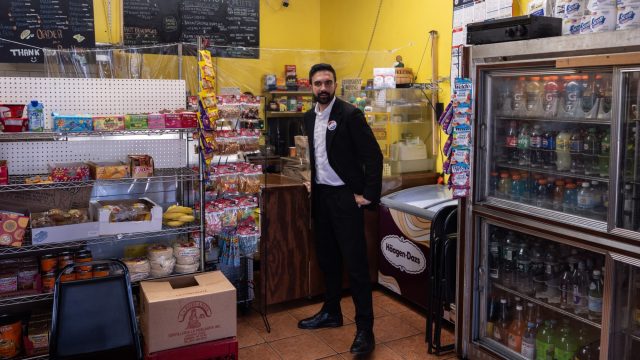
Do groceries and government go together? Zohran Mamdani, the New York City mayoral candidate, thinks so. He wants to open five publicly owned groceries across the city to provide low-cost food to underserved New Yorkers. Critics say the proposal smacks of “Soviet bread lines.”
Mamdani’s idea is “less radical than critics portray,” said CNN. City-owned grocery stores have popped up in small towns like Saint Paul, Kansas, and big cities like Atlanta. That makes them “more common than people are aware of,” said Nevin Cohen, director of the City University of New York’s Urban Food Policy Institute. Mamdani’s plan is light on details so far, but he wants to open one store in each of the city’s five boroughs. The idea is a bit of “reasonable policy experimentation,” he said.
‘The system that feeds the world’
Public grocery stores can “provide crucial resources at lower prices” in places where fresh food is scarce, said Glenn Daigon at The Progressive. The government-owned stores aim to “remove profit from the equation,” said Erion Benjamin Malasi of the Economic Security Project. But grocers have “among the lowest margins of any business in America,” said The Economist. That suggests public stores would sell food just a “smidge more cheaply than conventional grocers.”
Mamdani’s proposal would “collapse our food supply, kill private industry” and drag New York “toward the bread lines of the old Soviet Union,” grocery store magnate John Catsimatidis said at The Wall Street Journal. Better to offer tax incentives to help struggling grocers instead of promoting “forced takeovers of private enterprise.” Government-owned stores would elbow aside New York’s bodegas, delis and community supermarkets. Capitalism is not perfect, “but it’s the only system that feeds the world.”
New Yorkers ‘pushed out’ by prices
City-owned stores could be a “bold fix for food insecurity,” said Food Tank. The “growing trend” of government stores is “helping us reimagine what type of food system we want,” said Fresno State University sociology professor Justin Myers. There are plenty of successful models for the public option, “including commissaries on military bases and state-owned liquor stores.” The Department of Defense is “one of the largest food vendors in the country,” said Wesleyan University professor Christine C. Caruso.
Government groceries are just one of the items on Mamdani’s “affordability agenda.” The city has seen “more and more working people are being pushed out” by high prices, he said to NPR. He has also proposed providing free child care, raising the minimum wage to $30 and raising taxes on New York corporations. That raises the question of whether his “campaign promises can become reality,” said The New York Times. The grocery proposal is “certainly doable,” said James Parrott, the city’s former chief economist. But a broader backlash from business interests could “stymie his ambitious agenda,” said the Times.
The goal: To make food cheaper and more accessible