
What happened
Hungarian voters booted out their longtime prime minister, Viktor Orban, in a general election last week, dealing a blow to the European far right and robbing the Trump administration of its biggest cheerleader in the EU. Though the Kremlin-friendly Orban had held power for the past 16 years, partly by tilting the electoral system in his favor, his far-right Fidesz party lost to the center-right Tisza party of anti-corruption campaigner Peter Magyar. With turnout at a record 80%, Magyar took a two-thirds parliamentary majority, which will allow him to undo the changes Orban made to Hungary’s courts, elections, and press that had restricted the country’s democratic freedoms. While Orban had been expected to cry fraud if he lost, the trouncing was too complete. Instead, he conceded quickly as pro-Magyar crowds celebrated across the country. Magyar pledged to work more closely with the EU and NATO and restore checks and balances. “Together we liberated Hungary and took back our country,” he told cheering supporters. “Those who commit the sin of dividing the nation must leave power.”
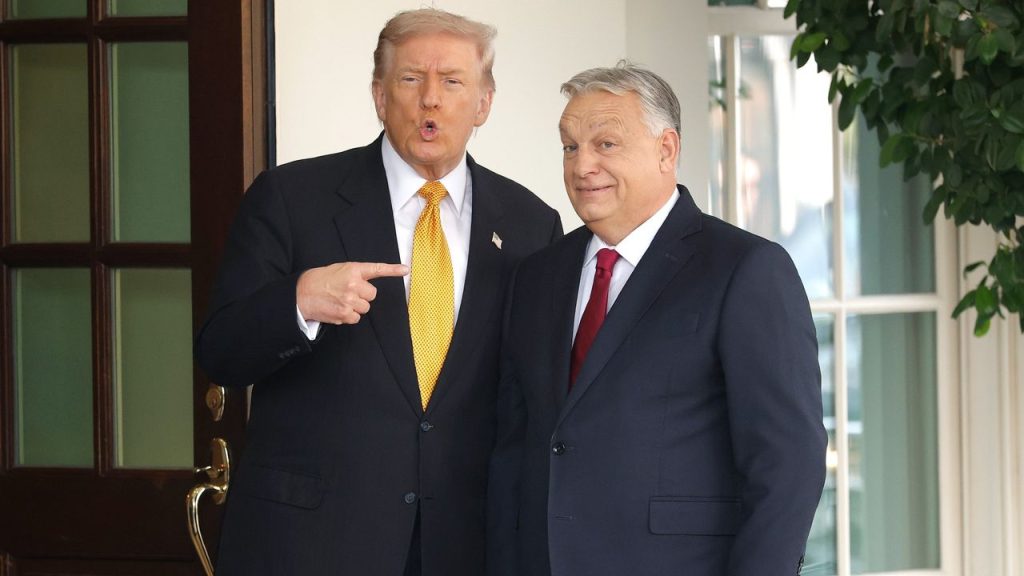
Ahead of the vote, the Trump administration had made a show of supporting Orban, with Vice President JD Vance visiting Budapest last week to campaign with him. President Trump even called in to a rally to praise Orban’s anti-immigrant policies. “I love Viktor,” he said. “He didn’t allow people to storm your country.” Russia, too, had an interest in keeping Orban in power, as he had consistently advanced Kremlin aims by blocking EU aid to Ukraine and vetoing EU sanctions on Moscow. “This is not just a repudiation of Russian influence,” said Ian Bremmer, head of the risk advisory firm Eurasia Group. “It’s also a repudiation of Trump.”
What the columnists said
Why was the White House “so invested in seeing Orban prevail”? asked Nick Catoggio in The Dispatch. Because MAGA elites looked to his “illiberal Christian democracy” as a model, even holding an annual conservative confab in Budapest. Orban was the “ur-Trump,” who proved back in 2010 that voters would flock to an anti-immigrant and culturally reactionary “strongman.” And crucially, he showed that such a person could entrench power by packing courts with loyalists, handing the press over to friendly oligarchs, and rigging the election system for his own party.
Yet eventually Orban forgot “a basic rule of politics” said Andrew Higgins in The New York Times. A populist must actually “be popular to win elections.” But as Hungary’s economy became “deformed by corruption,” voters grew angry. Hungary today has “the slowest growth in the region,” and “unemployment is at a 10-year high.” In the end, even Orban’s near-total control of the media, which effectively barred Magyar from TV during the entire campaign, was no match for reality.
That’s why Fidesz’s shellacking could be an “omen for Trump’s MAGA movement,” said Max Boot in The Washington Post. Like Orban, Trump “presides over flagrant corruption while inflation is rising and economic growth slowing.” He could face a similar smackdown in the November midterm elections. That would be more likely if Democrats were to follow Magyar’s script, said William A. Galston in The Wall Street Journal. The Hungarian challenger’s “disciplined and energetic campaign” focused on bread-and-butter issues: “cronyism and corruption, economic stagnation and inflation, and decaying public services.” Wisely, he avoided discussing “divisive social issues” or “attacking his opponent as an enemy of democracy.”
“Don’t read too much into Orban’s defeat,” said Jamie Dettmer in Politico. Sure, it’s tempting to see Hungary’s result as a “symbolic setback” for populists everywhere, especially given the effort that Trump and Vance have put into juicing far-right European parties. Yet elections reflect “local political and economic circumstances” much more often than “broad and lasting transnational” trends. This vote in a nation of only 10 million “isn’t a devastating blow to the far right”—not in Europe and not in the U.S.
Perhaps not, said Anne Applebaum in The Atlantic, but it does show that “illiberalism is not inevitable.” There’s been a belief within the MAGA movement—one that’s “also present in Russian President Vladimir Putin’s rhetoric”—that it and its international brethren are “somehow destined not just to win but to hold power forever, because they have the support of the ‘real’ people.” But that’s no longer the case. Hungary showed that “‘real’ people grow tired of their rulers. Old ideas become stale. Younger people question orthodoxy.” If Orban can lose, so too can his “Russian and American admirers.”
Orban: A loss too great to deny