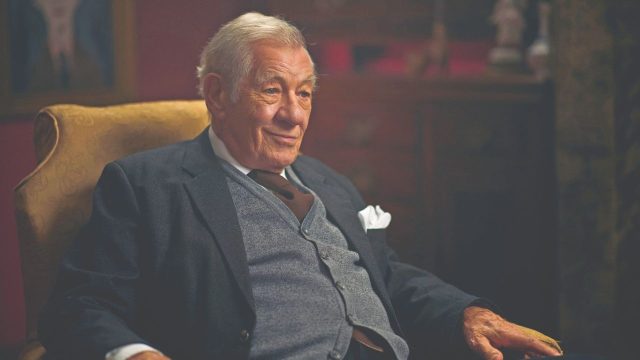
In 1972, the artist L.S. Lowry, then in his 80s and a “reluctant celebrity”, sat down in his living room for an interview with a young fan, said James Jackson in The Times. It was meant to be a one-off encounter, but it turned into an ongoing “four-year project”.
In this one-hour BBC2 programme, Ian McKellen appears as “the great Mancunian observer of ordinary lives”, lip-syncing to the freshly unearthed audio from those meetings. This takes some “getting used to”, but after a while it is “impossible to look away”.
We learn about Lowry’s relationship with his parents, “how he found his niche painting Pendlebury’s townscapes after his family were forced to downsize from their middle-class neighbourhood”, and his bachelorhood. But the film is not just about him; it also serves as “an epitaph” for his subject: “an industrial Manchester obliterated by the slum clearances”, a place “of hurrying crowds and tightly bonded communities. A vanished North.”
“Lip-syncing can be toe-curling to witness,” said Chitra Ramaswamy in The Guardian. But McKellen’s “is a thing of bleak and beautiful northern wonder, all obfuscating harrumphs and carefully placed blows on his hankie”. The show tells a “fascinating” story, about the artist and our “attitudes to art and heritage”, said Nick Curtis in The Independent. When he died, Lowry’s estate was valued at less than £300,000; in 2022, one of his works sold for £7.8 million. The factories he painted are gone; and he “couldn’t have imagined… the sparkling Lowry gallery” that now stands in their place.
The programme stands as an ‘epitaph’ to the ‘vanished North’ of ‘industrial Manchester obliterated by the slum clearances’