As the United States and China jockey for global influence and power, American farmers are growing increasingly anxious over one of the less-obvious fronts in the Trump Administration’s trade war with Beijing: commercial drones.
The drone have become a staple of modern farming across the U.S., and while conservative China hawks in Washington push for a ban on Chinese-made unmanned aerial vehicles (UAVs) over national security concerns, a number of Republican lawmakers are raising a red flag on behalf of heartland constituents whose agricultural livelihoods are at elevated risk. The congressional fight over farmland flyers is underway with a legislative deadline looming.
National security or corporate protectionism?
At the center of this growing fight is Shenzhen Da-Jiang Innovations Sciences and Technologies Company Limited, commonly known as DJI, the “world’s largest drone manufacturer,” which sells “more than half” of the United State’s commercial drones, Fox News said. Lawmakers have “repeatedly raised concerns” that the company’s drones “pose data transmission, surveillance and national security risks” and have raised allegations that DJI is controlled by the Chinese military.
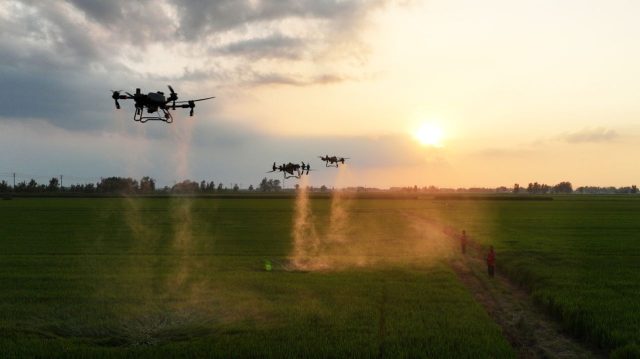
But DJI drones are a “key agricultural tool to treat more than 300 types of crops in fields and orchards,” said Michigan Farm News. “Over 90% of the spray drones our industry uses come from China,” said the American Spray Drone Coalition. A “drastic” cutoff like the one being debated in Congress will “devastate our industry.”
House Republicans, led by New York Rep. Elise Stefanik, have succeeded in passing harsh restrictions on domestic DJI sales in their version of a must-pass defense funding bill, but they are “facing pushback in the Senate,” Politico said. Lawmakers in the upper chamber initially dropped the House’s language in their version of the bill, with a number of Republicans “raising concerns about potential negative impacts on U.S. businesses and law enforcement.”
Banning Chinese drones would have “real cost ramifications for commercial enterprises, not just farming,” said North Dakota Republican Sen. John Hoeven to Politico, citing transmission line tracking and rescue and recovery operations.
Members of the United States’ nascent commercial drone industry are ”eagerly awaiting“ DJI’s exit from the domestic field, The New York Times said, despite “few U.S. drone makers selling the kinds of consumer and industrial products that DJI makes.” The push to ban DJI technology in the United States is about “forcing the biggest manufacturer of drones out of the market” so domestic manufacturers “don’t have to compete with them,” said DJI Global Policy head Adam Welsh to Mashable. “The reality is the best drones on the market right now are from China,” said American Spray Drone Coalition President Eric Ringer to Iowa Capital Dispatch. Accordingly, the country needs to “do better” at “building up good domestic alternatives.”
A Christmas Eve-eve deadline
For now, all eyes are on December 23, after which DJI would be automatically added to the FCC’s “covered list” of banned items that would block new drone shipments, as well as potentially disrupt future upgrades for existing devices — unless a national security agency were to audit the company to determine whether it poses a threat. But, with no agency set to perform the check, “DJI can’t clear its name,” said Mashable, all while the “clock continues to tick toward a ban that the company can’t stop on its own.”
As congressional China-hawks work to limit commercial drone sales from Beijing, a growing number of conservative lawmakers are sounding an agricultural alarm