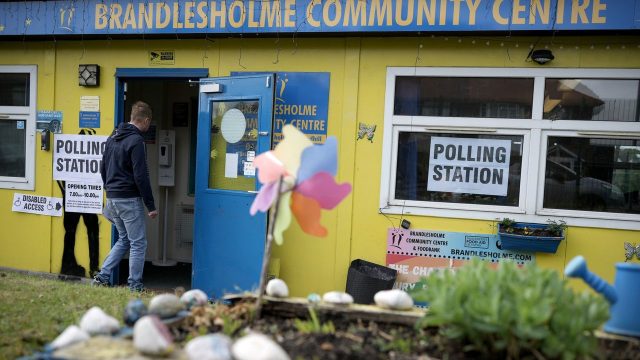
The government has abandoned plans to delay some of the May local elections in another screeching U-turn.
Labour had postponed 30 council votes until 2027, partly because of the cost of running elections for authorities that will be abolished in a reorganisation of local government set to be complete by 2028. Opposition parties argued that the decision disenfranchised 4.5 million voters, and Reform UK launched a legal challenge against the “undemocratic” delay.
Now, the Ministry of Housing, Communities and Local Government said all local elections will go ahead, citing “new legal advice”. Steve Reed, the MHCLG secretary, said the government would provide up to £63 million to help fund councils’ reorganisation costs.
When are the local elections?
Millions of voters across England head to the polls on Thursday 7 May for the biggest ballot since the 2024 general election. Devolved elections will also take place on the same day. In Scotland, voters will elect representatives to Holyrood, the national parliament, and Wales will hold elections for the Senedd. (In Northern Ireland, local council and Assembly elections are expected in May 2027.)
Where are the local elections?
On 7 May, about 5,000 seats across 136 local councils will be “up for grabs”, said the BBC. These include:
Six county councils: East Sussex, Essex, Hampshire, Norfolk, Suffolk and West Sussex.
Fifteen unitary authorities: Blackburn with Darwen, Halton, Hartlepool, Hull, Isle of Wight, Milton Keynes, North East Lincolnshire, Peterborough, Plymouth, Portsmouth, Reading, Southampton, Southend‑on‑Sea, Swindon, Thurrock and Wokingham.
Fifty-one district councils, 32 metropolitan borough councils (out of the total of 36) and all 32 London borough councils.
On the same day, six directly elected mayoral contests will also take place in Watford and the London boroughs of Croydon, Hackney, Lewisham, Newham and Tower Hamlets.
Who is eligible to vote in local elections?
About 42 million people in England are eligible to vote, according to the Electoral Commission. These include British citizens, qualifying Commonwealth citizens and those with citizenship of an EU member state – although specific rules vary according to which country you are from. The registration deadline is mid-April, after which the exact number of electors will be published.
The commission has a postcode tool for voters to find out whether elections are coming up in their area and where to find their nearest polling station. You can apply to vote by post and receive a postal vote ballot pack, or you can apply to vote by proxy and nominate someone to vote in person on your behalf.
What ID do you need to vote?
After changes brought in under the Conservative government, voters in England now need to show photo ID at polling stations (you do not need this for a postal vote). This is the list of accepted forms of identification. The document does not need to be in date as long as the photo is recognisable. If you don’t have photo ID, you can apply for a free Voter Authority Certificate before the deadline on 28 April.
What are the results likely to be?
Councils now face an “unnecessary race against time” to organise ballots and book polling stations and staff, said Richard Wright, chair of the District Councils’ Network (a cross-party group that represents 169 English councils) in a statement. Voters will also be “bewildered by the unrelenting changes”.
Jonathan Carr-West, chief executive of the Local Government Information Unit, told The Guardian that parties will now be “scrabbling around to find candidates they didn’t think they needed”.
Local councils are “experiencing whiplash”, said Matthew Hicks, Conservative leader of Suffolk County Council.
“Firstly, we got brickbats for trying to delay elections,” one Labour strategist told the Financial Times, “and secondly, we are now bound to lose a load of seats, so there’s no pretending this is great for us.”
What impact will the U-turn have?
Labour and the Conservatives are both braced for heavy losses at the hands of Reform and the Green Party. The postponement was “never going to enable the party to hide from the potentially adverse judgement of the electorate”, said politics professor John Curtice in The Independent.
London, where 1,800 seats are at stake, is “prime Labour territory” – territory that is now, “given the party’s dire position in the polls, potentially under threat”. The Green Party has “a track record of performing well in local elections”, and in English cities such as “heavily Leave voting Barnsley and Sunderland”, Reform has a “potential breakthrough in their sights”.
In both Scotland and Wales, polls currently point to Labour “ending up in third place”. In Wales, where the party has not lost an election since 1931, such a defeat would be “cataclysmic”.
According to Curtice, the biggest impact of Labour’s U-turn will be on the four county councils, Norfolk, Suffolk, East and West Sussex – three of which are currently controlled by the Conservatives. “Those are large councils where all the seats are up for grabs, and these are the type of areas that should mimic where Reform did well last year,” he told the FT.
Labour is braced for heavy losses and U-turn on postponing some council elections hasn’t helped the party’s prospects