
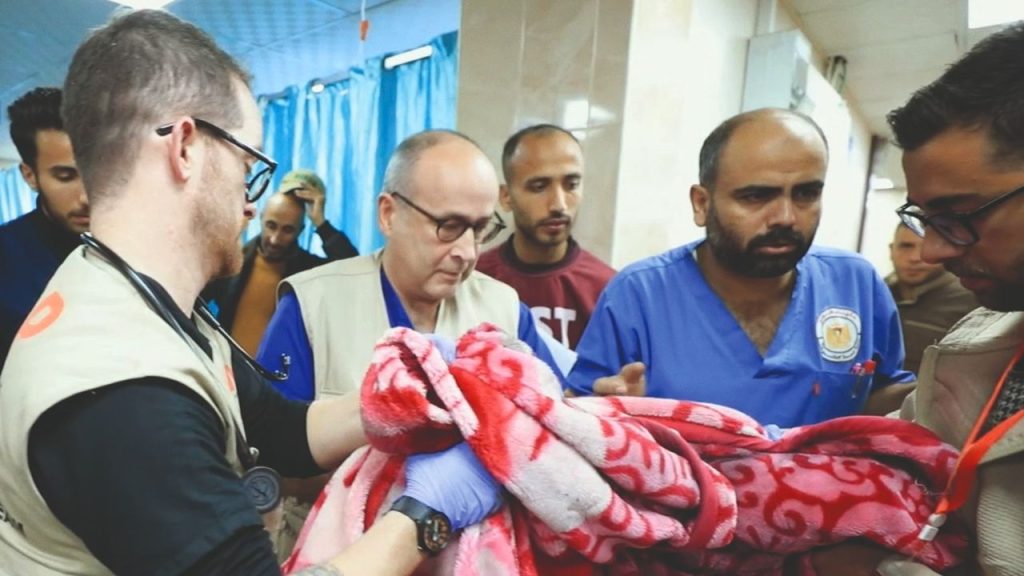
“I wanted to walk out of ‘Life Support’ many times,” said Danny Leigh in the Financial Times, and “I mean that as the highest recommendation.” This “essential” documentary, told from the perspective of international doctors who volunteered to help civilians in Gaza between October 2023 and September 2025, offers a rare glimpse into life – and death – in the besieged enclave.
It is particularly vital considering that, since the war began, no independent foreign journalists have been allowed into Gaza. Using interviews and video footage, director Daniele Rugo weaves together the testimonies of surgeons, paediatricians and other medical staff as they confront “nightmarish wounds” in hospitals that double up as shelters, while bombs fall. In its “stark simplicity” it is “deeply racking”.
Doctors tend to be careful with their words and don’t reach for “overstatement or exaggeration”, said Cath Clarke in The Guardian. But their “measured accounts of hell on earth” make this “devastating film almost unbearable to watch”. The doctors pay tribute to their Palestinian colleagues, who work marathon shifts, often while grieving personal losses. One surgeon takes sitting-down breaks during an operation to avoid blacking out from hunger. Another brings her teenage children to work, reasoning that, if they die, they will die together.
We see “the erosion of life” in Gaza first-hand, said India Lawrence on Time Out, from the “heartbreaking footage” of people relaxing and lounging under beach umbrellas in 2022, to the nightmarish reality of life in wartime. There is no dramatic climax, just the slow, relentless descent towards Gaza’s “total devastation”. “Life Support” is “not a happy watch”, but it is “an urgent and essential piece of reportage”.
Director Daniele Rugo weaves together the testimonies of surgeons, paediatricians and other medical staff