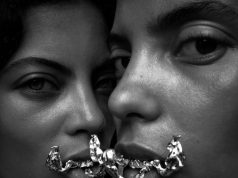

Tamika Mitchell (The British Blacklist) interviews Karla Crome, focusing on Possession, a 5-part supernatural thriller that Crome created for Sky Atlantic. The series stars Gugu Mbatha-Raw; it “blends gothic horror with questions of inheritance, colonial history and belonging, exploring the intersections of British and Jamaican identity through a story of power, spirituality and family secrets.” Here are excerpts; reach the full interview at The British Blacklist.
Karla Crome is a writer and actor whose work has spanned some of British television’s most acclaimed dramas and genre series. Known to audiences for performances in Misfits, Carnival Row, Under the Dome and Am I Being Unreasonable?, Crome has also built a reputation behind the camera, writing for series including Safe, The Stranger and Screw. She now brings those talents together in Possession, the five part supernatural thriller she created and wrote for Sky Atlantic. [. . .] Crome reflects on creating the series, collaborating with Jamaican director Storm Saulter, and why horror remains one of the most compelling ways to explore the world we live in.
Please introduce yourself …
I’m Karla; I’m a typical Cancerian. I’m of mixed Jamaican and British heritage and I’m from Borehamwood. [. . .]
The series also explores the legacy of colonialism through both a British and Jamaican lens. How did you approach writing a story that moves between those two worlds?
There are two strands in the show, the present day and the 1700’s. I particularly enjoy writing dialogue and playing with dialect so moving between Period Georgian and contemporary patois was really fun. The legacy of colonialism is present in the way the characters speak and express themselves.
We were lucky enough to film in both Bristol (which was a major port in the transatlantic slave trade) and across Jamaica. In both cases, the history is in the landscape. In Jamaica, we visited a number of former plantation houses to find our main location. Many of them have been developed into luxury hotels, resorts and museums. However, the house we settled on is actually a private residence, which has retained many of its colonial features. It is not a pleasant place. It’s dark, remote, instantly unsettling. No Sandals resort. We all agreed pretty much straight away that this was the right location. You can feel the history pulsating through the walls.
One of the things that immediately stands out about Possession is the way it brings together English witchcraft traditions and Jamaican Obeah. What interested you about placing those belief systems in conversation with one another?
Traditionally, TV and film have made very poor, offensive representations of African Spirituality and Creolised practices. What was demonised and outlawed as ‘Obeah’ were actually ways in which enslaved Africans were able to engage in spiritual practices that confirmed their autonomy and peoplehood. Anything that may have reminded the enslaved of their self-determination was feared as it would lead to rebellion. I don’t want to give too much away, but when our protagonist Claudia, played by Gugu Mbatha-Raw, arrives in Jamaica, these surviving practices do make her feel uneasy, because she doesn’t understand them. I suppose in our story European ritual magic is an allegory for control and Obeah (or what might be better described as Revivalism) represents the spirit of rebellion.
With Obeah often misunderstood or misrepresented on screen what research and conversations informed your approach?
We had a cultural advisor and Kumina priestess Dr Stines on set, who advised us on creating accurate and authentic sequences. She is not keen on the word ‘Obeah.’ She advised on how practices would be performed, how people would move to catch the spirit at a Nine Night, what might happen before or during a spirit trance. She also blessed the set on occasion and adapted some sequences so we didn’t unwittingly invite any malignant spirits into the space. It was a privilege and an education to have her. I was also very inspired and affected by Marlon James’ novel, The Book of Night Women. It was recommended to me early on in the writing process and its exploration of Obeah and Myal (a form of traditional Afro-Jamaican spirituality) had a profound affect on me. It’s just a brilliantly written book. It might be the best book I’ve ever read. [. . .]
Storm Saulter has spent much of his career telling Jamaican stories through a distinctly Jamaican lens. How important was it to have a director who shared that commitment to authenticity and specificity?
As a UK based team we knew quite early on that we needed a native Jamaican voice in the room to make the show work. I felt like I’d hit the jackpot when Storm came onboard. He was so passionate and excited about the world we were creating. As a writer, you want to be free to let your imagination run wild. I cooked up all sorts of bat shit narratives, characters and scenarios. Instead of fencing me in, Storm encouraged me to go big, and he always found a way to ground it and make it authentic. He had a rural Jamaican upbringing, he knows the oral histories of the island and the spirit of the Jamaican people. His eye on the script was invaluable. He also took a red pen to my shocking attempt at writing Patois, to which I’m eternally grateful. [. . .]
We’re seeing more projects that place African and Caribbean stories at the centre rather than the margins. Do you feel the industry is becoming more open to stories that aren’t filtered through a predominantly British or American perspective?
I certainly hope so. I have seen fierce talent both in front of and behind the camera whilst working in Jamaica, and that’s only one of many regions in the Caribbean. I was really inspired by the Trinidadian film Play the Devil by Bahamian filmmaker Maria Govan and Karnaval: A Peoples history of Haiti in 6 Chapters by Leah Gordon. Very different films documenting very different Caribbean cultures, but the history of ‘Mas’ was very prominent in both. They both inspired the Junkanoo sequence in Possession, which is probably my favourite set piece in the show. [. . .]
For full interview, visit https://thebritishblacklist.co.uk/karla-crome-talks-possession-slaverys-legacy-jamaican-spirituality-and-gothic-horror/
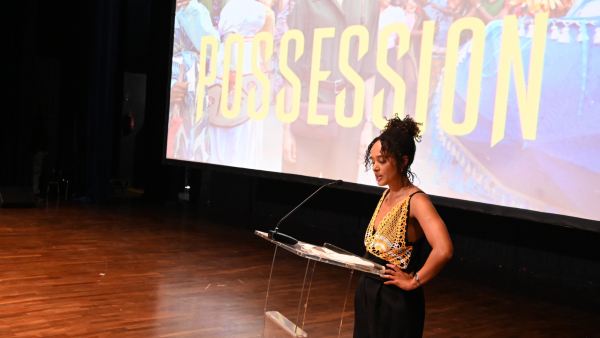
[Photo by Stefan-Bertin: Karla Crome ‘Possession’ Screening.]
Tamika Mitchell (The British Blacklist) interviews Karla Crome, focusing on Possession, a 5-part supernatural thriller that Crome created for Sky Atlantic. The series stars Gugu Mbatha-Raw; it “blends gothic horror with questions of inheritance, colonial history and belonging, exploring the intersections of British and Jamaican identity through a story of power, spirituality and family secrets.” Here