
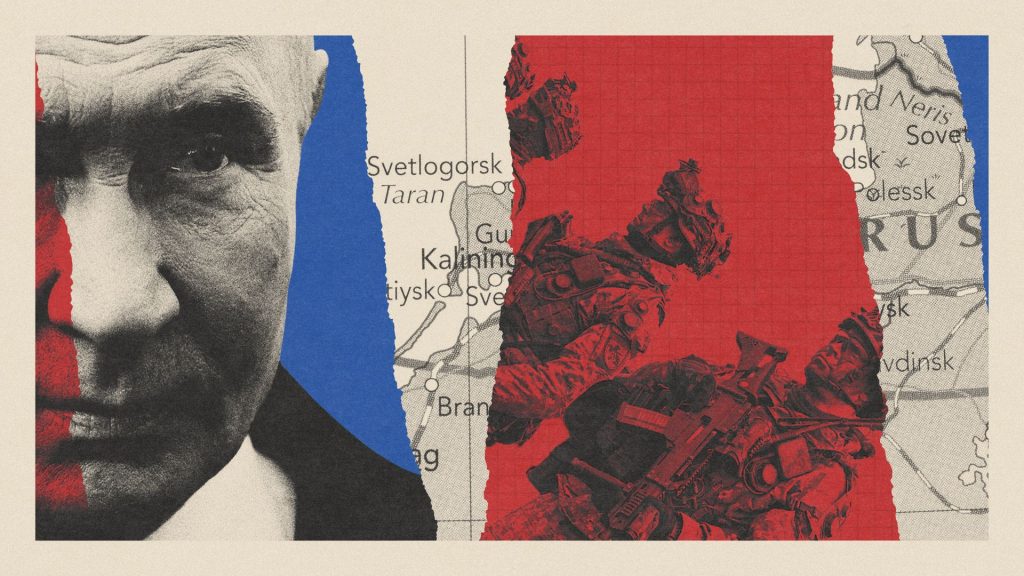
The Russian exclave of Kaliningrad has long been a geographical anomaly.
Sandwiched between Poland and Lithuania on the Baltic coast, it is completely cut-off from Russia. Yet the Kremlin has repeatedly warned against any attempt to threaten the territory, vowing to defend it at all costs, including with nuclear weapons if necessary.
Now security analysts think it could become a flashpoint if Vladimir Putin decides to escalate tensions with Nato.
What is Russia doing there?
The east Prussian city of Koenigsberg was renamed Kaliningrad after it was annexed by the Soviet Union at the end of the Second War. Kaliningrad was the name given to the entire region, which is home to around a million Russian citizens.
As well as being granted “special economic status” in 1996, the highly militarised territory is of “great strategic importance to Moscow”, said the BBC.
The Russian Baltic Fleet is based at Baltiysk, which is also the country’s only ice-free European port. This provides Russia with a “platform for air defence, missile and naval forces that can project power deep into northern and central Europe while also restricting Nato forces’ ability to reach the Baltic member states overland” across the Suwałki Gap, said Reuters.
Why is it a problem for Nato?
The Suwałki Gap is the 65-kilometre section of the Polish-Lithuanian border that separates Kaliningrad from the Russia-friendly and authoritarian state of Belarus. From Nato’s perspective it “poses a tremendous risk to the Baltics and is viewed as the alliance’s single greatest terrestrial vulnerability”, said Daniel Peris on Engelsberg Ideas.
Yet the “dual character of the Suwałki Gap – dangerous to both Russia and Nato – encapsulates the predicament in which Kaliningrad places Moscow”.
Why are tensions rising?
Tensions have been growing around the exclave since Russia’s full-scale invasion of Ukraine in 2022, when Lithuania restricted transit of sanctioned goods through its territory. This means Kaliningrad is “not just strategically exposed in the event of war but also reliant for a large fraction of its imports, energy and military resupply on a transit agreement with Lithuania”, a “point of great sensitivity for Moscow”, said The Times.
Russia has responded by increasingly using Kaliningrad as a forward operating hub for hybrid warfare attacks against EU and Nato countries. In recent months, however, the Western military alliance has “also become markedly more explicit about its readiness to obliterate Kaliningrad’s military infrastructure should Russia start a war against the alliance”.
“Any miscalculation could lead to a direct military confrontation,” said The Independent. “Possible triggers” could include “drone incidents, disruption of critical infrastructure, major new missile deployments or anything perceived by Moscow as amounting to a Nato attempt to impose a blockade on the exclave”.
Strategically vital Baltic territory is ‘potential flashpoint’ in confrontation between Nato and Moscow