
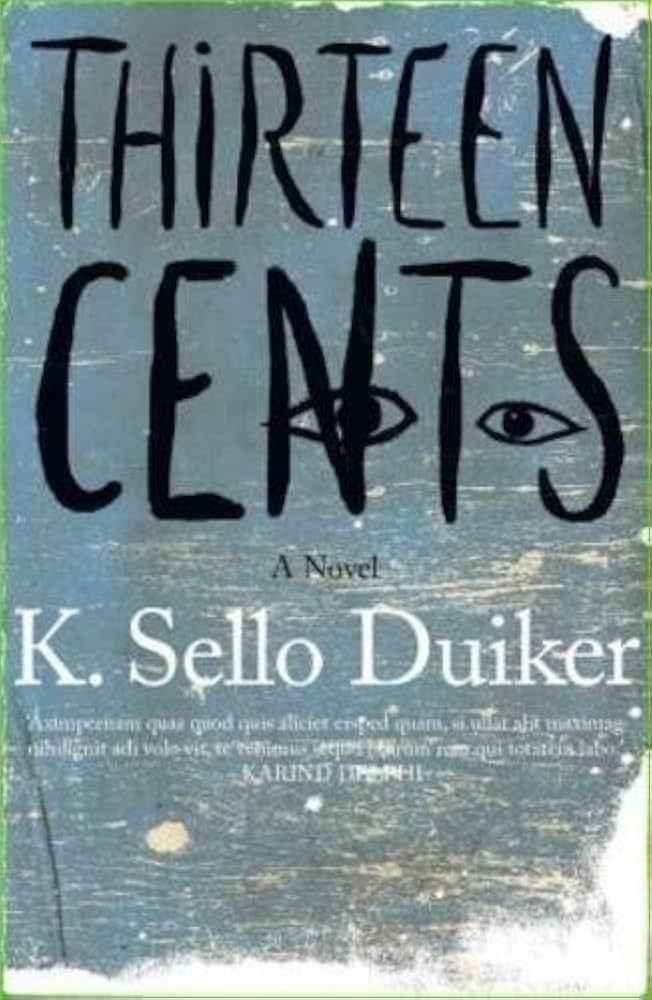
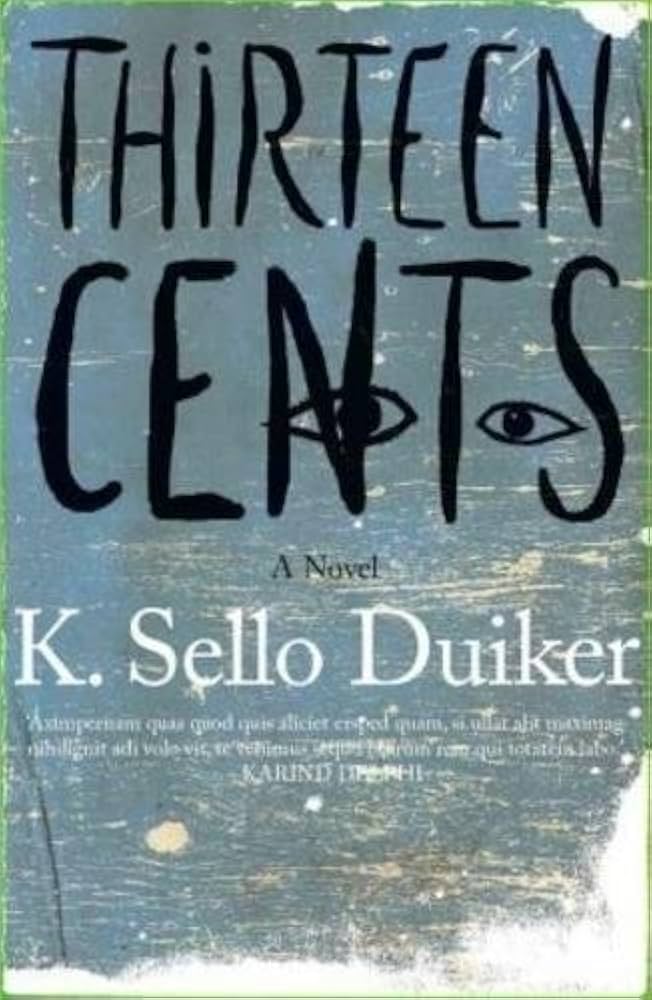
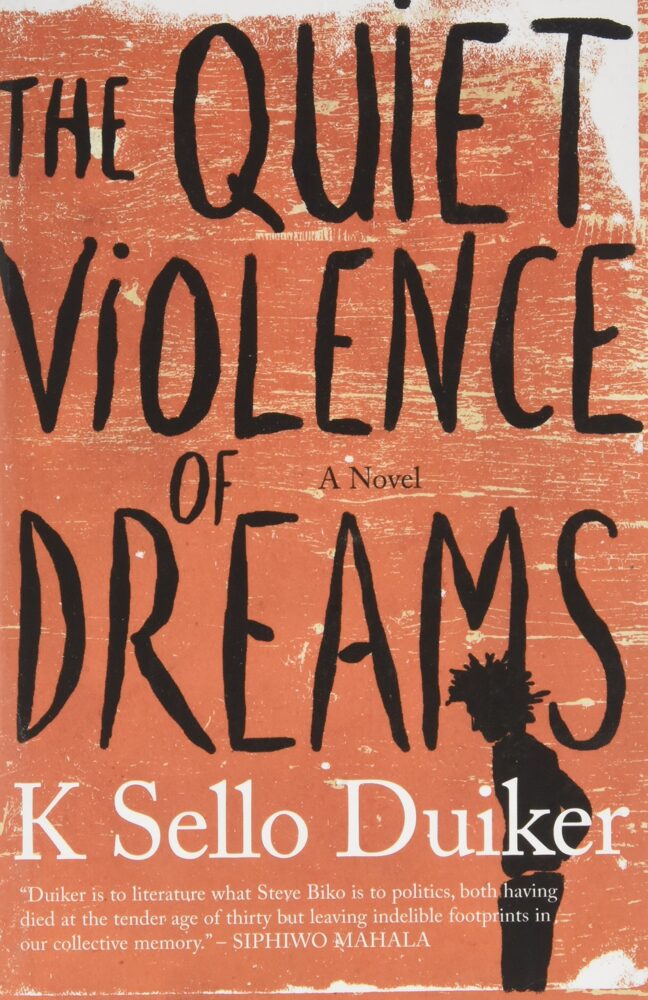
On April 13, a date that would have marked the late author’s 52nd birthday, the Kabelo Sello Duiker Foundation will have its official launch, a gesture that feels less like an unveiling and more like a return. Duiker is known for works such as The Quiet Violence of Dreams and Thirteen Cents.
Twenty-one years after his passing, Duiker’s work has not dimmed. If anything, it has sharpened, insisting on its place in a country still negotiating itself.
There is something quietly radical about remembrance when it is done with intention. Not nostalgia, not a soft-focus archive of a life once lived but an active, living engagement. The foundation arrives with this urgency. It is not only about preserving Duiker’s legacy but about placing it back into circulation among young readers, writers and thinkers who may not yet know how deeply his words already speak to them.
“We’re building towards an annual memorial lecture,” says Terrie Molepo, part of the communications team behind the foundation. “A space where we invite a key speaker to engage with themes in his work, LGBTQ+ issues, post-apartheid South Africa, the experience of being Black in this country.”
It is a deliberate framing. Duiker’s work was never abstract. It lived in the body, in the street, in the uneasy space between freedom and its failures. His characters moved through a South Africa that was newly unshackled but still deeply wounded. That tension between promise and reality remains familiar.
“The realism is still there,” Molepo continues. “When you look at the world today and then you look at his work, the parallels are undeniable.”
Duiker was, in many ways, writing ahead of his time. Not in the sense of being inaccessible or overly conceptual but in his willingness to name what others avoided. At a time when conversations around queerness, mental health and Black interiority were still largely absent from mainstream South African literature, he was already there, writing into those silences.
“He spoke about these issues when they were not fashionable,” Molepo says. “They weren’t on radio, in newspapers, or even in galleries. But he wrote them anyway.”
There is a particular kind of courage in that. Not the loud, performative kind but the quiet insistence of telling the truth as you see it, regardless of whether the world is ready to hear it.
For many readers, Duiker’s work offered something rare: recognition.
Molepo references Toni Morrison’s idea of writing for the Black reader, a concept that feels deeply aligned with Duiker’s approach. His stories were not concerned with translating Black experience for an outside gaze. They were rooted in a familiarity that needed no explanation.
“There was a sense of common ground,” she says. “Especially at that time, when we were reading a lot of diaspora writers but not enough stories grounded in African realities, post-apartheid, contemporary, lived.”
His protagonists were not distant or idealised. They were students navigating institutions, grappling with the disorientation of moving from township or rural life into elite academic spaces. They were young, uncertain, searching. They were, in many ways, reflections of a generation trying to find its footing in a country that had changed overnight but not nearly enough.
“To read his work and see that experience reflected back to you, it told you that you were not alone,” Molepo says.
That sense of not being alone is perhaps one of the most enduring gifts of literature. And Duiker understood that instinctively.
Even beyond the page, his contributions to storytelling extended into television. Molepo recalls his work on the character Vusi in Backstage, a figure that pushed the boundaries of what was being shown on South African screens at the time.
“That character was intense, layered, dealing with a calling and her queerness at the same time,” Molepo explains. “And this was prime-time television. A time when people gathered around the TV. It mattered.”
It is easy to forget how central those moments were, how storytelling in that format, had the power to shape national conversations. Duiker was not just participating in that space; he was stretching it.
Which is why the foundation’s work feels necessary now.
“It’s important that we honour a literary genius like him,” Molepo says. “And remind future generations that he existed.”
“There is a particular poignancy in the passage of 21 years. In that time, a child born in the year of his passing is now an adult. Entire lives have unfolded without direct contact with his work. The foundation seeks to bridge that gap, to introduce Duiker to those who have, unknowingly, inherited the world he wrote about,” she says.


“This is someone who was born in this country, who wrote about this country and whose themes you will likely relate to,” Molepo says. “Here is the work. Engage with it.”
But the foundation is not only concerned with preservation. It is equally invested in evolution.
“The work of an artist should grow,” she says. “There are people interested in adapting his work into films, series, music, poetry. We want to support that. To be a bridge.”
This idea of the bridge feels central, not just between past and present but between disciplines, audiences, and possibilities. Duiker was not confined to a single form; he moved between roles as a novelist, scriptwriter and creative professional. The foundation mirrors that multiplicity.
In practical terms, this means meeting young people where they are.
“Social media, digital platforms, even podcasting, that’s where we want to exist,” Molepo explains. “We don’t want young people to have to search for us. We want to find them.”
It is a strategy rooted in accessibility. Literature, particularly in South Africa, has often been framed as something distant, even elitist. The foundation’s approach disrupts that, positioning Duiker’s work within the everyday digital spaces that shape contemporary culture.
At the same time, there is a commitment to institutional engagement, working with universities, writing departments and creative industries to create pathways for emerging writers.
“He was a copywriter, a creative writer, a scriptwriter, a commissioning editor,” Molepo notes. “It would be remiss not to engage those spaces.”
The goal is not only to honour Duiker but to extend his legacy through others to nurture a new generation of storytellers who can carry forward the kinds of narratives he championed.
The official launch on April 13 is, in many ways, just the beginning. The foundation is already looking ahead to its first major milestone: an annual memorial lecture set to take place in April 2027.
“We wanted to do it this year,” Molepo admits, “but we realised this kind of work deserves time. We’re not in a hurry. We want to build something that lasts.”
That patience feels intentional. In a culture that often prioritises immediacy, there is something refreshing about choosing to move slowly, deliberately. To build with care.
And perhaps that is what Duiker’s work has always asked of us, to sit with discomfort, to look closely, to resist easy answers.
So why should we care, now, in 2026?
Molepo pauses before answering, then offers something simple, almost obvious in its clarity.
“Because he cared about people.”
It is there, she says, in the breadth of his characters, the marginalised, the neglected, those living in informal settlements, those often reduced to statistics.
“He looked at the human beings behind the numbers,” she says. “He reflected them back to us.”
In a country still grappling with inequality, still negotiating the weight of its history, that act of reflection remains urgent.
“If we care about global icons, about figures like Mandela or Martin Luther King, then it is worth taking the time to know his work,” Molepo adds. “There’s a reverence in it. Something that moves people.”
Even his family, she shares, continues to discover the depth of his impact through the testimonies of readers, people who studied his work, who found themselves in it, who were shaped by it in ways both quiet and profound.
“They knew him as a son and a brother,” she says. “But to experience him as a writer—that was a gift.”
The Kabelo Sello Duiker Foundation, then, is an invitation. Not just to remember but to return. To read, to engage, to feel.
Because some stories do not end. They wait. And when we find them again, they remind us that we were always part of them.
Twenty-one years on, the Kabelo Sello Duiker Foundation launches to return his urgent, unflinching stories to a new generation