
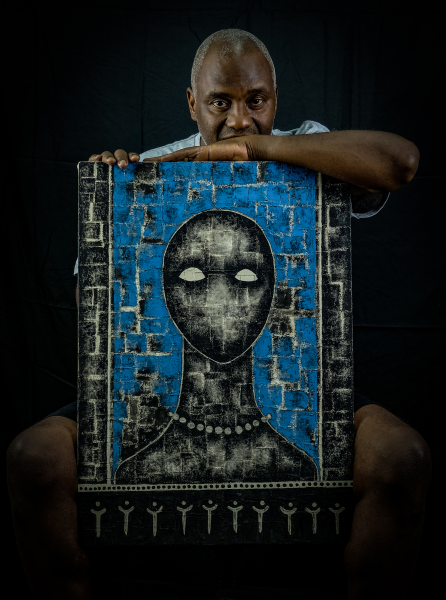
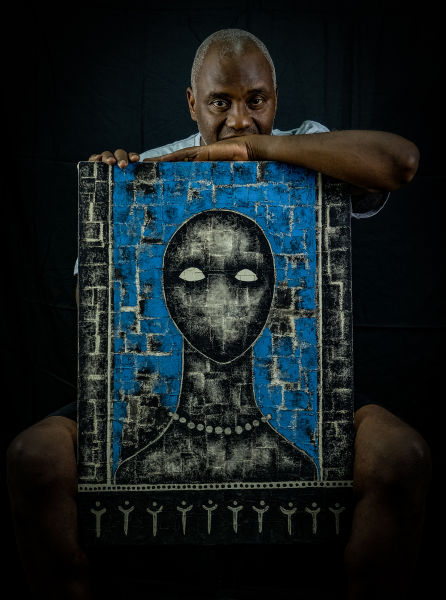
“We must fight for a measure of freedom at every moment in order to turn the future into a reality and not a utopia.” ArtReview recently interviewed Cuban artist Roberto Diago (Juan Roberto Diago Durruthy) who represents Cuba at the 2026 Venice Biennale.
ArtReview writes: [We] sent a questionnaire to artists and curators exhibiting in and curating the various national pavilions of the 2026 Venice Biennale, the responses to which will be published daily in the leadup to and during the Venice Biennale, which runs from 9 May through 22 November. Juan Roberto Diago Durruthy is representing Cuba; the pavilion is at Il Giardino Bianco – Art Space. Here are excerpts from the interview.
ArtReview: Tell ArtReview what you plan to exhibit in Venice. What has influenced or inspired you?
Juan Roberto Diago Durruthy I will be exhibiting an installation entitled Hombres Libres (Free Men), in which I try to reflect on humanity’s resilience in the face of the injustices of the past and present.
AR In what ways (if at all) does your work relate to the theme of the Biennale exhibition, In Minor Keys?
JRDD I think there is a connection, as my work has long focused on the violent trauma of the dehumanisation of men taken from their lands, brought to a new world where they rebuilt their lives. [. . .]
AR What role does a national pavilion play at a time of increasing confrontational nationalisms? Is it about expressing difference or commonality?
JRDD Each national pavilion adds its voice to the great human concert of life through art. It is one of those moments when, through artistic creation, the world engages in peaceful dialogue. It is a place where a wide variety of creations give shape to freedom.
AR Who, for you, is the most important artist (in any discipline) that your country has produced?
JRDD Among the many artists my country has produced, there is one who always inspires me: the poet Juan Francisco Manzano. A slave who, through his creative spirit, was able to break free from the chains of slavery, leaving future generations an example of resilience and a love of life through his artistic work.
AR What is something you want people to know about your nation that they might not know already?
JRDD I would like people to learn about the history of a country that has had to struggle from the time of conquests right up to the present day, where we must fight for a measure of freedom at every moment in order to turn the future into a reality and not a utopia.
AR Given that you are exhibiting in a national pavilion, is there something (a quality or an issue or attitude) that distinguishes the art of that nation from that of others? That makes it particular? Are there specific contexts that it responds to? Or do you think that art is a universal language that goes beyond social, political or geographic boundaries?
JRDD I believe that the art of my country is different from many other places in the world because of its open-minded attitude, free from prejudice, trends or market forces; everything is absorbed, from academic training to the influence of popular culture. I believe that Cuban art has a voice of its own despite the constraints of the world, and although the language of art may be universal, specifically in Cuba the general education of its people sets it apart and makes it unique in all artistic expressions, allowing all the arts to flourish to their fullest potential. [. . .]
For full interview, see https://artreview.com/juan-roberto-diago-durruthy-on-representing-cuba-at-the-61st-venice-biennale/
Also see www.diagoart.com
“We must fight for a measure of freedom at every moment in order to turn the future into a reality and not a utopia.” ArtReview recently interviewed Cuban artist Roberto Diago (Juan Roberto Diago Durruthy) who represents Cuba at the 2026 Venice Biennale. ArtReview writes: [We] sent a questionnaire to artists and curators exhibiting in and