Systems thinking invites us to move beyond the old assumption that complexity belongs only to science or that scientific methods alone can solve it. Increasingly, we see that creativity, when brought into dialogue with other disciplines, can illuminate complexity in ways that rigid frameworks cannot. Such an approach offers a systems perspective, one that cultivates innovation, resilience and the capacity for meaningful change.
I was reminded of this while reflecting on the recent proliferation of jazz festivals and events in the Western Cape. As a jazz enthusiast, I have spent much of the past two decades in spaces that keep South African jazz alive; spaces that celebrate our artistic and cultural inheritance while sharing it with the world.
Over that time, I have also witnessed how the Covid-19 pandemic disrupted the arts sector: careers stalled, livelihoods evaporated and projects that artists and their collaborators had risked everything to realise were suddenly thrown into uncertainty.
Against that backdrop, the resurgence of the Cape Town International Jazz Festival (CTIJF) has been remarkable. After attending the 2025 edition, I was struck by how decisively the festival appeared to have rebounded, rebuilding itself with renewed purpose. It was therefore surprising to learn that the Montreux Jazz Festival would stage an event in Franschhoek on the very same weekend. Within the same province, no less.
At first glance the development seemed less like collaboration and more like competition, especially in a landscape where institutions such as the South African Cultural Observatory have long advocated for clustering and cooperation within the creative economy.
Yet, I resisted the instinct to panic. Alarmism rarely clarifies anything. Instead, I tried to separate the noise from the detail.
In fact, this moment may ultimately prove beneficial for the jazz community. And particularly for artists, most of whom are collaborators by instinct. With two major festivals occurring within close geographic proximity, musicians may find themselves sharing stages, audiences and opportunities in a region that already enjoys considerable global exposure.
If funders fail to imagine a sustainable jazz ecosystem grounded in collaboration and clustering, artists themselves may show how it can be done. They can bridge the short distance between the festivals, forming bands that perform across both platforms and strengthening the broader musical ecosystem in the process.
What once seemed like a threat could, in practice, demonstrate the depth of resources available to South Africa’s creative economy. Early fears suggested that one festival might displace the other; especially given the international prestige associated with Montreux. But those anxieties now appear overstated.
If anything, the CTIJF has demonstrated its resilience beyond doubt.
Part of that resilience is personal for me. As someone who admires the founders of many of this country’s festivals, the CTIJF has long served as a beacon; a reminder of what South Africans can achieve when local excellence meets global collaboration. In 2012, I had the privilege of completing a period of work experience at the CTIJF, an experience that proved quietly transformative.
What I remember most vividly was the culture of distributed leadership. Senior figures within the organisation could be found eating the same meals in the same canteen as the riggers and labourers assembling the stages. It was a small but powerful gesture. One that affirmed the dignity of every person contributing to the festival’s success. In that moment, one glimpsed the democratic potential of inclusive systems.
Those impressions were reinforced by brief encounters with the late visionary pioneer Rasheed Lombard, whose dream helped bring the festival into being and sustain it through countless challenges. Today, that legacy continues under the astute leadership of Georgia Jones and Carolyn Savage, whose stewardship ensures that the festival remains both a cultural landmark and a source of inspiration for many of us working in the arts.
The broader funding ecosystem for the arts in South Africa often follows a familiar script: the government provides short-term seed funding, after which the private sector is expected to step in and sustain the initiative. Yet this expectation sits uneasily alongside reports that vast private-sector cash reserves remain largely uninvested.
Curiously, in the case of CTIJF, many financial institutions (beneficiaries of South Africa’s highly financialised economy) have chosen to support newer jazz programmes while withholding support from the very festival that has done the most to nurture the genre and its artists over the longest period.
And yet the festival endures.
If anything, the recent explosion of jazz gatherings around it may only strengthen its position. Clustering, whether intentional or accidental, has the potential to reinforce the networks that sustain artistic practice. In that sense, what initially appeared as rivalry might ultimately become something more generative: a moment that draws the jazz community closer together and reaffirms the resilience of one of Africa’s most important cultural institutions.
I look forward to making the journey from East London to Cape Town to attend the Cape Town International Jazz Festival once again when it returns from March 27 to 28.
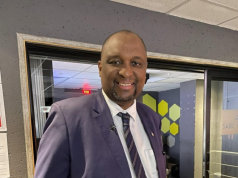
Papama Mnqandi is an Arts Innovator and young Arts Festival Manager based in the Eastern Cape province. He writes in his personal capacity
As two major jazz festivals converge in the Western Cape, what seems like competition may reveal a deeper story of collaboration, resilience and creative possibility