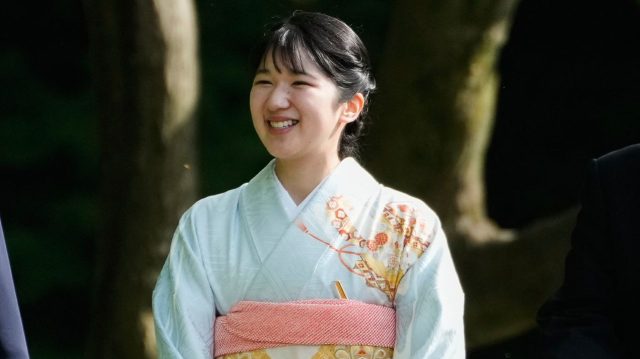
Japan stands torn between tradition and the future, as Princess Aiko, the only child of Emperor Naruhito, finds herself at the center of a growing movement to change the country’s patriarchal rules of royal succession. Treated like a pop star by many in Japan, the 24-year-old princess’s rocketing popularity comes at a fraught time for the royal family and Japan’s traditionally patriarchal society. As Japan’s shrinking royal family forces uncomfortable questions about the future of one of the world’s oldest monarchical lines, is Tokyo ready for change?
‘Rising prestige’ and a reopened debate
After having “impressed with her maturity and clear sense of duty” during her first state visit to Laos last month, Aiko’s “huge popularity” domestically will only further raise questions about why she is barred from taking on a “more prominent royal role going forward,” said Tatler. Questions about Aiko’s inability to assume her father’s throne come amid Japan’s “so-called ‘succession crisis,’” where “strict, male-only succession laws” established in 1947 mean that Prince Hisahito of Akishino, Aiko’s first cousin, is often “touted as the future of the Japanese royal family.”
Aiko’s “rising prestige” has “reopened the debate” about male-only royal succession in Japan’s “patriarchal and traditionalist society,” said El País. That debate comes after Japan “broke with gender prejudices” by electing conservative Sanae Takaichi as its first woman prime minister in October. There is also “strong public support” for the notion that Aiko, or “any other woman in the future,” could be made royal successor, which has led to a grassroots effort to raise the issue.
Cartoonist Yoshinori Kobayashi has authored comic books pushing for a rule change, which “supporters keep sending to parliamentarians” to raise the issue, said The Associated Press. Other advocates have “set up YouTube channels and distributed leaflets.” But while there is public support for updating the succession rules, “conservative lawmakers,” including Takaichi, “oppose the change.”
‘Kicking the can down the road’
Even members of Japan’s royal family acknowledge the monarchy’s dwindling numbers and clout. “Nothing can be done under the current system,” said Crown Prince Akishino, 60, to the AP. “I think all we can do right now is to scale back our official duties.”
Japan’s royal succession debate has gone on “for decades,” particularly after a 2005 government panel recommended the crown be passed to the oldest child “regardless of their sex,” said the Japan Times. But while that recommendation “appeared to pave the way” for Aiko’s “rise to the Chrysanthemum Throne,” the birth of Prince Hisahito the following year “silenced the debate.” Following the arrival of a young, male heir, Japanese politicians are “kicking the can down the road” when it comes to changing the rules, said Kenneth Ruoff, the director of Portland State University’s Center for Japanese Studies, to the Japan Times.
Late last year, the United Nations’ Human Rights Committee on the Elimination of Discrimination against Women criticized Japan’s male-only rules of succession, prompting the Japanese government to withhold its voluntary funds for the commission. “The right to succeed the Imperial Throne is not included among basic human rights,” said Japan Foreign Ministry spokesperson Toshihiro Kitamura in a statement. “Therefore, it does not constitute as discrimination against women.”
Hisahito is “likely to become emperor one day,” said Al Jazeera. “After him, however, there is nobody left” unless the succession rules change.
Fresh off her first solo state visit to Laos, Princess Aiko has become the face of a Japanese royal family facing 21st-century obsolescence