
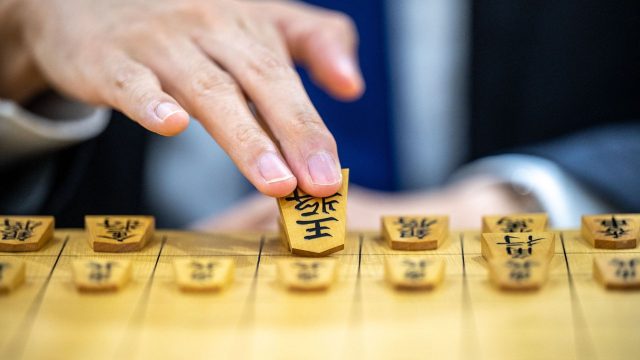
Trailblazer Tomoka Nishiyama has become the first female kishi – a professional player of shogi, a Japanese board game often compared to chess.
Shogi has two professional classifications: kishi, which is, in theory, open to women as well as men, and joryū kishi, which is for women only. But, since the Japanese Shogi Association was established in 1924, every single kishi player has been a man. Nishiyama has the honour of “breaking a century-old ceiling” in an overwhelmingly “male-dominated game”, said The Japan Times.
‘Stifling’ maleness
On an 81-square shogi board, there are wooden counters that can be played in a similar way to the rooks, kings, bishops, knights and pawns of chess, but there are additional complexities. Players also control “jewels”, “lancers” and “silver generals”, and nearly all captured pieces “can be redeployed to attack their former king”, said The Times.
Professional shogi matches bring together “some of the country’s most brilliant minds in subtle contests of technique, strategy and intuition” but there is “an atmosphere of stifling maleness”. For years, it’s simply been assumed that women are “intellectually incapable” of competing at the highest levels. Nishiyama’s achievement finally puts paid to that.
Not that her rise to the top was easy: she had encountered “repeated setbacks” in her journey to kishi, said The Japan Times. Her first effort, in 2021, fell short and, in 2025, she narrowly lost another bid, defeated 2-3 in an examination in which candidates must win three matches against five professionals. She finally made it under a new ruling that allows five-time winners of the “prestigious” women’s Hakurei title to qualify for professional status – which she formally accepted this week.
Shoulders of giants
All this follows a breakthrough for joryū kishi players last December, when the Japanese Shogi Association overturned a rule it had introduced eight months earlier that barred new mothers and women in the last six weeks of pregnancy from title matches.
It was a measure reportedly intended to protect women’s health but, when Kana Fukuma, who once held six of the eight major women’s championship titles, forfeited a title under this rule, she protested loudly. “I was forced to choose between titles and giving birth,” she told Japanese media. The rule was eventually rescinded but shogi officials bear “a heavy responsibility for the confusion it caused”, said The Mainichi.
After confirming her kishi status, Nishiyama thanked the senior female players who “have always been kind to me” and “taught me about the difficulties of being a woman in shogi”. I’m aware that their history “is what has allowed me to be where I am today”.
Tomoka Nishiyama breaks through male-dominated shogi ceiling