
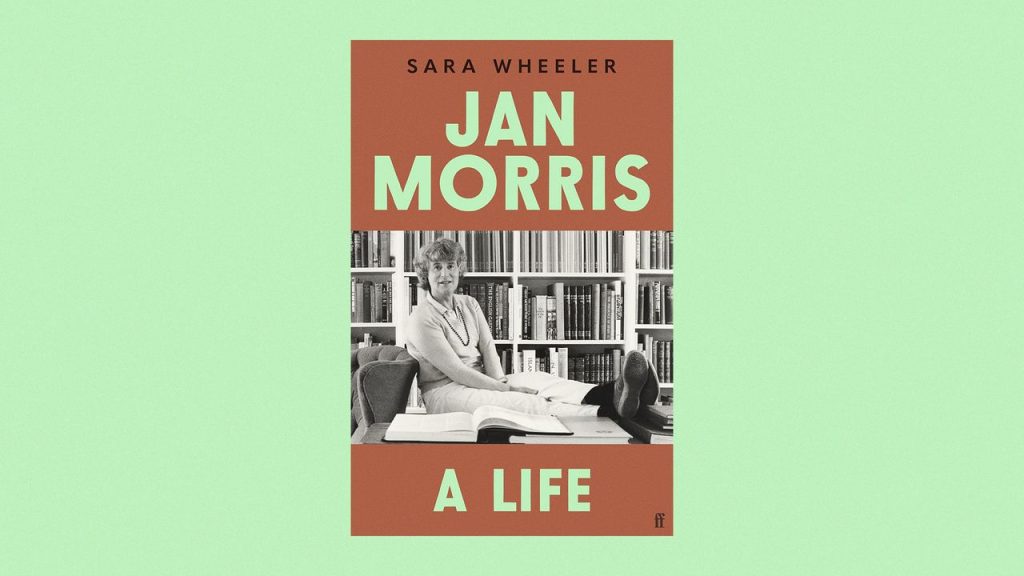
Jan Morris’ life “seems impossibly rich”, said Charlie Gilmour in The Guardian. As James Morris, he experienced the world first from inside the British elite, “with all the opportunities that entailed”. After winning a scholarship to Lancing College, he joined the Army, and was sent on “plum postwar deployments to Venice and Trieste.
Oxford followed, then The Times, where he became a star foreign correspondent. Morris scooped the world in 1953 with the news of the British expedition’s conquest of Everest. He interviewed Che Guevara, and watched Adolf Eichmann “trembling” in the dock. He wrote a great many books – travel, history, biography, memoir – which were mainly popular and often critically acclaimed. “And, over the next two decades, he transitioned from James to Jan.” But whether James or Jan, Morris was, above all, a writer. “It will make an excellent and not unentertaining piece of memoir!” she wrote, after her vaginoplasty at a clinic in Casablanca in 1972. Sara Wheeler’s biography is “sensitive, beautifully written and masterly”, and makes space for all the complexities.
“In her later years, Morris liked to say kindness was the most important thing in life,” said Justin Marozzi in The Sunday Times. “Yet kindness is not the quality that lingers most in the mind after reading this stunning portrait” – certainly not on the evidence of four of Morris’ children. “Monumental selfishness would be closer to the mark.” (Her eldest son, Mark, called her “a narcissist in her inability to empathise”.) “The rock” to which Jan always returned, from her “ego-driven peregrinations”, was her partner of 70 years, Elizabeth. What it all cost Elizabeth, Wheeler writes, “no one can know”. Wheeler, an admired travel writer, was “the perfect choice to write this biography … she is as fierce and flinty as her subject”, and takes no prisoners. “Why did she dress like a Walmart version of the Queen?” she asks.
Morris “was an elusive, self-contradictory person who makes a terrific subject for a biography”, said Lucy Hughes-Hallett in The New Statesman: a woman who was once a man; a brilliant writer who was also a shamelessly lazy hack; a loyal friend who was an “aloof and unhelpful parent”. Wheeler, “brisk and sardonic”, lays out the facts as she finds them. She has exactly the right blend of sympathy and critical detachment, said Piers Brendon in Literary Review. And “she does not pretend to omniscience, leaving some things up in the air”, such as whether Morris’ transition gave her fulfilment. “Seldom have I read such an enthralling biography.”
Sara Wheeler paints a ‘masterly’ portrait of the complex trans pioneer