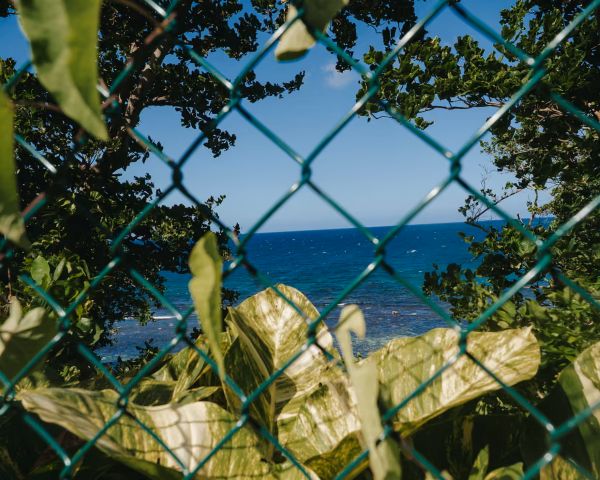
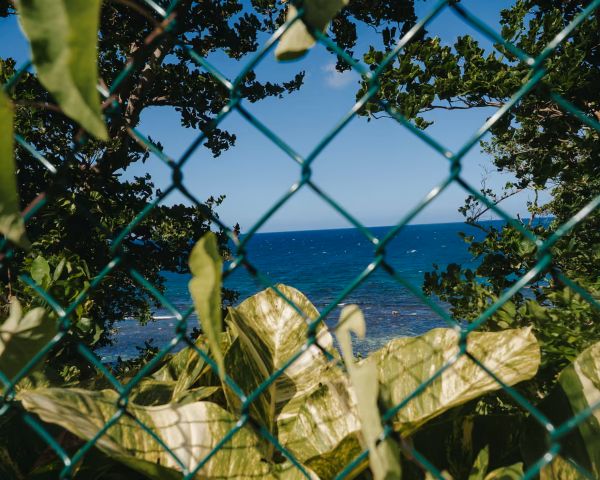
This topic is especially close to my heart, as I see this in the context of the destruction of shoreline and fragile coastal ecosystems due to privatization in Puerto Rico. In Kingston, Jamaica, Natricia Duncan and Anthony Lugg report on the struggle for Jamaican beach access: “Activists are challenging colonial-era law and demanding ‘free, legal, unfettered, forever rights’ to use beaches. [‘We shouldn’t be forced to fight for what is already ours’].” For full article, see The Guardian.
Campaigners in Jamaica are heading to court next week to try to prevent the government from cutting off access to more of their beaches.
They argue that ceding their shorelines to big hotel chains enriches private investors and benefits tourists and outsiders while depriving Jamaicans who depend on the sea for their livelihoods, leisure and health.
The legal battle is being led by the Jamaica Beach Birthright Environmental Movement (Jabbem), created in 2020 after community members clashed with police in violent protests over the closure of Mammee Bay, in the popular tourist parish of St Ann.
Five court cases will begin later this month to try to prevent the privatisation of Mammee Bay and Little Dunn’s River in St Ann, the Blue Lagoon in the north-eastern coastal parish of Portland, Bob Marley beach in St Andrew, and Flankers/Providence beach in the tourism capital of Montego Bay. [. . .]
Matthew Samuda,the minister of environment and climate change, said that while the “idea of access needs to be explored”, the governmenthad to consider how it could convert Jamaica’s natural assets into “economic benefit that helps you, me, every single citizen, the poorest among us, the richest among us”.
He said between 112,000 and 116,000 Jamaicans were employed in the tourism sector, and an estimated 300,000 to 350,000 – more than 10% of the population – benefited through connected industries such as farming, transportation, craft vending and electrical engineering.
“Recent approvals for new developments … especially where public land was involved in the development, have insisted that developers carve out corridors to the sea,” Samuda said. “Jamaica has the commitment of its government to ensure that its natural assets also benefit its citizens.”
In March the prime minister, Andrew Holness, proposed a beach access and management policy, which promises to modernise the legislation and increase access. But campaigners say the policy still allows unacceptable restrictions.
Taylor said: “What that policy is trying to say is that Jamaicans will not have fundamental rights. They will have only qualified rights. And that qualified right will be set by a licence that a developer will have for the beach.” [. . .]
For full article, see https://www.theguardian.com/news/2026/jun/14/jamaica-beach-access-court-fight-privatisation-coast
[Photograph: Destinee Condison/The Guardian: Little Dunn’s River in St Ann is the subject of one of five court cases.]
This topic is especially close to my heart, as I see this in the context of the destruction of shoreline and fragile coastal ecosystems due to privatization in Puerto Rico. In Kingston, Jamaica, Natricia Duncan and Anthony Lugg report on the struggle for Jamaican beach access: “Activists are challenging colonial-era law and demanding ‘free, legal,