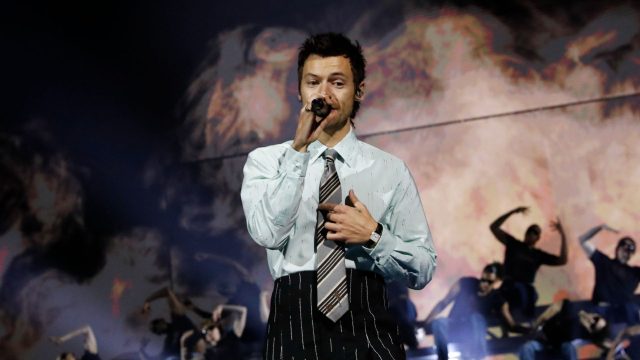
The House of Lords has “long been derided as a stuffy relic of the past”, but its dress code is moving towards the modern era, said Sammy Gecsoyler in The Guardian: men are no longer required to wear a tie in the “storied” chamber.
Long a “knotty item” of menswear, the Covid era had already dealt a blow to this one-time staple of professional dress. Are we witnessing the definitive death of the tie?
Feigning maturity
The updated House of Lords rule book, signed off by peers last week, states that members are expected to wear “business attire” when debating or voting, but can decide whether to wear a necktie or not.
“The news does seem to place another nail into the coffin of the neck tie itself”, wrote Joseph Bullmore in The Sunday Times. “The tie used to be what the boss wore; the symbol of power” but now it’s “almost solely” a gesture of subservience or service: “the graduate at the job interview, feigning at maturity; the doting waiter at the Mayfair members’ club”. Meanwhile, a photo taken at the 2022 G7 summit showed the “collected leaders of the world” with “their collars gaping louchely open, like a parade of ushers come 10pm at a Surrey wedding”.
Sales of ties have decreased by 7.5% year-on-year over the past five years, according to the Observatory of Economic Complexity. However, the picture is less bleak than it may appear: second-hand clothing platform Depop reported a 42% rise in searches for ties in the six months to February.
“I don’t think ties are completely dead, they’re just having a down moment,” Guy Hills, a fashion photographer and owner of London clothing shop Dashing Tweed, told The Guardian. For a younger generation “more interested in sustainability and proper clothing”, he said, the tie is ripe for a comeback.
Sign of rebellion
Indeed, successive obituaries for the necktie have proved “premature”, said The Art of Manliness: the necktie has “kept on beating the odds”.
A previous generation saw the tie as an “office relic” and traded it in for the freedom of “open collars and elevated loungewear”, but for younger people it has become “a sign of rebellion”, wrote Shane C. Kurup on Country & Town House.
Inspired by the experimental styles of celebrity aficionados like Harry Styles, ties with “regimental stripes, natty foulards and 80s abstract-print silks” are “being worn excessively long, a touch short, layered up, undone, tucked in or backwards”. Dior, Hermès, and Saint Laurent all featured neckties in their Spring 2026 collections.
Menswear “tends to move in cycles” and after “periods of looseness, where comfort becomes the dominant language of getting dressed”, there’s “a pull back toward structure”, wrote Ryan Fidell on the Vintage Tie Shop. After a decade that “leaned hard into casual”, the tie is “interesting again”.
The House of Lords has relaxed its rules on the neckwear, in a blow for sartorial traditionalists