
There are three “all-time difficult gigs”, said Jonathan Maitland in The Spectator: prime minister, England football manager, and director-general of the BBC – a job that may just be “The Most Impossible In The World”. And unlike the other two, there are no “potential big wins”, only “potential catastrophes”.
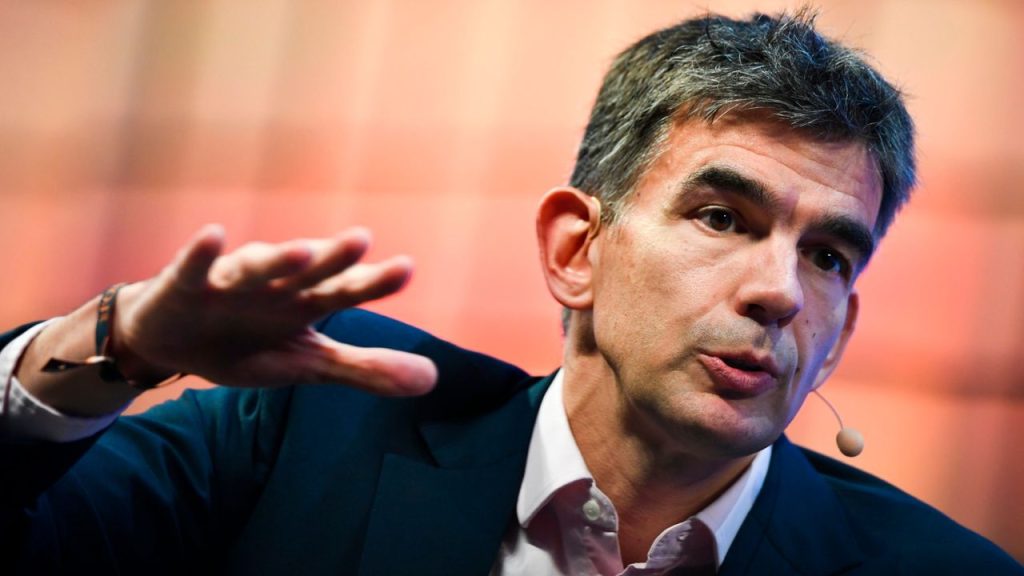
Now we know the next person to be handed the poisoned chalice: Matt Brittin. The former president of Google in Europe, the Middle East and Africa, as well as a former Great Britain rowing bronze medallist, is set to take the battered reins following Tim Davie’s resignation. Will Brittin’s reign “end with a similar catastrophe?”
‘Baffling to the point of idiocy’
Just what the BBC doesn’t need, another leftie, said Robin Aitken in The Telegraph. Brittin, 57, was appointed non-executive director of The Guardian Media Group last year. Twenty years ago, he was director of strategy and digital at The Mirror. You don’t end up in senior positions at Britain’s leftist publications without sharing “left-wing sympathies yourself”. Given that government-commissioned research by Ipsos found last year that 52% of people don’t trust the BBC to be impartial, and most of those will be “right-of-centre voters”, that should’ve “counted heavily against him”.
The appointment is “baffling to the point of idiocy”, said Jawad Iqbal in The Times. The BBC is “besieged” by “seemingly endless rows” about impartiality and bias, not to mention Donald Trump’s multibillion-dollar lawsuit and its “recent howler”, broadcasting the N-word during coverage of the Baftas. The “root cause” of every crisis is its journalism and programming – things Brittin “knows diddly squat about”.
Yet the board seems to think the answer to this “calamitous” run is to give control to a “tech bro” who, just like Davie, has “no relevant broadcasting experience”. The BBC needs someone who can “reconnect it to its core values”, and argue its case for continued public funding, yet Brittin is a “product of the morality-free, algorithm-obsessed world of the tech giants”. “What could possibly go wrong, apart from everything?”
Inspirational team leader who can ‘manage complexity’
But people within Google have “only good things to say about Brittin”, said the BBC’s culture and media editor Katie Razzall. They say he’s an “inspirational leader and a great team player”, who commands loyalty. They had “no concerns” about his lack of editorial or broadcasting experience.
And in fairness, Brittin always seems “positive and cheerful” – certainly “less arrogant” than the stereotypical tech bro, said Politico’s executive editor Anne McElvoy in The Independent. That might be one reason he impressed the BBC’s board, “browbeaten after an annus horribilis”. He is an “experienced team leader who can manage complexity”, and as a former champion rower, “naturally competitive and steely”. But the challenges – tying down the terms of the Royal Charter, working with streaming platforms like YouTube without “ending up trapped under the wheels of big tech interests” – aren’t abating. Brittin won the job from a “depleted field” from which “many industry players absented themselves”. As one leading broadcast figure put it: “the pay is not that good for the blood pressure damage.”
But these are also “seismic times for global media”, said Lionel Barber in the Financial Times. With Larry and David Ellison seizing control of CBS News, CNN and a slice of TikTok in the US, while tech firms spend billions on data centres, a “new age of disruption is upon us”. Brittin’s appointment “suggests the penny has dropped” in the UK. He understands how technology has “transformed media consumption”. Squabbles over the TV licence fee or the BBC’s perceived elitism “miss the bigger picture”. Russia, China and Maga ideologues are “spreading disinformation to undermine confidence in British institutions and democracy”. Yet the BBC, the world’s biggest and most recognised public service broadcaster, has suffered a 40% cut in real terms in its budget since 2010. Its governance needs a “radical overhaul”. Muddling through is “no longer an option”.
Former regional boss of Google and GB rowing bronze medallist chosen as new director general, but lack of journalism experience ruffles feathers