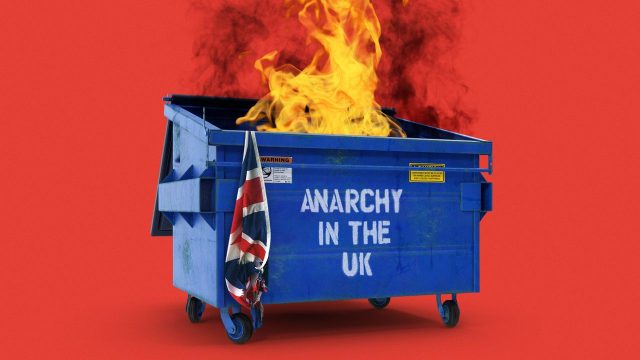
Is Britain ungovernable? That is the question many are asking after a dramatic week in Westminster that potentially fired the starting gun on a Labour leadership race that could give the UK its seventh prime minister in a decade.
This latest political “merry-go-round has prompted soul-searching”, said Charlie Cooper on Politico. A G7 economy and “former global hegemon”, Britain is “increasingly a picture of political instability and economic stagnation”.
What did the commentators say?
Keir Starmer came into office promising to be honest with voters about “how tough this will be. And frankly, things will get worse before they get better”, said Cooper. But less than two years on, it is the parties on the extremes “offering quick and direct solutions” – such as Reform’s pledge to slash immigration or the Greens with promises of wealth taxes – “that now win a hearing with voters”.
With few in parliament able to “combine policy nous, real-world experience and the ability to sell a vision and convey hard truths”, the “constant churn” among PMs is “an indictment of leadership in the country”, said Tej Parikh in the Financial Times. “In a democracy, politics and policies are a reflection of the public too”, but “Britons struggle” to accept some necessary “trade-offs”.
Ending the pension “triple lock” is just one example of this. Throw in rising “expectations of government”, the electorate’s lack of patience and the declining “calibre of public discourse” and “it is little surprise Britain gets cakeist and myopic leaders, who are low on reform and high on easy answers”.
The electorate is “furiously disillusioned and disappointed” but the hard truth is that this “omnicrisis” of low productivity, a housing shortage, social care strain, welfare reform and ballooning national debt is not “easy to answer”, said Isabel Hardman in The i Paper.
“Failing to answer” these questions “leaves Britain hobbled in the long-term” and leaves voters feeling “let down by the politicians who they elect and pay to be honest and take the difficult decisions on their behalf”. Doing something about this would require “a leader who doesn’t care about social media storms or polling fluctuations or the complaints of focus groups” and is able to “switch off all that noise and fixate on the real problems”.
What next?
For too many people, the change they voted for in 2024 and repeatedly tell pollsters and focus groups they want “hasn’t come fast enough”, said TUC general secretary Paul Nowak in The Mirror. It “hasn’t been all doom and gloom” but “the good work the government has done” – renationalising the railways, ending the two-child benefit cap and upgrading workers’ rights – “has been overshadowed by too many self-inflicted mistakes and a failure to shout proudly about those achievements”.
“Anyone who wants to replace Starmer has to start by accepting that he has done good things – just not enough and not at scale”, said Aditya Chakrabortty in The Guardian. Then they must “turn and face the country and tell us what they would do better”.
A “deep and justified pessimism” is gripping the UK. The feeling is that “tomorrow will be worse than today, that our children will not enjoy the same standards of living that we have done. That is what any Labour leadership contest must address.”
Many voters have a “palpable sense that the system is rigged against them”, said Nowak. Whoever is in No. 10 “today, tomorrow, in five years or in 10”, they “will have to fix the broken social contract”.
Difficult trade-offs ahead require a leader who can ‘switch off all the noise and fixate on the real problems’