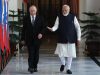
The spectre of Donald Trump looms large over the first state visit by Vladimir Putin to India since Russia’s invasion of Ukraine began.
Putin was met on arrival with a warm embrace by Narendra Modi and the two leaders are due to discuss deals over oil, arms, working visas and strengthened diplomatic ties between the two countries.
Following an opening press conference, two things “stood out”, said the BBC: first, a “conspicuous display of mutual respect”; and second, an “absence of any blockbuster announcement”.
The “need” for both countries right now is to boost “bilateral trade”, as Russia is “reeling” from Western sanctions and India is “facing 50% tariffs from Washington”.
What did the commentators say?
Modi continues to walk a diplomatic “tightrope” between Russia and the US, said Foreign Policy. Putin’s two-day visit is a stern “test” of how well India can “balance ties” with the two countries.
The summit comes at a “critical juncture” for both Russia and India, mostly due to the looming presence of the US, said The Guardian. Trump’s re-election has “upended years of closely nurtured US-India relations”, causing disruption with “inflammatory rhetoric” and “punishing” import tariffs. As a result, Delhi has been thrown “into a tailspin”.
Putin, too, is not in Trump’s good books. He has rejected the latest US-proposed peace plan for Ukraine, and is looking to bolster Russia’s recent battlefield advances that have “strengthened his hand” with diplomatic gains.
“The question of oil also looms large.” Modi has “insisted that India would continue to buy Russian oil” – Moscow supplies over 35% of India’s crude oil imports, compared to only around 2% before the war in Ukraine began. However, heavy US-imposed sanctions have led to a “notable slowdown” in this supply to appease Trump, not to mention India having “agreed to import more US oil and gas”.
“India is rolling out the red carpet for the Russian president”, undermining global efforts to cast him as an “international pariah”, said Bloomberg. India, though still wanting to maintain economic ties with the US, is looking to diversify and “gain more access to the Russian market”. Most likely, this week could see an agreement reached over the “shipment of marine products and agricultural goods”, both of which would be in India’s favour.
Russia’s interests are clear too. India, with a population of around 1.5 billion and the “fastest growing major economy” in the world, is a “hugely attractive market” for Russian goods and resources, said Steve Rosenberg, the BBC’s Russia editor.
Putin’s enthusiasm is plentiful. One “priority” is weapons sales, with reported deals on exporting “state-of-the-art Russian fighter jets and air defence systems”. Due to the war in Ukraine, Russia has also been hit with a labour shortage, and India presents itself as a “valuable source of skilled workers”. Most importantly, the main benefit is geopolitical: the Kremlin “enjoys demonstrating that Western efforts to isolate it over the war in Ukraine have failed”.
What next?
Any progression towards a peace deal in Ukraine would “give India more breathing room” with the US than it had six months ago. Then, Trump’s “ire” towards Modi “ran high” and he imposed additional 25% tariffs on the country, said The Wall Street Journal.
Putin is expected to offer “Russia’s latest arms” to “bolster the long-standing relationship” between them. Even if this were to fall through, the mere prospect of a summit shows that the relationship is on an “upswing”, according to one expert.
The Indian leader is walking a ‘tightrope’ between Russia and the United States