What happened
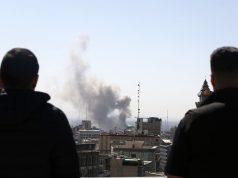
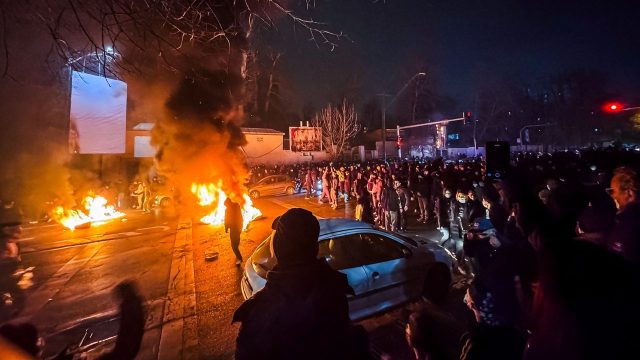
Iranian security forces massacred thousands of protesters this week in an attempt to quell a surging nationwide uprising, as President Trump vowed to defend the demonstrators with “strong action” against the country’s theocratic rulers. The regime said some 3,000 people have been killed in the demonstrations, which began in late December as an economic protest quickly broadened into a general uprising advocating the fall of the ayatollahs. Witnesses and analysts say the true death toll is likely many times higher. Videos taken by protesters show security forces firing again and again as demonstrators chant “Death to the dictator!” In an effort to prevent such images from getting out, authorities cut off internet and cellphone service for days, and guards went house to house to confiscate Starlink satellite internet equipment. The regime also sent spy drones cruising down streets to detect shouts of protest slogans. Doctors said the security forces appeared to be aiming at people’s heads, and one ophthalmologist reported seeing hundreds of patients shot in the eye. “The streets are full of blood,” a Tehran resident told the BBC. “They’re taking away bodies in trucks.”
Despite Trump’s threat that the regime would “pay a big price” if any of the estimated 20,000 protesters arrested were executed, Iran sentenced Erfan Soltani, 26, to death after a rapid trial and prepared to hang him. The Pentagon briefed the president on potential U.S. military responses and evacuated nonessential personnel from a U.S. base in Qatar. “Help is on its way,” Trump told Iranians. “Save the names of the killers and abusers. They will pay a big price.” Iran’s parliament speaker, Mohammad Bagher Qalibaf, said if the U.S. attacks, Israel and “all American military centers, bases, and ships in the region will be our legitimate targets.”
What the columnists said
“Iran is drowning in blood,” said Pegah Banihashemi in the Chicago Tribune. Iranians had already been suffering before the rial’s plunge in value sparked this uprising. Given that the people’s “economic desperation” comes on top of “political suffocation and religious coercion,” it’s no wonder they are bravely putting their bodies on the line. The scenes of this merciless crackdown are like “a knife to the heart” for Iranians abroad like me, especially since “many of the dead and detained are teenagers.” Videos show rows of bodies lined up outside hospitals, desperate families searching for their loved ones, and “mothers screaming, crying, calling the names of children who will never answer.”
This “unspeakable massacre” is heartbreaking indeed, said Noah Rothman in National Review. So why no denunciations from the American leftists who were so quick to cry genocide against Israel in Gaza? “What happened to the all-consuming empathy for civilian casualties?” Many Iranians say they feel abandoned by a world that offers
concern but little else.
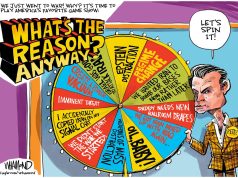
Trump promised to come to their aid, said The Wall Street Journal in an editorial, and it’s clear that the regime has crossed “his red line.” Yet he soon began backtracking, saying that Iranian leaders now “want to negotiate” over the country’s nuclear program. He shouldn’t fall for that ruse. The offer of talks will simply buy the regime time to thoroughly crush the resistance. Trump must “follow through on his vow to intervene”—possibly with targeted air strikes.
That “would be a drastic mistake,” said retired Lt. Gen. Mark Hertling in The Bulwark. Iran’s Arab neighbors, our allies, have been begging the U.S. not to further destabilize the region by pushing Iran into a bloody civil war. Iranians deserve a just government, but “legitimacy cannot be bombed into existence.” And the greatest risk is “not doing too little—but doing something that helps the regime survive.” Even if Trump does want to choose military action, said Jack Detsch in Politico, his list of options is “far more limited than it was even a year ago.” Recent operations in Yemen and Iran have depleted weapons stockpiles, and the Pentagon has deployed major resources not to the Persian Gulf but to the Caribbean to menace Venezuela.
If the regime does fall, what would replace it? asked Sanam Vakil in The Guardian. Protesters have not united behind a feasible alternative. Sporadic chants in support of Reza Pahlavi—the exiled son of the deposed shah who has been urging Iranians to continue their protests—“should not be read as a call for monarchist restoration.” They merely reflect “the absence of credible, organized opposition inside Iran.” If, though, the regime hangs on, it will be paranoid and “increasingly reliant on repression.” Either way, “what comes next is unlikely to be liberalization.”
Demonstrations began in late December as an economic protest