
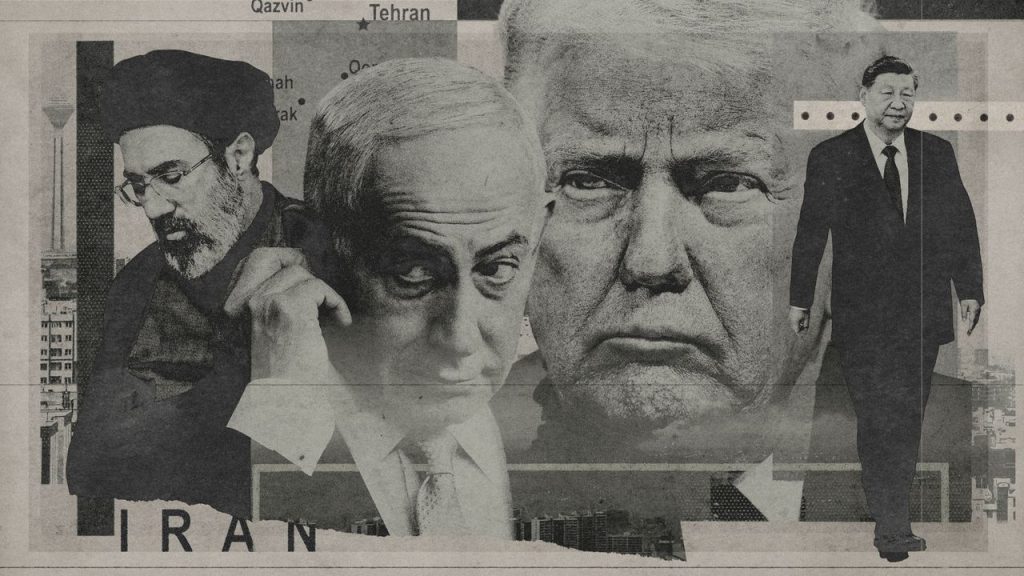
After five weeks of war, Donald Trump has claimed “total and complete victory” over Iran. But Tehran begs to differ: as it accepted the conditional two-week ceasefire, it declared victory, too, saying it had dealt the US a “crushing historic defeat”.
Meanwhile, commentators are pointing to real, quiet wins for both China and Pakistan, whose behind-the-scenes roles in pushing for the ceasefire have increased their global standing.
What did the commentators say?
Benjamin Netanyahu “looks set to be the biggest loser” of the conflict, said The Guardian’s senior international correspondent, Peter Beaumont. Pressuring Trump to agree to his decades-long goal of neutralising Iran has “turned out to be a bust”. The “political consensus” between Israel and the US is “visibly crumbling”, and there’s “domestic fallout” for Netanyahu in the run-up to an election.
Trump has also emerged as a “strategic loser”, said the South China Morning Post. Washington failed to achieve regime change in Tehran, and Iran retained control of the Strait of Hormuz, the conflict’s “most strategic asset”. Meanwhile, the US has used up “sophisticated air-defence missiles” intercepting “far cheaper Iranian drones and projectiles”. Iran’s nuclear programme has survived, along with the “stockpile of enriched uranium” from which it could “potentially produce a viable weapon”, said The Times’ Middle East correspondent, Samer Al-Atrush. That “will not be given up easily”.
Tehran’s blocking of the Strait of Hormuz was a “high-risk” strategy that “paid off”, said DW. It “secured a ceasefire without conceding defeat”, which it “can present as proof that it withstood the US and all its military might”. The Iranian regime “survived, and bought time to try to shape” the phase of negotiations “on more favourable terms”.
In the longer term, it is actually Beijing that most “stands to gain”. America has “moved many military assets to the Middle East to protect shipping”, which “leaves fewer resources for the Indo‑Pacific, where Washington and Beijing compete for influence”. China has also had the chance to present itself “as a responsible global actor”, with its power brokers widely credited with pushing Iran to agree to the ceasefire.
China is “shaping up to be the big winner”, said Roger Boyes, The Times’ diplomatic editor. Unlike the US, it expected Iran to seize the strait and “amassed large oil reserves”, making itself “more resilient” to an energy crisis. “As a significant exporter” of other goods, it was still initially “hit hard” by the strait’s closure but then the Islamic Revolutionary Guard Corps ordered that China-bound vessels could pass through “toll-free”.
Pakistan’s credentials have been burnished, too. Its role in brokering the ceasefire was “unexpected” but the Islamabad Accord is the country’s “most consequential diplomatic moment in a decade”, said former UN peacekeeper Anil Raman on NDTV. Capitalising on its good relations with both the US and Iran, Islamabad will “press hard to consolidate” this “return to global relevance”.
What next?
J.D. Vance is due to lead a US delegation in negotiations with Tehran in Pakistan on Friday. The White House said the ceasefire between the US and Iran has created an “opening for a diplomatic solution and long-term peace”.
But the specifics of the terms to be discussed “remain murky”, said the BBC, “as is current state of shipping traffic” through the Strait of Hormuz. Iranian forces have warned that ships would be “destroyed” if they tried to sail through without permission.
China and Pakistan emerge stronger from the 38-day conflict; for the US, Israel and Iran, the picture is more mixed