The call for innovation and preparedness in a multipolar world, highlighted at the recent global edition of the African Public Square open debate, points to a core concern: what resources are needed to make African agency real? This question has been recurring since the decade of independence in the 1960s. African public intellectuals such Thandika Mkandawire, Archie Mafeje, Amilcar Cabral and Kwame Nkrumah have repeatedly concerned themselves about how African societies can act with purpose and autonomy in a global system that has historically limited their choices.
Among others, these public intellectuals have examined the structural forces shaping Africa’s development. Asking how the continent can move from the margins of the global system to a position of strategic agency. Understanding innovation and preparedness in a multipolar world therefore requires grounding these ideas within a broader Pan-African intellectual tradition. At its core, this tradition points to three interconnected pillars: material capabilities, institutional capacity and ideational autonomy. Together, these form the basis for exercising African agency in an increasingly polarised global order.
Essentially, the idea of African agency refers to the ability of African states and societies to shape their own development trajectories rather than simply responding to external pressures or constraints. Yet the pursuit of agency has historically been complicated by Africa’s integration into the unequal global economy under exploitative institutional arrangements. Accordingly, the roots of this structural inequality lay in the historical dynamics of global capitalism nurtured in colonialism. Many researchers and public intellectuals argue that colonialism incorporated African economies into the world system in a subordinate position, orienting them toward the export of raw materials while limiting their capacity for industrial development. This pattern has persisted into the present postcolonial era/neocolonial era, reinforcing forms of exploitation, disposition and dependency that continuously constrains the policy autonomy of African states.
African economies remain locked into a narrow pattern of specialisation, limiting their ability to exercise real agency. Breaking out of this requires purposeful leadership to drive structural transformation. This involves developing new policy approaches that build productive capacity, diversify economies and deepen regional integration to strengthen Africa’s position in the global economy. In this sense, agency goes beyond political sovereignty, it depends on having the material foundations of economic power.
As global power relations shift toward a more multipolar configuration, the emergence of new economic powers and shifting patterns of trade and investment may expand opportunities for African states but they do not automatically dismantle the structural inequalities embedded within the global system. Agency therefore still depends on the deliberate cultivation of strategic capabilities.
The first dimension of the resources required for exercising effective African agency concerns material capabilities. These include industrial capacity, technological infrastructure, financial resources and the broader economic foundations that enable states to pursue independent development strategies. Without such capabilities, political sovereignty risks becoming largely symbolic, as states that lack productive autonomy often remain dependent on external resourcing. This dependency significantly narrows the policy options available to African governments. For Africa, rebuilding such capacities requires renewed attention to industrial policy, technological upgrading and the strategic management of natural resources. Especially, as the importance of material resources has become even more apparent in the contemporary global economy. Technological changes, digital transformations and the transition toward renewable energy systems are reshaping patterns of (re)production and trade. For African countries, the challenge is not merely to participate in these transformations but to do so in ways that enhance domestic capabilities rather than reinforce dependency.
However, material capabilities alone are insufficient to generate sustained development or strategic autonomy. The translation of economic resources into development outcomes requires effective institutions. In this instance, institutional resources include the capacity of the state to formulate and implement coherent policies, coordinate economic actors and manage complex development processes. In many respects, the institutional question lies at the heart of the current debates about governance and development in Africa in the present disorderly world. Therefore, strengthening institutional capacity requires more than administrative reform. It involves building a professionalised and nationalist oriented bureaucracy, developing long-term planning institutions and creating mechanisms that allow governments to coordinate industrial policy effectively.
Equally, regional institutions play a crucial role in this context of resourcing African agency. Organisations such as the African Union and emerging economic frameworks like the African Continental Free Trade Area represent efforts to enhance collective bargaining power and deepen regional economic integration. By coordinating policies and expanding intra-African trade, such institutions may help create the scale necessary for industrial development. Institutional preparedness is therefore central to the idea of navigating a multipolar world. In an international environment characterised by multiple competing powers, states with strong institutions are better positioned to negotiate partnerships, manage investments and protect long-term national interests.
Perhaps the most subtle yet significant dimension of African agency concerns ideational resources: ideas, conceptual frameworks and intellectual traditions through which societies interpret their circumstances and formulate policy responses. Ideational resources therefore shape the boundaries of political imagination. The ideas policymakers hold about development, governance and global engagement influence how they think, act and the kind of strategies to pursue development at home, while expressing sovereignty at the international level. This insight resonates strongly with contemporary debates about policy ownership and the need for locally grounded knowledge systems. Intellectual institutions—universities, research centers and policy think tanks therefore remain critical components of Africa’s strategic agency infrastructure. This position has been argued by some leading African scholars and various public intellectuals. Hence, the quest for resourcing African agency is inseparable from the struggle for intellectual autonomy.
The current global system is undergoing significant transitions of disorder(s). The relative decline of Western economic dominance, the rise of new economic power bases such as BRICS and the Gulf States is intensifying geopolitical competition, contributing to the emergence of a more multipolar international order. This presents opportunities for African countries to create new strategic engagement for inclusive transformation on the continent. Multiple external partners mean expanded possibilities for trade, investment and technological cooperation. Thus, African states have greater flexibility to diversify their diplomatic and economic relationships, reducing reliance on any single external actor.
However, multipolarity also carries risks of intensifying geopolitical competition. This can lead to new forms of external influence or strategic rivalry on the continent. Without adequate preparation, African states may find themselves navigating complex global dynamics without the institutional or economic capacity to safeguard their interests. Therefore, preparedness becomes an essential strategic diplomacy for coordinating regional policies and robust economic planning necessary to ensure that new opportunities translate into genuine gains for African societies.
Within the emerging disorderly global landscape, innovation becomes a crucial component of African agency. Innovation should be understood as encompassing technological capability, institutional reforms, new policy approaches, and creative forms of regional cooperation. African scholars have long emphasized the importance of context-sensitive policy experimentation. Rather than adopting external models uncritically, governments must adapt policies to local realities and developmental priorities. Also, innovation in this instance involves managing the continent’s abundant natural resources in ways that promote domestic value addition. Similarly, innovation in regional cooperation could strengthen Africa’s collective bargaining position in global negotiations, whether in trade, climate policy, or technology governance. Ultimately, innovation reflects a broader commitment to strategic learning: the ability to adapt to changing global conditions while remaining anchored in local priorities and capacities.
The call for innovation and preparedness in a multipolar world is embedded in reflections on material, institutional, and ideational resources. It encapsulates a rich intellectual tradition within the African political economy that needs (re)visitation for the exercise of effective agency. The urgency of now, is to identify pathways toward greater autonomy: as agency is not given but built. It emerges from the deliberate cultivation of economic capabilities, the strengthening of institutional frameworks, and the development of intellectual traditions capable of interpreting and responding to complex global realities. In a world where power is increasingly diffusing and global dynamics are rapidly shifting, the pursuit of African agency requires both strategic clarity and sustained investment in these foundational resources. Innovation and preparedness are therefore not abstract ideals but practical imperatives for navigating the uncertainties of the raging disorder in the 21st century.

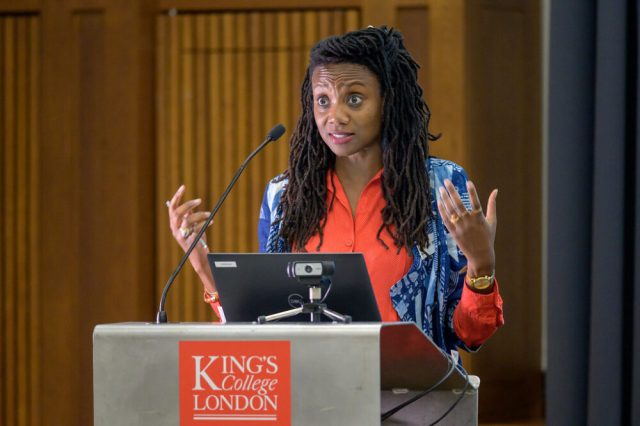
Professor Eka Ekpe is the director of the African Leadership Centre at King’s College London and professor of Development Economics.
African public intellectuals have repeatedly concerned themselves about how African societies can act with purpose and autonomy in a global system that has historically limited their choices