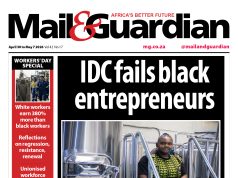

Amid growing calls for an inquiry into the Industrial Development Corporation (IDC), entrepreneurs in distress are speaking about their experiences with the state-owned lender.
The push follows appeals by theNational African Federated Chamber of Commerce and Industry (Nafcoc) and opposition parties for scrutiny of the IDC’s lending practices, after several black-owned companies faced liquidation over loan repayments.
Challenging the IDC’s rationale behind the liquidations, Nafcoc secretary-general Richard Zulu has appealed to the state-owned development finance institution (DFI) to reconsider its aggressive debt collection tactics saying their approach contradicted “the very mandate of a DFI”.
“Among Nafcoc’s proposals is a structured inquiry into recovery practices, transparency on liquidation versus restructuring outcomes and a Developmental Recovery Charter that prioritises rehabilitation over foreclosure,” said Zulu.
Two weeks ago, Trade, Industry and Competition Minister Parks Tau convened a meeting between the IDC and Nafcoc to discuss concerns and several challenges levelled by Nafcoc against the state-owned funding organisation.
Tau’s spokesperson Kaamil Alli confirmed that a meeting had taken place between the two parties but declined to disclose its outcomes.
For some of the entrepreneurs affected by the IDC’s heavy-handed approach to debt collection, the consequences have been deeply personal. Among them is Apiwe Nxusani-Mawela, whose agro-processing and beverage manufacturing company, Brewsters Craft, shut its operations in the wake of the Covid-19 pandemic.
Nxusani-Mawela made an impassioned plea for government intervention to support black-owned businesses under pressure.
“We are just ordinary South Africans seeking to grow our economy and create jobs. All we are asking our government through institutions like the IDC is to provide sufficient funding support and interventions for our businesses to thrive,” she said.
Nxusani-Mawela is South Africa’s first black woman to found a microbrewery and also holds a rare distinction as the first black South African to earn a national diploma in clear fermented beverages.
A microbiologist and trained brewmaster, Nxusani-Mawela spent a decade at SABMiller as a brewer before leaving in 2015 to start her own venture in the craft brewing space.
“I helped a few brands start their own businesses. Two years later, I approached the IDC with a business plan – the aim being to obtain a loan to build our own brewery,” she said.
After due diligence, the IDC approved a R10 million loan to Brewsters Craft, although her request for working capital was declined.
The onset of Covid-19 and the subsequent lockdown dealt a severe blow to the industry, forcing operations to shut down. In January 2021, the IDC transferred her account to its legal department. Assets that had cost about R6.7 million were later sold for R1.3 million.
“When we closed, we had our first group of five students. Unfortunately, they could not complete the training because of us being forced to close down the plant accredited as a training centre,” she said.
“The business had three permanent employees and three who worked on a temporary basis, including some taken on learnership. They all lost their jobs after the shutdown.”
Nxusani-Mawela believed the IDC could have taken a more flexible approach.
“Failure to pay back the loan was not due to the funds [being] misused or mismanaged. The IDC only focused on what the policy says: If someone skips payment for three months, the next thing is legal – without putting into context the impact of Covid to the industry at the time. They box all the entrepreneurs into one, not realising that black entrepreneurs need support beyond just the release of funds. The IDC is not developmental and not patient – putting small businesses at the same level as big ones needing billion rand funds.”
The pressure pushed her to formally challenge her treatment. “I had to lodge a formal complaint because I was being victimised. I felt things could have been handled differently if they were dealing with someone with a different skin colour.”
Nxusani-Mawela also pointed to the broader vulnerability of black entrepreneurs navigating funding systems. “Black-owned businesses have become the most affected at the IDC because we don’t know how to raise issues when under pressure. Black-owned businesses find it so difficult to even get the funding.”
At the height of the crisis, the stakes were personal as well as financial. “I almost lost my house and everything because someone decided that following policy was more important than understanding the context of the country and the world engulfed by the Covid pandemic.”
Despite the setback, she has begun rebuilding her business through partnerships, producing Tolokazi Beer for the UK market after losing her own manufacturing facility.
She has also returned to training, with a renewed focus on skills development and job creation.
“I have been accredited by the QCTO [Quality Council for Trades and Occupations], training over 50 young students.We are now going back to rehiring the same people who lost their jobs during Covid – signalling that things have changed.”
She believes that with greater institutional support, the outcome could have been very different.
“Instead of being patient, the IDC did not react in the best interest of a black woman-owned business … We would have created more jobs and made an impact in the business value chain – from farmers to retailers.”
In another case, businessperson Angus Norkie said his experience with the IDC had been “prolonged and damaging”, leaving his company Nocks Oil (Pty) Ltd “in operational limbo for more than seven years”.
“We experienced administrative injustice, failure of accountability mechanisms and involvement in unlawful conduct,” said Norkie.
Nocks Oil applied in August 2018 for R45 million in funding to establish a fuel and energy business, which it said would create jobs and supply chain opportunities.
“Had the application been approved, 49 full-time jobs would have been immediately created, with further indirect employment opportunities across logistics, services and supply chains.”
Norkie said the business model was commercially sound and supported by prospective clients willing to enter into supply arrangements. However, the application was rejected in March 2019.
“The letter explicitly stated that the IDC had contacted all our prospective clients and that – based on feedback received from those clients – the IDC decided to reject the application.
This assertion was reiterated and confirmed by IDC officials during a meeting held on 18 March 2019.”
Norkie disputes this account, saying his company later confirmed directly with its prospective client that no such engagement had taken place.
“We subsequently obtained email confirmation from an IDC official, which verified that the stated client engagements, relied upon in the rejection letter, were not conducted as claimed.”
This meant that the rejection decision was based on false information and in contravention of the Promotion of Administrative Justice Act, he said.
“We contend that rejecting an application based on demonstrably false grounds, constitutes procedurally unfair and unlawful administrative action – in contravention of basic principles of administrative justice and governance.”
The matter was referred to the Public Protector, which found in favour of the IDC but Norkie said the company has now escalated the dispute to the Constitutional Court. There, “we are seeking final relief and clarity. We hope that constitutional principles of legality, fairness and accountability will be properly applied”.
DFIs must “be held accountable for the accuracy of their decision-making processes”, he added.
“Businesses with genuine job-creation potential must not be left in permanent limbo due to administrative failures. Government cannot credibly champion entrepreneurship, industrialisation and job creation, while allowing institutions tasked with those objectives to act without consequence.”
Tshepo Ramodibe, the spokesperson for the IDC, said that business distress and liquidation are not unique to IDC‑funded businesses, nor are they unusual in a weak economic environment.
“South Africa has experienced elevated levels of business failure in recent years as a result of structural constraints such as electricity supply challenges, logistics disruptions, rising input costs and subdued economic growth. For example, Stats SA recorded 1 534 liquidations in South Africa in 2025.
“Within this environment, the IDC acknowledges that business partners in our portfolio are under pressure,” Ramodibe said, adding that this is reflected in the corporation’s publicly disclosed figures showing elevated portfolio stress in the 2024/25 financial year.
He stressed, however, that liquidation is not the default response to distress. “Importantly, however, liquidation is not the default response to business distress at the IDC. The Corporation distinguishes between stressed, distressed and liquidation cases and actively pursues turnaround, restructuring and recovery interventions where there is a reasonable prospect of viability.”
He said about R2 billion was approved in the past financial year to support distressed firms through restructuring, balance-sheet repair, working capital support and business rescue processes.
“These interventions are often implemented over extended periods, and, in line with our commitment to prevent de-industrialisation, liquidation is considered only once all reasonable recovery options have been exhausted.”
Ramodibe said Nafcoc remains a key stakeholder. “Its objectives align with our mandate to grow black business and transform our economy. To this effect, we remain engaged in finding solutions on how best we can meet our shared objectives.”
The IDC differs from commercial lenders in its investment approach. “A notable differentiator between the IDC and commercial banks is that we are a patient investor and lender – precisely why the challenging economic environment is impacting businesses across our portfolio.”
He said distress is spread across multiple sectors, including manufacturing, agro-processing, construction, mining-linked value chains and services.
“This reflects the broader performance of the economy over the past decade rather than sector-specific or ownership-specific factors. In particular, sectors heavily exposed to structural constraints, input-cost pressures and weak demand have experienced heightened stress, consistent with wider economic trends.”
Ramodibe noted that 60% of the IDC’s portfolio is invested in black-owned, black-empowered and black-shareholding companies. “With this high concentration of black-owned companies in our portfolio, this explains why most distressed businesses in our portfolio are black-owned.”
Another casualty
What began as a major energy initiative led by entrepreneur Manana Bogatsu has become one of the casualties of alleged mishandling by the Industrial Development Corporation (IDC).
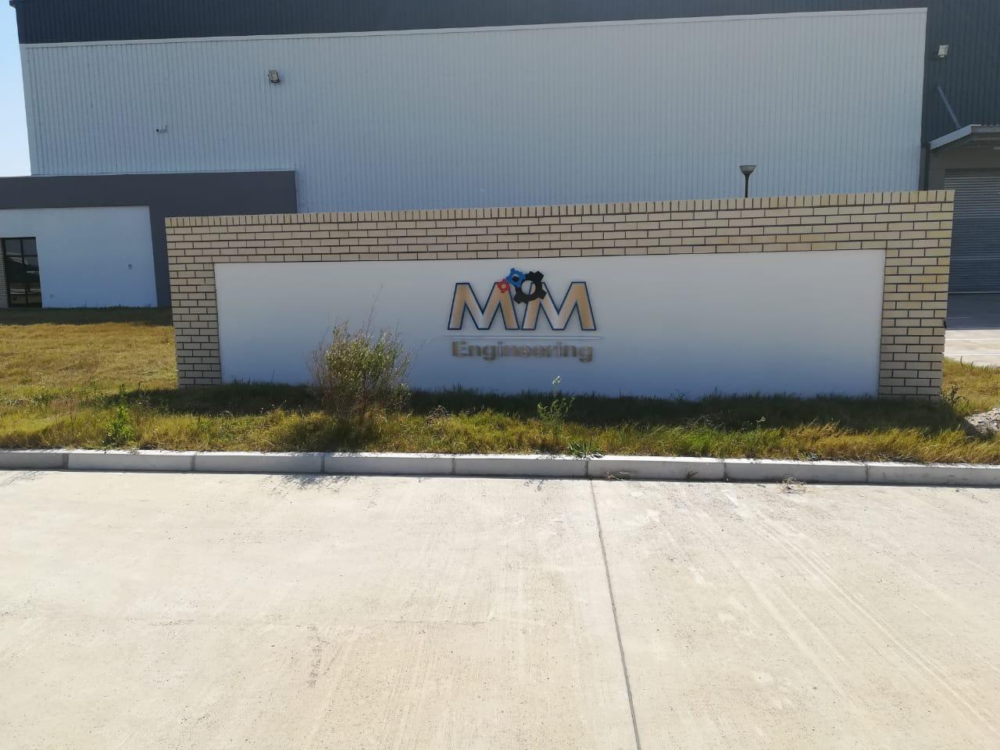
At the centre of the project was MM Engineering, founded by Bogatsu, which initially operated as a wholesale trader in petroleum products, LP Gas and related commodities.
She later identified an opportunity in the gas value chain and established MM Engineering Services (Pty) Ltd, an associate company of Mmapho Group (Pty) Ltd.
The company was developing a technologically advanced low-pressure LPG cylinder manufacturing plant in Coega, in partnership with the department of trade, industry and competition and the IDC.
Bogatsu said she had spent years developing the concept before approaching the IDC for funding. “Prior to and up until about 2008, I invested hundreds of hours in the research and development of a local LPG cylinder manufacturing plant in SA,” she said.
“During or about 2008/2009, I approached the IDC for funding of the project in the sum of approximately R345M. Representatives from the IDC who were appointed to deal with my application were Mr Joseph Sithole and Ms Zimkhitha Zathu.”
At the time, she was the rightful owner of a fully paid-up warehouse in Meyerton, Gauteng, which could adequately have housed the plant and only would have required minor renovations at a nominal cost to facilitate the project, she said.
Although the IDC agreed in principle to fund the project, it insisted that the plant be relocated to the Coega Special Economic Zone in the Eastern Cape.
“To me, it didn’t make business sense to move the plant all the way to Coega, because the market for the LPG cylinders is in the inland Gauteng area,” Bogatsu said.
She added that tensions began to emerge after engagement with IDC officials and external parties. Bogatsu, Sithole and a technical adviser later visited Coega in 2014.
“On arrival, we were informed that the plant and the entire project would partner with Cadac and Onvlee, who were surprisingly present at this meeting. We were blindsided by Sithole and the IDC in this decision.
“It was clear that the IDC unilaterally engaged third parties into the project without our knowledge. At this stage, I ought to have considered the conduct of the IDC to be suspicious.
“But given that I was desperate for funding, I allowed the IDC to take matters in their own hands.”
She further alleged that the IDC influenced key procurement decisions, including equipment sourcing.
“The IDC further recommended that instead of procuring the manufacturing plant from India, we should utilise original equipment manufacturers from Europe. They selected Repkon Machine and Tooling at an escalated price difference of approximately R165 million.”
At this time, she was still a 100% shareholder in MM Engineering Services (Pty) Ltd. Bogatsu also described changes to the proposed ownership structure of the company.
“A further condition of funding was that the IDC would become a 30% shareholder in MM Engineering Services (Pty) Ltd. Repkon was also invited to become a shareholder in the company and offered 30% shares by the IDC.
“I was also offered 30% held through my company, Devoserve, and 10% was allocated to the Workers’ Trust – through a company Friedshelf 1706 (Pty) Ltd, in terms of which the future workers of MM would stand to share in profits of MM.”
An entrepreneur has accused the Industrial Development Corporation of rigid recovery practices that ignore the impact of Covid-19, as calls grow for an inquiry into its treatment of struggling black-owned businesses