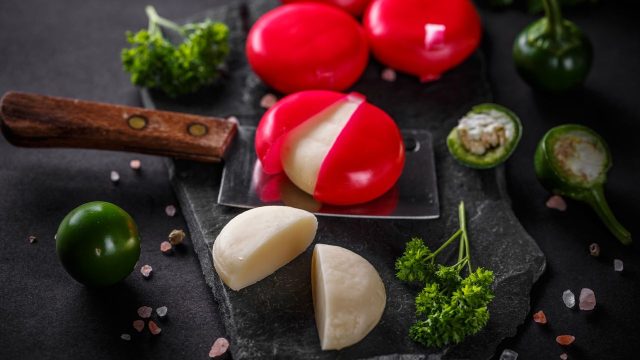
Babybel, the “small, ready-to-eat industrial cheese wrapped in its signature red wax”, is an unexpected beneficiary of anti-obesity drugs, said Le Monde.
Its French-owned producer Bel is investing €60 million to ramp up production of the cheese in response to a 6% growth in global sales, and a 12% increase in the US.
Healthy snacks are in demand as meals are being “swapped for grazing” as the rise of weight-loss jabs encourages a “change in eating habits”, said The Independent. In the UK more than 1.5 million people are thought to be using weight-loss drugs, which will have repercussions for the way we shop and eat.
‘Open up your palate’
As well as generally reducing appetite, GLP-1 weight-loss drugs like Wegovy and Mounjaro reduce the “reward value” of junk food. This means that “many patients go off” them, Alexander Miras, a professor of endocrinology at Ulster University, told The Guardian.
We’re “hardwired to like things that used to be scarce in evolutionary terms”, like “large amounts of fat and sugar”, said Jason Halford, of the European Association for the Study of Obesity. By reducing those cravings, weight-loss jabs can “open up your palate and allow you to appreciate other tastes”.
Not all those new tastes are particularly sophisticated. A high-protein version of Babybel has found a thriving market in the US among consumers on weight-loss jabs who want savoury, protein-rich snacks rather than sweet ones.
In the UK, Waitrose has reported that 57% of its customers are opting for “snacky foods” over full meals, due to appetite-suppressing obesity jabs and broader “concerns over ultra-processed foods”, said City A.M.
Cold turkey
The surging popularity of weight-loss drugs is already having a slimming effect on restaurant menus, and it’s also impacting on how we shop, particularly as the festive season approaches.
The supermarket sector is “unprepared for the change this Christmas”. More than one in 10 Britons say they will be hosting at least one guest this year who is on anti-obesity medication.
“There is a worry that Christmas retail hasn’t caught up with reality,” said Toby Nicol, chief executive at weight-loss group Chequp. “Millions of people now eat dramatically smaller portions, yet the supermarket aisle still assumes everyone wants a full adult serving.”
However, what retailers lose in junk food sales, they may gain in other sectors. Data suggests that while weight-loss drug patients are spending less on food, they are splashing out more on clothing and hair and skincare products as they “become more interested in their appearance”, according to market research analysts Berenberg.
Anti-obesity drugs have been a boon for Babybel but are supermarkets ready for a slimmed-down Christmas?