
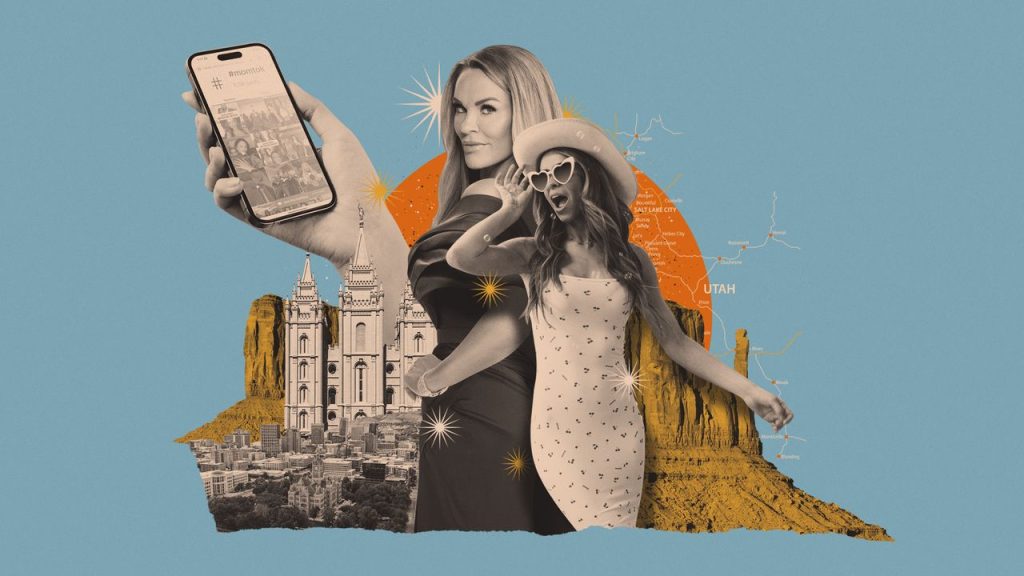
All eyes are on the Beehive State, as Utah has emerged as a powerhouse in the media sphere over the past few years. While interest in wholesome family content, particularly of the Mormon variety, has garnered the region growing attention, not all aspects of the state’s popularity have panned out so well, leading to a new set of laws to protect Utah children.
Social media hub
From the trad wife phenomenon to mommy influencers, Utah has become “known as a hotspot for social media content creators,” Fox 13 said. It is a “really unique part of Utah that makes it stand out amongst other states,” Mariah Wellman, an assistant professor at Michigan State University who researches the influencer industry, said to Fox. Utah is a well-known hub for Mormons, and the Church of Latter-day Saints has been a “source of public fascination for years,” said A Frank Voice. LDS culture has always “emphasized documentation, memory-keeping and family presentation,” so when social media came along, “many LDS women were basically already halfway to being influencers.” Platforms such as Instagram and TikTok have become a “digital extension of an existing cultural practice.”
The stars of the Hulu series “The Secret Lives of Mormon Wives” epitomize the popularity of Utah momfluencers as the faces of #MomTok. Another popular Mormon creator, Hannah Neelman — the former Juilliard ballerina turned farmer and parenting influencer with a family of 10 — has gained an immense following by chronicling her life on the aptly named Ballerina Farm. Local organizations within the LDS Church are also adopting social media platforms; the Young Women Worldwide Instagram account, which launched in 2023, has gathered tens of thousands of followers, positioning itself as a “safe space” for young LDS women, leaders and parents.
Utah educators are also embracing social media. This is a “legitimate career, and we have to start to accept it, it’s not going away,” Charity Richins, an influencer marketing teacher at North Summit High School, said to Fox 13. The classes received approval from the Utah State Board of Education last year and are now being offered in schools across the state. The course is part of Utah’s Career and Technical Education program, designed to provide students with real-world skills.
Reality TV staples
Beyond social media stardom, Utah is also a hotbed for reality television. “The Secret Lives of Mormon Wives” has made headlines for following a #MomTok group as they navigate faith, relationships and public perception after a swingers scandal. The show has led to other projects for some of the stars, including #MomTok leader Taylor Frankie Paul, who was named the newest star of “The Bachelorette” for Season 22, and rivals Whitney Leavitt and Jen Affleck, who both competed on Season 34 of “Dancing with the Stars.”
Reality TV hub Bravo has two Utah-based shows: “The Real Housewives of Salt Lake City” debuted in 2020 and “Sold on SLC” in 2024, the latter putting a “Utah spin on ‘Selling Sunset,’” Collider said. Salt Lake City is the “hidden gem of reality television,” with multiple networks already tapping into its potential. The casts of these shows stand out because they have to “battle between the religious and social standards in Utah” and “external temptations from the media and pop culture.” The conflict creates a welcome new dynamic for reality TV, since the “shadiest drama, the darkest secrets and the biggest fights come from the people you least expect.”
Viral product marketing
Utah creators have used their influence to help several products go viral. Most notably, Utah was at the forefront of the Stanley cup craze. These water bottles were designed in 1913 and introduced their modern 40-ounce version in 2016, which saw limited sales. Then in 2017, they were featured on The Buy Guide, a popular Utah-based shopping blog and Instagram account launched by three former Brigham Young University students. Over the next few years, the cups became a “signature momfluencer accessory” that “paired nicely with Utah’s ‘dirty soda’ craze,” Axios said.
Other viral products have also come from Utah-based companies, including Owala water bottles and HydroJug water tumblers. Both cups have followed Stanley mugs to become the preferred beverage carriers of the social media set. Crumbl Cookies, a bakery company that was founded in Logan, Utah, in 2017 and later expanded nationwide, also soared to popularity in recent years, even featuring a collaboration with the Kardashian-Jenner family, which garnered mixed reviews from influencers on TikTok and Instagram.
Thanks to influencer culture and reality TV, Utah has emerged as a center for “aesthetic influence” in the beauty industry, Glamour said. Utah’s beauty obsession is not new. During the 2010s, beauty influencers from the state “captured our timelines and built big followings from their long mermaid hair, tanned skin and fluffy eyelashes.” Now, a “new crop of Utahns are bringing the aesthetic to the next generation,” but instead of bloggers, “it’s mostly TikTok influencers and reality TV stars driving the shift.” Thanks to the popularity of Utah creators and reality stars, the “hyperfeminine, done-but-not-overdone vibe” that characterizes Utah beauty has “emerged as highly influential for women across the country.”
The popularity backlash
While family vloggers and parenting influencers surge in popularity, a pall has been cast over the community due to some recent developments. Ruby Franke, a Utah mother of six, gave parenting advice to millions on YouTube before her arrest for child abuse in 2023. Franke and her partner in crime, therapist Jodi Hildebrandt, have become the subject of documentaries exposing the abuse, including the Hulu docuseries “Devil in the Family: The Fall of Ruby Franke” and “Evil Influencer: The Jodi Hildebrandt Story,” a documentary on Netflix.
Last year, Utah added new protections for the children of online content creators, following Franke’s conviction. Gov. Spencer Cox signed a law “under the encouragement of Franke’s now ex-husband” that gives adults a path to “scrub from all platforms the digital content they were featured in as minors” and requires parents to set aside money for kids featured in content, said The Associated Press. Children cannot “give informed consent to be filmed on social media, period,” Kevin Franke said to lawmakers. “Vlogging my family, putting my children into public social media, was wrong, and I regret it every day.”
From #MomTok to reality TV gems, Utah has emerged as a media powerhouse