With Russian and Ukrainian forces seemingly locked in stalemate on the ground, the war has increasingly become an aerial one with both sides turning to drones and “smart” missiles to try to gain an advantage.
What does that look like?
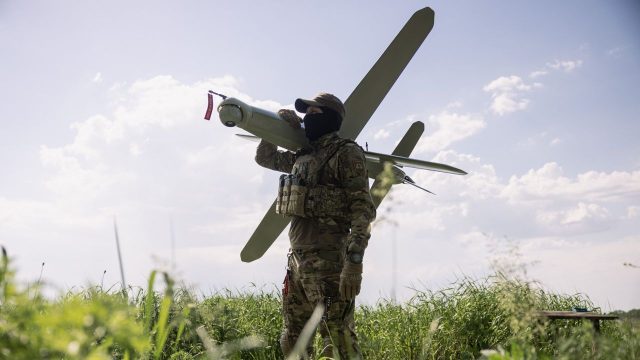
Over the past four years Ukraine has pioneered the use of both offensive and defensive drones. They have changed the face of war and helped narrow the advantage enjoyed by Russia when it comes to weapons and personnel.
These unmanned aerial vehicles, or UAVs, “hit Russian targets every day” and have played “a huge role in Ukraine’s recent improvement in fortunes, together with other innovations in the country’s drone war”, said the Financial Times.
At the same time, Ukraine has built an “increasingly sophisticated, layered air defence system”, said the BBC’s defence correspondent Jonathan Beale. Kyiv is now able to successfully intercept the vast majority of Russian long-range drones and missiles before they can hit their targets. “Embracing innovation and technology is giving Ukraine an advantage”, with “software that tracks every glide bomb, missile and drone launched by Russia” being “at the heart” of its air defences.
While the “intensity” of air attacks “continues to increase”, Russian military expert Nikolai Mitrokhine told Le Monde, both sides are using different tactics. Russia carries out occasional but massive strikes to overwhelm Ukrainian air defences. It “sometimes fires nearly 1,000 drones a day – as was the case on 24 March – while Ukraine launches almost nightly attacks, between 250 and 400 drones”.
What weapons do they have?
Ukraine has been producing long- and medium-range FP-1 and FP-2 drones – known as “Drakosha” or “little dragons” – at scale and at speed at a cost of about €50,000 each. It has been “pouring resources” into “middle strikes” that target Russian air defences and military logistics as far as 180km (112 miles) behind the front line, said Reuters. These strikes cannot “turn the tide against Russia” alone, but are “having an additional impact by facilitating longer-range drone strikes that are damaging Russian oil infrastructure”.
And while Ukraine still relies on expensive US-made Patriot missiles to take down Russian ballistic missiles, cheap interceptor drones, such as the P1-SUN, are proving most effective in defending Ukraine’s cities from aerial attack. They are 3D-printed and cost just $1,000 (£750); more than 1,000 are produced every day by Ukraine.
They can, however, do little to stop Russian glide bombs. These are Soviet-era munitions fitted with cheap guidance kits that turn so-called “dumb” bombs into precision weapons. They can be launched from well inside Russian airspace and there is no reliable way to stop them. “For three years, they have been one of the most destructive weapons” used by Kremlin forces to level entire city blocks from Kharkiv and Zaporizhzhia to Kherson, said The Telegraph.
Ukraine hit back last week, unveiling its first domestically produced glide bomb, named the Vyrivniuvach, or “Equaliser”.
How might this change the war?
The Equaliser is “one of the most significant additions to Ukraine’s home-grown arsenal since the war began”. It “could potentially accelerate the pace at which Russian forces are pushed back”, said Keir Giles, from the Chatham House think tank.
More generally, Ukraine’s long-range capabilities are “significantly changing the situation and, more broadly, the world’s perception of Russia’s war,” President Volodymyr Zelenskyy said last month.
“Fast-improving” Ukrainian drone capabilities are “hurting the invaders’ logistics behind the battlefield, and pounding oil infrastructure and military targets deeper inside Russia,” said The Wall Street Journal. “Having gained a tactical and technological edge” in the air, this summer will test whether Ukraine “can turn that slender advantage into a strategic turning point”.
Next-generation drones and sophisticated air defence system have handed Kyiv the advantage as Russia continues massive air strikes