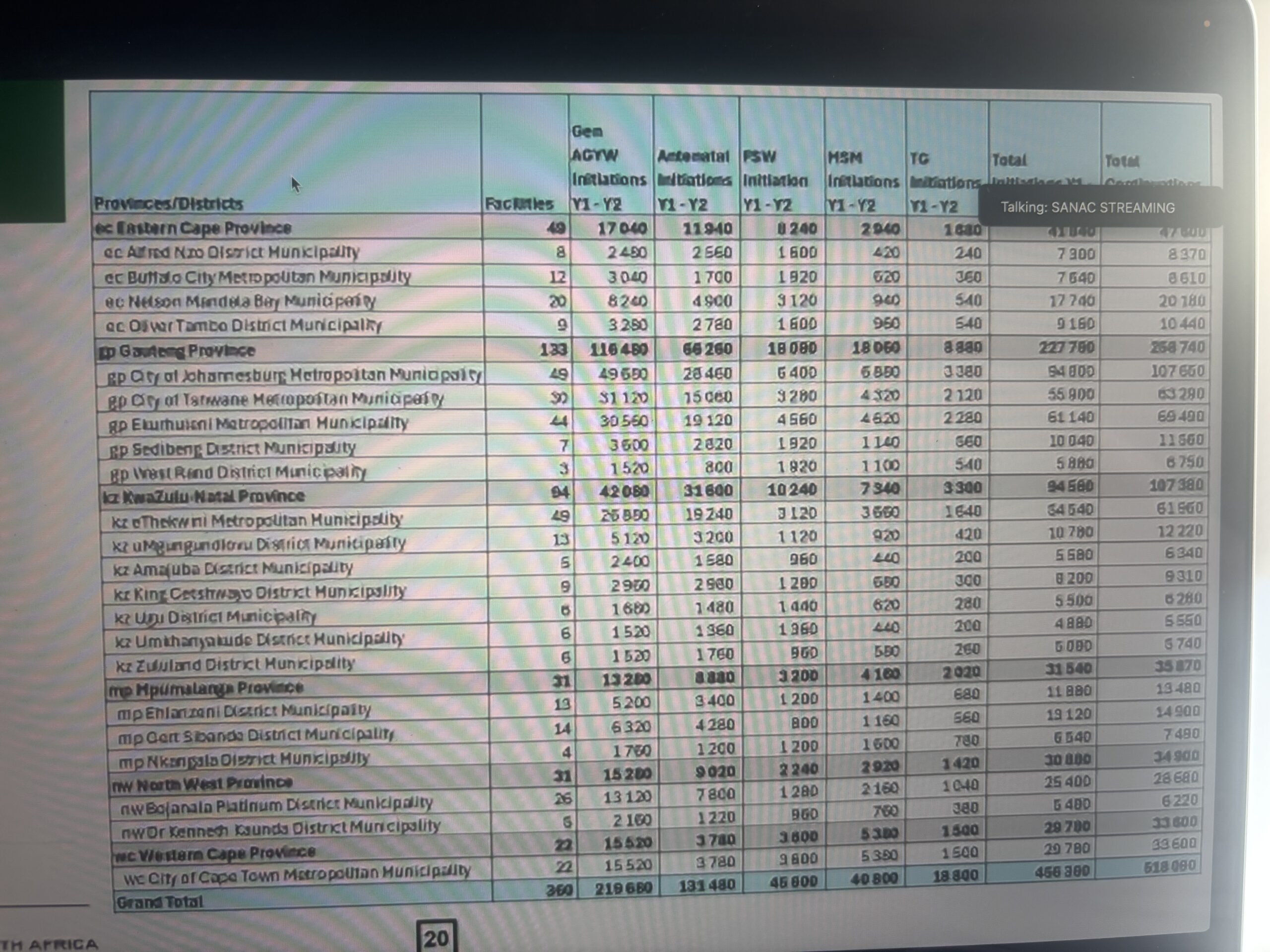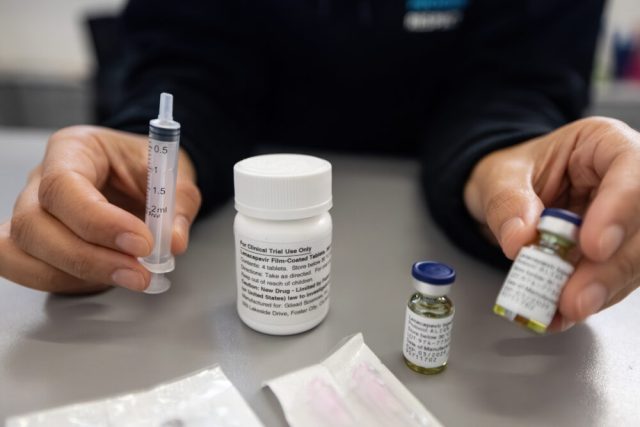
The six-monthly anti-HIV jab, which prevents HIV through sex, is now stocked for free at 360 government clinics in six of South Africa’s provinces.
The provinces are Gauteng, KwaZulu-Natal, the Eastern Cape, Mpumalanga, North West and the Western Cape, according to the health department’s list of clinics.
The Northern Cape, Limpopo and the Free State will get jabs next year, when cheaper generic versions of LEN become available and South Africa starts rolling out the shot on a larger scale.
At least one generic drug maker, Hetero in India, has applied to register their product with South Africa’s Health Products Regulatory Authority (Sahpra) chief executive Boitumelo Semete-Makokotlela told Bhekisisa.
Semete-Makokotlela says this will be a priority review which will be completed in 180 working days (around eight months), in this case by the end of January 2027.
Lenacapavir, in short referred to as LEN, is almost foolproof in protecting HIV-negative people against the virus and has to be taken only twice a year.
If enough HIV-negative people take the shot — between one and two million HIV-negative people need to take LEN at least once a year between now and 2043 — Wits modelling scientists predict that South Africa could stop new infections fast enough to end Aids as a big public health problem in 18 years.
That, they say, could result in South Africa’s approximately 140 000 new HIV infections in 2025 being reduced to about 65 000 a year so that the rate of new infections decreases to 0.1% or below.
But to achieve this, the country needs between 18 million and 36 million LEN doses in total over the period 2026 to 2043.
South Africa has received only two LEN deliveries — 37 920 doses (via two consignments on 30 March and 2 April) and 19 800 doses on 7 April — of the branded version of the medicine made by Gilead Sciences, paid for with a grant from the Global Fund to Fight Aids, TB and Malaria.
The fund says the third delivery of 57 600 doses is expected to land at OR Tambo on 15 June, which would bring the total number of delivered doses to 115 320.
In total, the fund has promised the country just under a million branded doses (974 450) — enough to phase in and keep 456 360 people on the medication — over two years. The doses come to between 3% and 5.5% of the total number of doses the country needs to end Aids by 2043.
Samples of each Global Fund consignment have to be quality tested before distribution to the health department’s provincial depots. As South Africa doesn’t yet have accredited labs to conduct quality testing, LEN’s maker, Gilead Sciences, sends samples to its lab in Cork in Ireland, a process which it says takes about a month. The first batch has been cleared and the 7 April delivery is undergoing testing.
Activists are unhappy about the time quality testing takes, arguing that Gilead should apply for exemption from Sahpra for the process or accredit a South African lab to do the testing.
Once generics become available in 2027, the health department says it will start to buy LEN with its own budget on a much larger scale but how much it plans to buy has not been announced.
The South African National Aids Council, Sanac, has asked local drug companies to submit proposals to make LEN locally. The council’s chief executive, Thembi Xulu, says a committee is evaluating the proposals and will submit a shortlist of companies that can either make LEN from start to scratch or perform aspects of the manufacturing process to Gilead for consideration for generic licences by the end of June.
LEN is not yet available in the private sector — Gilead has not registered a private sector price in South Africa — and will probably become available at private facilities only once generics have hit the market.
How does the jab work, how do you know if you need it and where can you find it? We’ve got you covered with 13 questions and answers.
- How does LEN work?
HIV needs to replicate to survive but, like other viruses, it can’t stay alive on its own. In humans it hijacks a type of immune cell called a CD-4 cell and worms itself into its DNA, forcing the cell to make copies of the virus instead of itself.
LEN is called a capsid inhibitor, which means it messes with HIV’s shell around its genes — called a capsid — in a way that makes it hard for the virus to get into someone’s CD-4 cells. LEN is injected into the fatty layer of an HIV-negative person’s tummy once every six months and is near perfect in preventing someone from getting the virus through sex.
The injection leaves a small supply of medicine, called a depot, under the skin that slowly releases the drug over six months. (That’s why the medicine needs to be taken only once every six months.)
Remember: LEN only prevents HIV infection; it doesn’t prevent someone from getting any other sexually transmitted germ.
- Is LEN an HIV vaccine?
No. Scientists haven’t yet come up with an HIV vaccine. LEN works differently than vaccines and there’s an important implication: unlike vaccines, which often give lifelong protection, because they train the body’s immune system to fight infections, LEN works for only as long as someone takes it, because it instead blocks HIV from entering someone’s cells.
That’s why the medication is called pre-exposure prophylaxis medicine, or PrEP — a drug that is taken before someone is exposed to a germ like HIV, so that if the bug enters their body later it cannot easily infect them.
An easy way to think about LEN is to compare it to contraception: if you take a daily contraceptive pill and not use it each day, your chances of falling pregnant increase. Or if you take a three-monthly contraceptive injection, you’re protected from pregnancy for only that period.
LEN works in the same way: it protects you only while you take it. If you want protection from HIV infection for longer than six months, you need to take another injection.
- Does LEN give foolproof protection against HIV infection?
Almost. In a July 2024 study among teenage girls and young women LEN showed perfect protection. But, as researchers continued to follow and test participants for HIV after the study results had been published, two more girls got infected.
A second lenacapavir study, of which the results were released in November 2024, revealed that the jab worked almost as well for gay and bisexual men, as well as for transgender people, as it did for young women.
The study showed a 96% reduction in new HIV infections among trial participants who took LEN (two out of 2 179 participants got infected). Since the publication of the study, there has been one more infection.
- Does LEN have side effects?
Yes, all medicines do. The good news is that LEN is generally well tolerated. The most common side effects are pain at the spot where the medicine is injected, small lumps under the skin where LEN forms a small depot and sometimes swelling and redness or itching.
Once in a while, a little bit of fluid might be seen at the spot where someone was injected; this is due to the injection process rather than the medicine itself.
- Who can take LEN?
You have to be HIV negative and weigh at least 35kg. Early data from the Desmond Tutu Health Foundation shows LEN is also safe for pregnant and breastfeeding women to use.
Sahpra has therefore not excluded them from access but also doesn’t explicitly recommend it for this group in the registration document, as more data is needed to do that.
Moreover, the World Health Organisation acknowledges in its guidelines for LEN that, although data is limited, bad reactions among pregnant women have not been recorded.
Lenacapavir must also not be used together with medicines that might reduce the level of LEN in someone’s body, such as the TB medicine, rifampicin; the anti-seizure meds carbamazepine and phenytoin; or the herbal remedy, St. John’s wort, which some people use for depression or anxiety.
LEN has been registered as a schedule 4 medicine in South Africa, which means you can’t buy it over the counter; it has to be prescribed and injected by an authorised health professional, at this stage, a doctor or nurse.
Remember: You have to take an HIV test each time before you take a LEN injection to make sure you’re still HIV negative.
- Which clinics stock LEN — and how much does it cost?
At this stage, 360 government clinics — in six provinces — stock LEN for free. The provinces with facilities that are handing out LEN are Gauteng (133), KwaZulu-Natal (94), the Eastern Cape (49), Mpumalanga (31), North West (31) and the Western Cape (22), according to the health department’s list of clinics.
The Northern Cape, Limpopo and the Free State will get jabs next year, when cheaper generic versions of LEN become available and South Africa starts rolling out the shot on a larger scale.
Each of the six provinces has between one and seven health districts with clinics that are stocking LEN. Mostly, those are districts with high rates of new HIV infections and facilities that have been doing well with managing prescriptions for a daily HIV prevention pill that state health facilities started to stock widely in 2020.
Bhekisisa used the health department’s list of clinics and compiled these into a searchable PDF document. Find the clinics here. You can also use this searchable map of Wits RHI to find a clinic.
- Can you get LEN at a private healthcare facility?
Not yet. The company making LEN, Gilead Sciences, told Bhekisisa in October that it is “evaluating private market strategies to expand product availability in South Africa as soon as possible”. Gilead has, however, not yet registered a private sector price for LEN in the country.
Once generic LEN becomes available in 2027, the medicine could eventually be sold privately as well but, even then, stock might be limited, as the SA government needs millions of doses.
- How do you ask for LEN at a clinic?
First, you need to look for a clinic on our list that stocks LEN. When you get to the clinic, you need to ask for the clinic’s HIV services; that’s where LEN will be available. In most government clinics the HIV service is given in a separate section of a clinic.
The first thing a nurse or counsellor will do is to tell you how HIV prevention medicine works and test you for HIV, because you have to be HIV negative to use LEN. The nurse or counsellor will explain to you that you can choose between LEN and a daily HIV prevention pill.
- What does your first dose look like?
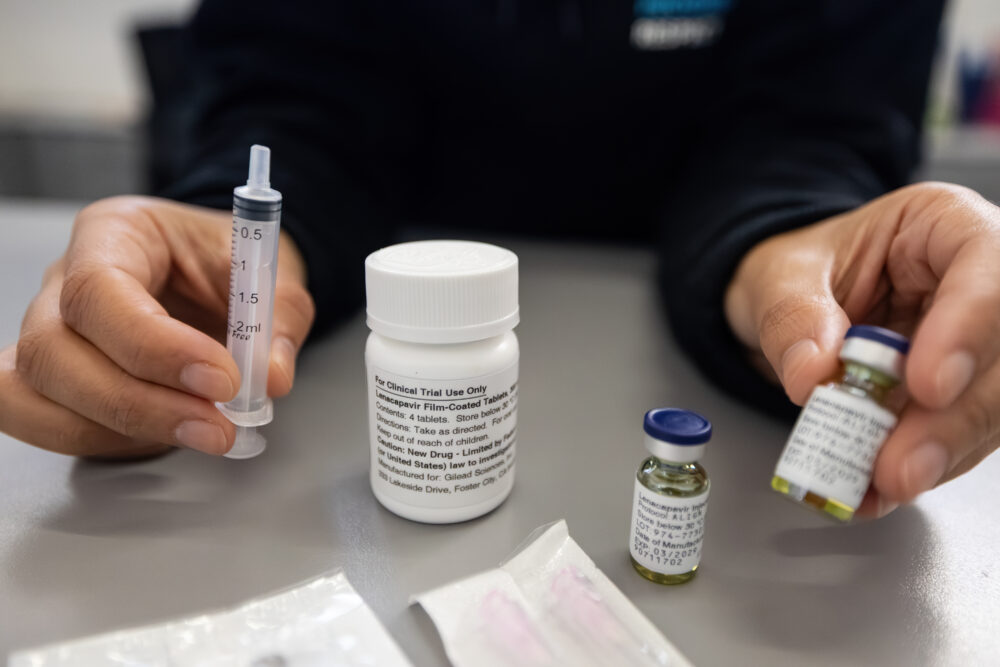
Like all other doses your first dose will be 927mg of LEN. But it’s too much to fit in one syringe, so people get two jabs, each containing half of the amount.
LEN, however, works over time — it releases itself slowly into someone’s body over six months. That’s why there isn’t enough LEN for HIV protection in someone straight after the first dose.
Along with the first dose, people therefore also need to take four 300mg LEN pills — two on the same day as the injections and two on the day thereafter. That way, there’s enough LEN in their body for full protection against HIV infection by the third day.
You will take the first two of the four pills at the clinic, along with your injection. The nurse will give the other two pills to you to take home to take the next day. It is very important to take them or there will not be enough LEN in your body quickly enough to protect you from HIV infection.
- What does a follow-up dose look like?
A follow-up dose of LEN is given around six months — 24 to 26 weeks — after the first dose. You only have two weeks to play with. If you therefore turn up later than 28 weeks after you had taken your first dose, you will have to take the four pills that you had to take along with your first dose, again.
That is because the LEN in your system by then may have dropped below the level you need for protection. Because of that, simply giving the next injection might not restore protective drug levels quickly enough.
The oral tablets act as a “reloading” dose to quickly raise lenacapavir concentrations while the long-acting injection begins releasing the medicine again.
Remember, you can only get a follow-up LEN dose once you’ve tested negative for HIV again.
- Who needs LEN the most?
The health department will get the biggest bang for its buck — read: stop the most new infections — if it pays special attention to groups of people who have a bigger chance of getting HIV than the general population.
In easy speak: it costs less money to prevent infections in groups where HIV is common, than in populations where HIV is rare, because fewer people would need to take the medication to prevent at least one infection in groups with high rates of new infections.
That doesn’t mean that people who don’t fit into these groups will be turned away from clinics that stock LEN. Rather, it means that the government will make an extra effort to reach these groups:
- Teen girls and young women: About a third of South Africa’s just over 400 daily new infections in 2024 were among women in this age group, even though they make up only about 8% of the total population. Teen girls and young women’s chances of getting HIV are high because their bodies are still growing and the tissue inside their vaginas and cervixes is soft and thin, making it easier for HIV to pass through. Because of poverty, young women also often end up in relationships with older men, who have the money to help them cover their or their family’s living costs. In such relationships they rarely have the power to ask their boyfriends to use condoms or to be in monogamous relationships.
- Sex workers: Sex workers are around nine times more likely to get HIV than the general population.
- Gay and bisexual men; transgender people: Men who have sex with men have a 26 times higher chance of getting HIV than the general population. Transgender people are around 13 times more likely to have HIV than the general population. Transgender women in particular, have a 20 times higher chance of getting the virus.
- Pregnant and breastfeeding women: Pregnant and breastfeeding women have a higher chance to contract HIV than the general population. Dvora Joseph Davey, an associate epidemiology professor at the University of Cape Town, explains that pregnant women often don’t use condoms, because there’s no risk of falling pregnant when they have sex during their pregnancy. There are also biological reasons why pregnant women could be more likely to contract HIV. “When someone is pregnant, there are changes in the cells in the female reproductive system and the body changes how much of certain proteins it makes, which can cause inflammation,” Joseph Davey explains. “Inflamed tissue makes it easier for HIV to enter someone’s cells, because it increases the risk of tearing in the vagina during sex.”
Use Bhekisisa’s dashboard to calculate how our LEN doses can be distributed most effectively.
12. How to stop LEN
When you stop taking LEN, it remains in your system for up to 12 months. But the levels of medicine in your body are too low to protect you against getting infected with HIV. If you do contract HIV during this time, you could develop resistance to treatments from the class of antiretroviral drugs that LEN belongs to, namely capsid inhibitors.
To prevent resistance, you need to use other forms of HIV prevention, such as the daily HIV prevention pill or condoms, during the year after your last dose and test for HIV regularly so you monitor your HIV status.
13. Is LEN the only HIV prevention medicine?
Absolutely not. Government clinics have been stocking a once-a-day HIV prevention pill widely since 2020. A monthly pill, known as MK-8527, is in the last stages of being tested, as well as a four-monthly injection using the medicine cabotegravir and once-a-year LEN jab.
A two-monthly cabotegravir shot has been registered in South Africa but is too expensive for the government to buy and not available in the private sector.
“In the end, people will use what works for them,” says HIV scientist Katherine Gill. “This is why choice matters.”
This story was produced by the Bhekisisa Centre for Health Journalism. Sign up for the newsletter.
The six-monthly anti-HIV jab, which prevents HIV through sex, is now stocked for free at 360 government clinics in six of South Africa’s provinces. How does the jab work, how do you know if you need it and where can you find it? We’ve got you covered with answers to 13 questions