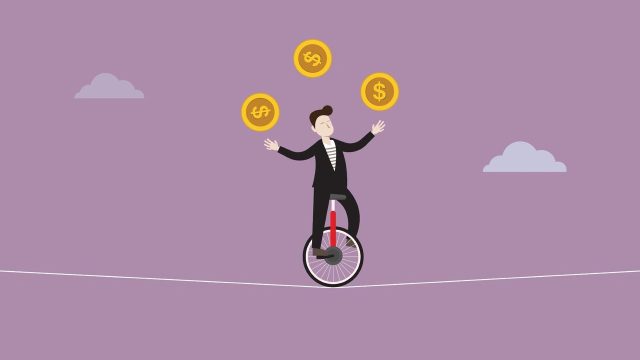
With only so much money coming into your bank account each month, it can feel challenging to decide where to allocate it, especially when you have competing priorities. After all, paying down debt, whether from credit cards or student loans, is non-negotiable. But saving is also critical if you want to reach other financial goals, like contributing to an emergency fund for your peace of mind or putting money toward a down payment for an eventual home of your own.
While it may not always feel easy to juggle these two financial priorities, it is certainly possible — and arguably necessary, depending on your situation. Take these three tips into consideration.
Fine tune your budget
To successfully maintain the balancing act that is saving up money while paying down debt, it is first important to evaluate your overall financial situation. This should include the money flowing into — and out of — your bank account each month, alongside your outstanding debt and how much you currently have saved.
By getting this big-picture view of your situation, you can identify any wiggle room to put more money toward either priority. It can also help you determine whether one priority may come out ahead in terms of needing more of your attention, e.g. if you lack an emergency fund or your debt is racking up interest fast.
Do not underestimate the importance of an emergency fund
While it may feel counterintuitive to be socking away money for your future self when you already owe money to others, failing to put anything aside can end up landing you in further debt. “If you don’t have any savings, focusing solely on paying debt can backfire when unexpected needs or costs come up. You might need to borrow again, and debt can become a revolving door,” said Melissa Joy, a certified financial planner and founder of the firm Pearl Planning, to Bankrate.
While you will need to pay at least the minimum due on any debts to avoid credit impacts, from there, see if you can find any amount you can divert toward savings each month. Or even better, “set up monthly automatic transfers from your checking account into a high-yield savings account earmarked for emergencies only,” said U.S. Bank, aiming for a balance that would cover three to six months of expenses.
Implement a debt payoff plan
Debt — especially high-interest debt like credit card debt — will stand in the way of achieving financial freedom if you let it linger. So, come up with a plan that will allow you to pay it all down, once and for all. Typically, the most cost-effective approach is to focus on zeroing out the account with the highest interest rate first (known as the avalanche approach), though some people may feel motivated if they tackle their smallest balance first, then work up from there (the snowball strategy). You might also look into debt consolidation.
No matter what approach you choose, it is critical that during this time you do not take on any more debt. “Adding new debt while trying to pay off existing balances only makes things more difficult,” said U.S. Bank. Plus, the faster you can pay off your debt, the sooner you can turn your attention fully to saving, and making your other financial goals a reality.
Putting money aside while also considering what you owe to others can be a tricky balancing act