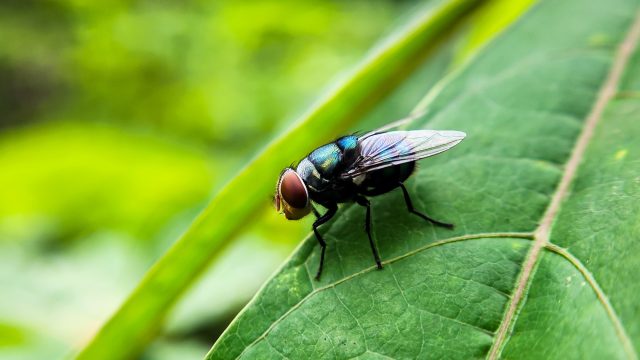
The New World Screwworm (NWS), a flesh-eating parasite, is spreading across Mexico. This has led to a suspension of cattle imports from Mexico to the U.S. Without intervention, the parasite will propagate further, affecting livestock, wildlife and potentially even humans.
How bad is New World Screwworm?
NWS is a deadly parasitic infection that can “kill a full-grown cow within one to two weeks,” said NPR. When affected, the fly’s larvae will “burrow into a wound or mucus membranes of animals and rarely humans.” Then the resulting “maggots feast on the flesh and blood of their host with tiny mouth hooks.” Cases of NWS are on the rise in Mexico and are rapidly moving northward.
This spells bad news for livestock, wildlife, pets and even humans. “The U.S. cattle industry is unprepared for the screwworm’s return,” said The Atlantic. “Certain drugs to treat screwworm infection are not licensed in the U.S., having been unnecessary for half a century.” As a response to the growing threat, Agriculture Secretary Brooke Rollins has suspended “live cattle, horse and bison imports through U.S. ports of entry along the southern border,” said a press release by the U.S. Department of Agriculture (USDA). The suspension will be reviewed on a month-to-month basis until the parasite is contained.
“This is not about politics or punishment of Mexico, rather it is about food and animal safety.” Rollins said in the press release. “The protection of our animals and safety of our nation’s food supply is a national security issue of the utmost importance.” NWS will likely “propel beef prices, which are already sky-high because of drought, even higher,” said The Atlantic. “The cattle industry will have to adapt quickly to a new normal.”
Has this happened before?
NWS is not a new parasite, but it is a surprise that it is having a resurgence. The U.S. and Mexico “were able to eradicate the New World screwworm in the 1960s and ’70s by releasing hundreds of millions of sterile adult flies that would mate with the females — ultimately preventing them from laying viable eggs,” said NPR. This led to an invisible barrier in Panama in 2006, that “consisted of planes releasing millions of sterile screwworms to rain down over the Darién Gap every week,” said The Atlantic. This effectively kept the parasite away from the U.S. and Mexico.
However, in 2022, the barrier was breached and cases started to rise across Central America and work their way northward, spreading most rapidly in 2024. While the exact reason for the breach is unknown, experts attribute it to the Covid-19 pandemic causing “supply-chain snarls at the fly factory in Panama” and disrupting “regular cattle inspections that might have set off the alarm bells earlier,” said The Atlantic.
To push the NWS population back down, the U.S. is “investing $21 million to renovate an existing fruit fly production facility in Metapa, Mexico” that will “produce 60-100 million additional sterile NWS flies weekly to push the population further south,” said the USDA. “We were so successful,” said a U.S. official in Central America to The Atlantic, “that literally people forgot.”
The parasite is spreading quickly