
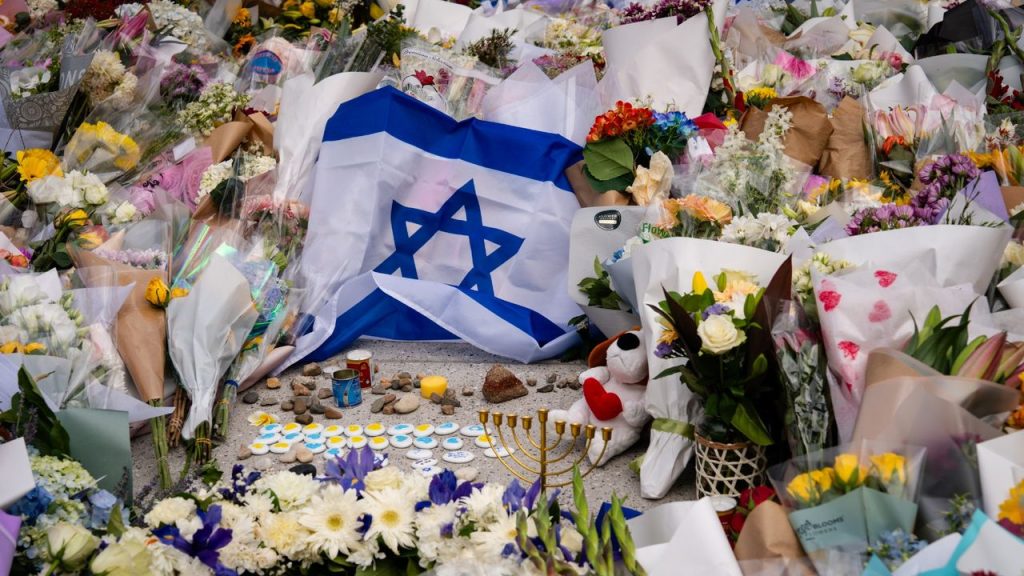
Australia’s government announced plans to strengthen the country’s gun control laws, following Sunday’s terrorist attack at Bondi Beach, in Sydney.
In the 20-minute rampage, a father and son opened fire on a crowd of about 1,000 people who had gathered to celebrate the first day of the Jewish festival of Hanukkah. The father, Sajid Akram, 50, had licences for six firearms, the number recovered at the scene. He was shot dead by police; his son, Naveed Akram, 24, was arrested and taken to hospital. They appear to have been inspired by Islamic State.
The victims of the attack – Australia’s deadliest mass shooting since 1996 – included two rabbis, a Holocaust survivor and a ten-year-old girl. Many more might have died had it not been for the heroism of a bystander, Ahmed al-Ahmed, who crept up behind Sajid Akram and seized his rifle. This week, the prime minister, Anthony Albanese, announced extra funding for measures to protect the country’s Jewish community.
‘Indelibly stained with tragedy’
This attack on ordinary Jewish people, as they marked the first night of the “Festival of Lights”, was shocking in its malevolence, said The Australian. Bondi is home to many of Australia’s 117,000 Jews; the beach is also a place where people from all creeds and backgrounds congregate. Now, it will be “indelibly stained with tragedy”.
Australia ranks as one of the world’s safest nations, said The Independent. Its gun laws – tightened after the mass shooting in Tasmania 29 years ago – are already among the strictest anywhere. If Jews aren’t safe there, they may now reasonably ask “where in the world they can be safe”.
Australia’s government has suggested that the shooters “weren’t part of a wider cell”, said The Sydney Morning Herald. But the discovery of Islamic State flags in their car, and the revelation that the two men had recently travelled to the Philippines, parts of which are rife with “Islamic extremism”, may be telling.
In 2019, the younger man was actually investigated by Australia’s security services, owing to his links to Islamic State members, said The Times. But he was deemed not to be a threat – an assessment that has “proven to be tragically flawed”.
The global surge in antisemitism
There was a celebratory atmosphere at Bondi on Sunday, said The Economist. “Children wearing face paint crowded a petting zoo. Families held balloons and bubble wands.” Yet as the sun began to dip, two men armed with long-barrelled rifles began firing from a footbridge into the crowd; and the death toll could have been even higher, had they detonated the improvised explosives later found in their car.
It was an appalling tragedy, made worse by its predictability, said Limor Simhony Philpott on UnHerd. Australia’s Jewish community has endured a five-fold surge in antisemitic incidents since the start of the war in Gaza in October 2023. Jewish schools, synagogues and homes have been firebombed; protesters have chanted “Fuck the Jews” outside the Sydney Opera House. In the summer, Australia’s government kicked out Iran’s ambassador, after accusing Tehran of orchestrating antisemitic attacks on its soil. But it has done little else to curb antisemitism. Instead it has alienated Israel, its former ally, by making the misguided decision to join the UK and others in recognising a Palestinian state.
This attack reflects a broader crisis for the world’s Jewish population, said Jonathan Sacerdoti in The Spectator. In the past two years, there have been murderous attacks on Jews on five continents. This summer, there were two in cities in the US, and on Yom Kippur in October, two people were killed in the attack on the Heaton Park synagogue in Manchester.
When it comes to antisemitic terror, violent words can lead to violent actions, said Dave Rich in The Guardian: hence the anger felt by many Jews when they see banners at pro-Palestine marches demanding an “Intifada revolution” or bearing Hamas symbols.
The frightening reality, said Daniel Finkelstein in The Times, is that calls to “Globalise the intifada” and the like have made Jews the target of “warped killers” who think that, by unleashing terror, they are “doing the world a favour”. I will carry on lighting candles in the days ahead, and singing the Hanukkah songs. “But I admit that this year, for the first time in my life, I do feel just a little fear as I do it.”
Deadly terrorist attack during Hanukkah celebration in Sydney prompts review of Australia’s gun control laws and reckoning over global rise in antisemitism