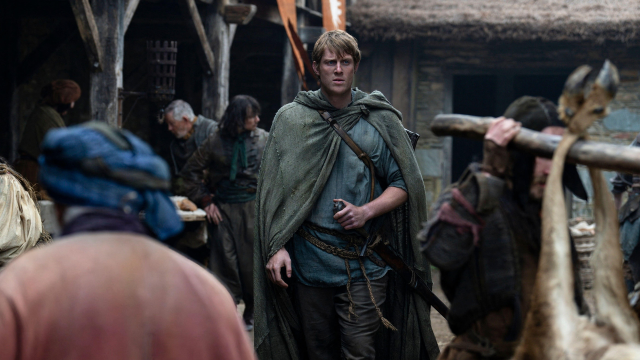
The “Game of Thrones” spin-off “A Knight of the Seven Kingdoms” will “either charm or repulse”, said Rebecca Nicholson in the Financial Times.
Based on the three George R.R. Martin novellas known as “The Tales of Dunk and Egg”, the prequel takes place around 90 years before the events of “Game of Thrones”, but 72 years after “House of the Dragon”.
Some critics have already “balked” at the “phlegm, vomit and excrement” on display. “Take it in the right spirit, though, and it adds to the raucous, carnival-esque feel. It has been a long time since visiting Westeros has been so enjoyable.”
‘Heartwarming’ tale
“A Knight of the Seven Kingdoms” is a “drastic switch-up in scale”, said Alison Herman on Variety. While the first two Martin television adaptations so far chart the “epic struggles for the fate of Westeros”, the latest spin-off is set during “a single tournament over just a few days”. And the action takes place from a “single point-of-view character: the titular Ser Duncan the Tall (Peter Claffey), a young wandering warrior on a quest to prove himself”.
This “heartwarming” tale is the “‘Game of Thrones’ we all need now”, said Lucy Mangan in The Guardian. At the start of the show “Dunk” sets off for the jousting tournament at Ashford Meadow, where he hopes to make a name for himself. During one of his early “pit stops” at a tavern he meets the “bald-headed, ethereal, rovingly intelligent child Egg (Dexter Sol Ansell)”, who offers to be his squire. Together, the “underdog and the underpuppy” embark on a journey through the “back roads of Westeros”.
I thought it was a “total delight from start to finish”, said Neil Armstrong on BBC Culture. “We haven’t had this much fun in Westeros for a long time – maybe ever.” Dunk and Egg’s “odd-couple relationship, occasionally antagonistic but mostly affectionate” is the “beating heart” of the show. “And it’s very funny.” The writers bring a “lightness of touch” to the humour, effortlessly blending droll remarks with “almost Monty Pythonesque absurdity”. It’s a “nailed-on winner”.
‘Too meagre to love’
Yes, the series reveals a more “playful” side to Westeros, said Judy Berman in Time. “But the show’s anaemic plot and spotty attempts at humour also raise questions about the health of the franchise.” Surely there was a more “compelling” story to mine from Martin’s bibliography? “A Knight of the Seven Kingdoms” might be “too benign to hate” but from what I’ve seen so far, “it is also too meagre to love”.
The show is a “loose, low-stakes oddity” that “feels like a footnote”, said Louis Chilton in The Independent. There’s something about the series that “doesn’t quite work”. “It is a character piece without a sufficiently interesting character at its core.”
“Blood and guts” are still here, “because what’s Westeros if not a queasy swill of muck and bodily fluids?” said Lorraine Ali in the Los Angeles Times. But there’s an issue. Without an overarching story that “promises to go somewhere bigger”, sitting through the puke, poo and smashed skulls “isn’t all that tolerable”.
It’s “disappointing” that the show retains this “adolescent desire to shock”, said Ed Power in The Telegraph. Still, once it gets past these “childish instincts”, “A Knight of the Seven Kingdoms” settles into a “sweet depiction of an unlikely friendship. A feel-good ‘Game of Thrones’ prequel? Scratch that one off your ‘didn’t see it coming’ list for 2026.”
George R.R. Martin prequel is more ‘fun’ but still has plenty of blood and guts