
Homebuyers are losing faith that mortgage rates will fall, said Julie Z. Weil in The Washington Post. The average fixed rate for a 30-year home loan hasn’t dipped below 6% since the fall of 2022. For a brief moment earlier this year, it looked like the tide might be turning. But then the Iran war erupted in February, and rates, which are linked to Treasury yields, have since surged more than half a point, recently topping 6.5%. Potential buyers “who had been waiting for better” news are reconciling with the reality that rates “aren’t coming down this year in a significant way.” Some are biting the bullet, hoping they can refinance later—and trying to find ways to cover higher housing costs. They include Bob Anderson, 66, who will close on a Detroit-area home in June that will cost $350 more a month than his rent. “I will admit I’m a little stressed,” Anderson said.
Home Depot is “a barometer for America’s housing market,” said The Economist. But the company’s share price has “plunged by a quarter from its peak last year,” as fewer home sales have led to lower sales of construction equipment and for DIY projects. “We have never seen housing activity this slow for this long,” chief financial officer Richard McPhail said in April. Real estate agents are also under pressure, said Nicole Friedman in The Wall Street Journal. Most realtors are “independent contractors and get paid when a deal closes.” But deals have been hard to come by this spring. The National Association of Realtors’ membership has decreased by 200,000 since 2022, and in a 2025 NAR survey, only 71% of agents “said real estate was their only profession”—a record low.
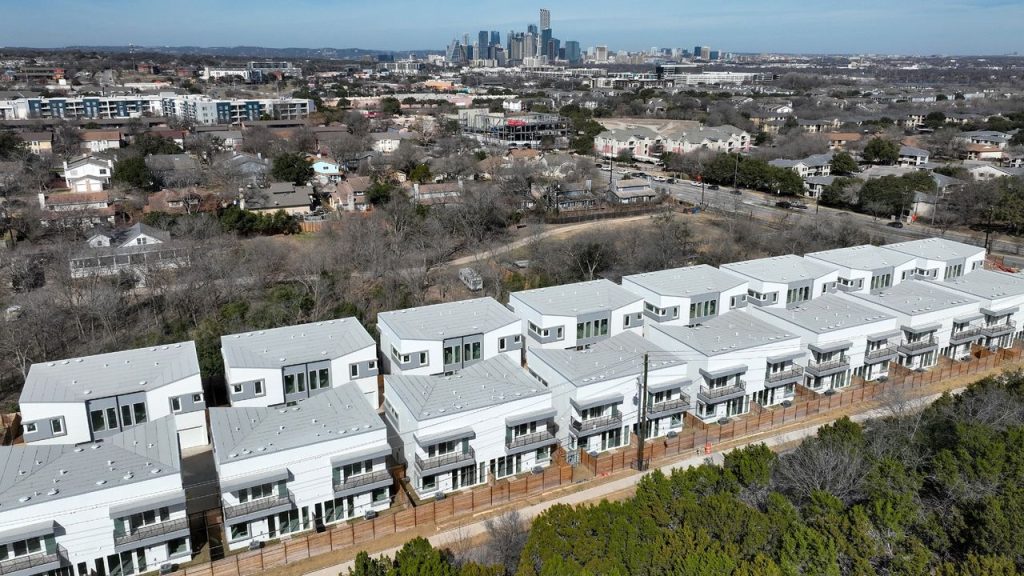
One Texas city offers a road map out of this mess, said Shaina Mishkin in Barron’s. Since Austin simplified its permit approval process a decade ago, housing “supply has increased, prices are down, sales are up, and buying costs have shrunk.” The typical household in Austin can now “afford 74% of listings, nearly on par with 2019 levels” and bucking the downward trend in other big cities. Austin’s leaders “understood that expanding the housing stock in any way, even with luxury apartment buildings, would ease pressures,” said The New York Times in an editorial. Let that be a lesson to everyone: “We need to build more homes.”
The build-more theory faces a major obstacle, said Ryan Dezember in The Wall Street Journal: rising construction-material costs. The average American home uses “more than 400 pounds of copper,” the price of which is soaring thanks in part to high demand from data centers. Lumber, fuel, resins, and plastics, as well as the costs of delivering these products to work sites, have all gotten more expensive because of President Trump’s tariffs and the Iran war. These costs are “adding to an affordability problem that is pushing homeownership beyond reach for more Americans.”
Mortgage rates are stuck