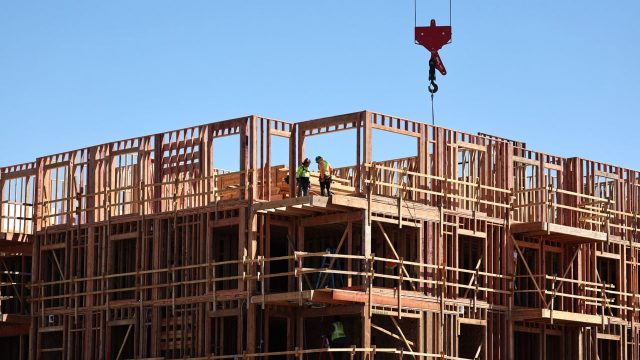
Frustrated homebuyers should be celebrating “one of the most significant pieces of housing legislation passed in decades,” said Emma Janssen in The New Republic. The bipartisan 21st Century ROAD to Housing Act automatically became law on July 11 after lingering on President Trump’s desk for 10 days without his signature. He had refused to sign the legislation in protest of Congress’s failure to pass the strict voter ID bill that he’s been pushing, but to Republicans’ relief he also decided not to use his veto pen. The law makes a sweeping effort to ease the affordability crisis by boosting housing supply and limiting rules around construction. Small measures—like “removing the requirement that manufactured homes have a permanent steel chassis beneath them”—could lower costs of a new unit by $10,000, according to Sen. Elizabeth Warren (D-Mass.), who co-sponsored the bill. Other substantive victories include “a restriction on the purchase of new single-family homes by large institutional investors,” who Warren claims have turned America into “a nation of renters.”
The law does get a few things right, said Conor Dougherty in The New York Times. America needs more housing, but local governments—not the federal government—are “often the ultimate deciders of where, how, and if housing is built.” The housing act aims to address that “through carrots and sticks,” such as a $200 million annual “innovation fund” to reward local governments that build more housing. It also cuts several strings attached to the production of factory-built or modular homes, which could “unleash a wave of innovation in construction techniques” to make them cheaper and more attractive. Of course, Trump refused to “slap his name on the one thing he should,” said Zeeshan Aleem in MS.now. In a “tantrum so baffling and self-destructive it beggars belief,” he called the housing bill “a big yawn.” Someone should remind him that “the high cost of living is the defining policy issue in our country.”
Too bad the law does more “to expand the federal bureaucracy than the supply of homes,” said The Wall Street Journal in an editorial. It “dangles money” for housing construction that “comes with federal mandates”—like what wages need to be paid to workers. The White House has been actively eliminating “superfluous government programs.” Here goes Congress adding more. Ultimately, this law is “a medley of 47 promising ideas,” said Robert Kuttner in The Boston Globe, “virtually all at token levels.” That’s not adequate. “My generation and the one that came before us got an incredible deal” on homeownership thanks to New Deal programs that have long since vanished. It’s laudable that the sponsors of the bill are finally “shining a light on a dire national problem.” But it will take “a great deal more to make housing truly affordable.”
New bill also limits investor-owned properties