Our role as creatives shifts everyday, evolving beyond the simple act of production.
We can strive to entertain but there exists a deeper, more urgent responsibility to ensure that what we put into the world is rooted in ethical mindfulness.
Roanna Williams and Fran Luckin have understood that model’s importance for years and built their brands on it.
As two of South Africa’s influential voices in the creative space, they are redefining the ethical responsibility of advertising in today’s media landscape. In a world where advertising is more widely consumed and accessible than traditional film, its influence extends far beyond commerce, shaping culture, behaviour and public discourse at scale.
With decades of experience across both global networks and independent models, they understand the power the medium holds and the responsibility that comes with it.
“There’s something deeply rewarding about taking a human truth or a business challenge and turning it into a solution that actually moves people.” Roanna Williams begins, as we discuss what drew her to the work, explaining that she doesn’t just want to create something that’s clever, she wants to be behind something that makes people feel.
“Because when something hits you emotionally, it stays with you and that’s what drives action. That’s where the real impact lies.”
By balancing the hook of entertainment with the weight of social visibility, we get the opportunity to create art that serves as both a mirror and a window, inviting the audience to see the world and their place within it, with newfound clarity.
For Williams and Luckin, the most powerful work stops behaving like traditional advertising and starts functioning as a cultural intervention. Their social impact work is defined by a refusal to soften issues or hide behind metaphors for the sake of comfort. Instead, they focus on crafting honest, unflinching narratives that hold tension and invite the public to engage with difficult realities.
They have been involved in a number of campaigns that have held the attention of the collective public, stirred conversations and inspired change; named Williams’ high impact intervention at the Durban July.
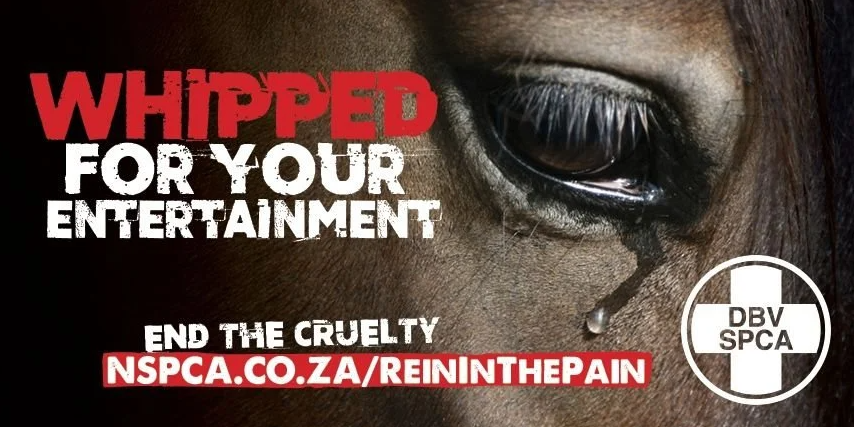
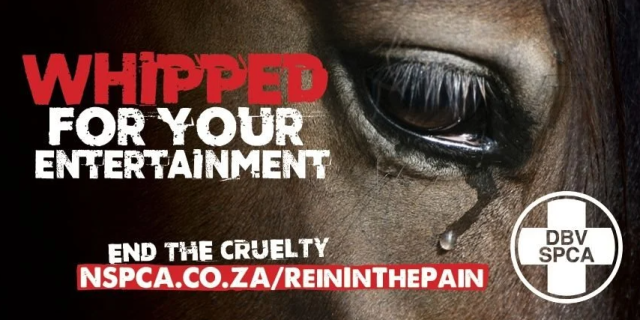
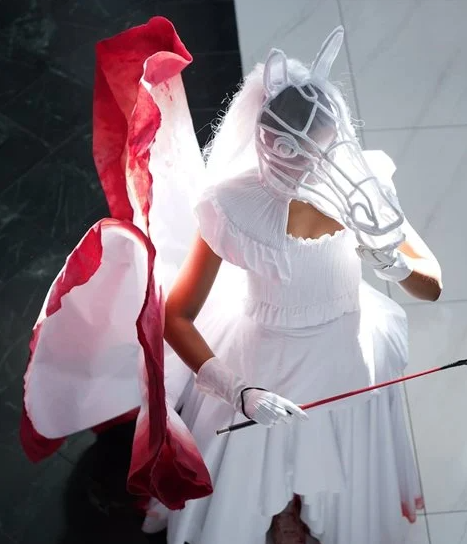
Rein in the Pain, in collaboration with the NSPCA, was designed to interrupt a major cultural moment with a real and ignored issue.
“With projects like these, the intention is to meet people where they are, in spaces they already occupy, like cultural moments, public events or exhibitions and interrupt that space with something real. It’s about taking issues that are often normalised and making them impossible to overlook but doing so in a way that encourages reflection rather than defensiveness.”

Another project like this was the Republic of Sexual Abuse exhibition with POWA, which was launched at the start of the 16 Days of Activism.
It aimed to highlight the alarming rates of gender-based violence in South Africa and to shock the public into action and encouraged them to ‘renounce’ their citizenship of this republic.
In using your voice against abuse, and saying, ‘I am not proud to be a citizen of the RSA!’ you begin the work of challenging yourself and changing your environment.
Now that Fran Luckin has joined Williams at the independent agency, Boundless, their collaboration is being framed as a power shift in the South African creative economy.
Independent agencies, according to Williams, are closer to culture and less constrained by bureaucracy, allowing them to hold brands to higher standards. This independence facilitates something the women call ‘story-doing’ over storytelling, as seen in projects like the Moletele Limes Project, a partnership with Corona that shifts and inspires action by creating tangible, long-term impact at the community level.
“The uncomfortable truth is this: nobody is actively seeking a relationship with a brand,” says Luckin, who has overseen award-winning campaigns like the Selinah commercial while she served as Creative Director at Ogilvy. She has actively championed work that pushes brands beyond visibility.
The Selinah commercial, telling the story of a woman named Selinah living with HIV, was admired for how it looked at changing the lives of people living with HIV/AIDS, mitigating the stigma and showed the importance of anti-retroviral medication (ARVs).
“When brands decide which cultural conversations to enter, the only voice that should carry real authority is that of the audience they want to reach, to be honest,” she continues, speaking about how the mandate should always centre a genuine understanding of what people care about, so the work doesn’t feel intrusive or performative.
“Engagement has to be earned through relevance, authenticity and respect for the audience’s context. Brands that don’t recognise this risk inserting themselves into conversations where they’re neither wanted nor credible.”
For this duo, commercial success is not in opposition to social responsibility; it depends on it.
By tapping into real human insight and cultural relevance, they aim to build sustainable brand value while ensuring that advertising remains a tool for meaningful societal change, as well as motivating an even younger generation to share their voice and enforce the change we strive for.
“That’s why I feel a responsibility to use my platform for something more. Being part of Open Chair and contributing to spaces that support, mentor and uplift women, matters deeply to me,” says Williams on being a director of this organisation that takes 14 young women to Cannes Lion.
“It’s about creating environments where people feel safe to speak, to grow and to challenge the things we’ve been conditioned to accept.”
On that same note, Luckin adds, “I think it will always be necessary for those of us with a longer tenure to help create space for younger people coming up through the industry. It’s a chance to give back and it’s a joy.”
In as much as the industry is tough and continues to be viewed from the lens of a boys’ club, Luckin and Williams believe in the power of kindness and having someone there to say, You’re not crazy. I believe in you. The belief that the work they put into the world can do more than just exist is what drives them to show up each and every day. “It can open eyes, shift mindsets and empower others to see their own value. If I can inspire even one person to feel seen, to speak up or to believe in their worth, then the work is doing exactly what it’s meant to do,” says Williams.
Seeing the collaboration of two incredible women who’ve always advocated for the power of the human pulse in creative word, the kids would call this “two queens maximising on their joint slay,” something that Luckin says calls to mind the latest Vogue photoshoot with Anna Wintour and Meryl Streep.
Together, Roanna Williams and Fran Luckin aim to prove that commercial success and social responsibility reinforce each other.
Their collective voice prioritises the audience’s perspective, ensuring that brand engagement is earned through relevance and respect rather than internal opportunism.
Moving beyond traditional campaigns, Williams and Luckin champion “story-doing,” creating work that interrupts culture, sparks dialogue, and drives meaningful societal change