
It was in the spring of 1997 when Edwin Cameron looked at himself in the bathroom mirror and stuck out his tongue. He was terrified of what he saw.
His mouth was dotted in flecks of white; a fungus, the sort of spores that belong on dead bodies, he thought. Breathing was becoming difficult. He was having trouble swallowing, had lost his appetite and dropped 15kg. He was beginning to look emaciated and people were noticing. Just the other day, a colleague in a crowded lift commented on his weight loss.
Even before the X-rays came back from the radiologist in October, he knew he had pneumocystis pneumonia, or PCP, a form of pneumonia which is caused by a fungus that infects the lungs. Unless it was treated with a heavy course of strong medication, it would kill him. He knew what that meant, just like he knew what he was looking at on his tongue was oral thrush. Both were common diseases that ravaged people with extremely weak immune systems.
The judge could no longer ignore what was happening: HIV, a secret his body harboured for 12 years, had finally turned to full-blown Aids.
The medicines that could save his life cost R4 500 a month, about a third of the salary he collected as a high court judge in Johannesburg. He would pay cash; back then, these were not the sorts of drugs freely available in public clinics and medical aids did not cover them. By then, treatment was a combination of antiretroviral drugs (ARVs), which had recently started successfully treating patients in the US. But the cost of the medicine put treatment out of reach for all but a few Africans — a searing injustice that put a steep price on life. That fact never escaped Cameron; it would drive much of his life’s work.
It would be seven more years of court battles, of a government paralysed by HIV denialism, of relentless activism, demonstrations, screeching demands for drug companies to lower costs and millions of people lost to HIV before the drugs were made free in government clinics.
But on 7 November 1997, at his home in Brixton, the judge would swallow his privilege. By his side was researcher Morna Cornell and activists Mark Heywood and Zackie Achmat (all of whom would lead HIV work) as he ingested the first of what would be tens of thousands of pills over the next 28 years.
That December, Cameron walked up Table Mountain. It was nothing short of a miracle.
Darkest days
If you had told him then that he’d be sitting in his home in Sandton, at 73, six years after stepping down from the Constitutional Court, where he served for 11 years, recounting those terrifying times on a bright summer’s day as a marquee was being set up in the garden to celebrate a friend’s birthday, there is no way he would have believed you.
“I was 33 when I was told [I had HIV] and 32 when I was infected,” he recalled in an interview with Bhekisisa’s TV programme, Health Beat. “Undoubtedly, I would not ever be 40. I would never see a democratic, free South Africa. I would never become a judge; despite my terrible criticism of the apartheid judiciary, which got me into trouble at the time.”
Cameron talked about the darkest days of the disease, which was then called Grid (gay-related immune deficiency), as it ripped through gay communities across the US in the 1980s before baring its teeth to the world. Today in South Africa, four out of every 10 new infections are girls and women between the ages of 15 and 24, even though they make up only about 8% of the total population.

“I can pretty assuredly say that I was infected with HIV 40 years ago at Easter, 1985. I was told by my doctor about 20 months later. Gay men like myself in their early 30s, with their lives and their hopes and dreams before them, were dying in their tens of thousands on the West and East Coasts of America, in the Midwest, Western Europe, Australia and there was nothing anyone could do about it.
“They could give palliative treatments and maybe antibiotics for some of the secondary diseases, the symptomatic presentations of the collapse of your immune system. But there was nothing that could be done, so you faced a certain death.”
The first generation
Cameron was one of the first South Africans to take what were new, lifesaving drugs and is proof of their ability to sustain a long life. It is through those like him, who had access to the drugs early on, that medical science is able to not just keep people with HIV alive but also witness the effects on people who are growing old with it.
Just by living longer, we become more susceptible to developing noncommunicable diseases (NCDs) like diabetes, heart conditions and cancer. But studies have shown that people living with HIV are four times as likely to get NCDs as they age faster — during the period that they’re not on treatment — than those without it. And they are often hit with multiple NCDs at the same time.
Cameron is strict about adhering to his ARVs and is careful about what he eats (he is a vegetarian, “full of protein for those vegetarian sceptics”, he says), exercises regularly and is an avid cyclist. Yet you can see his reflection in those findings.
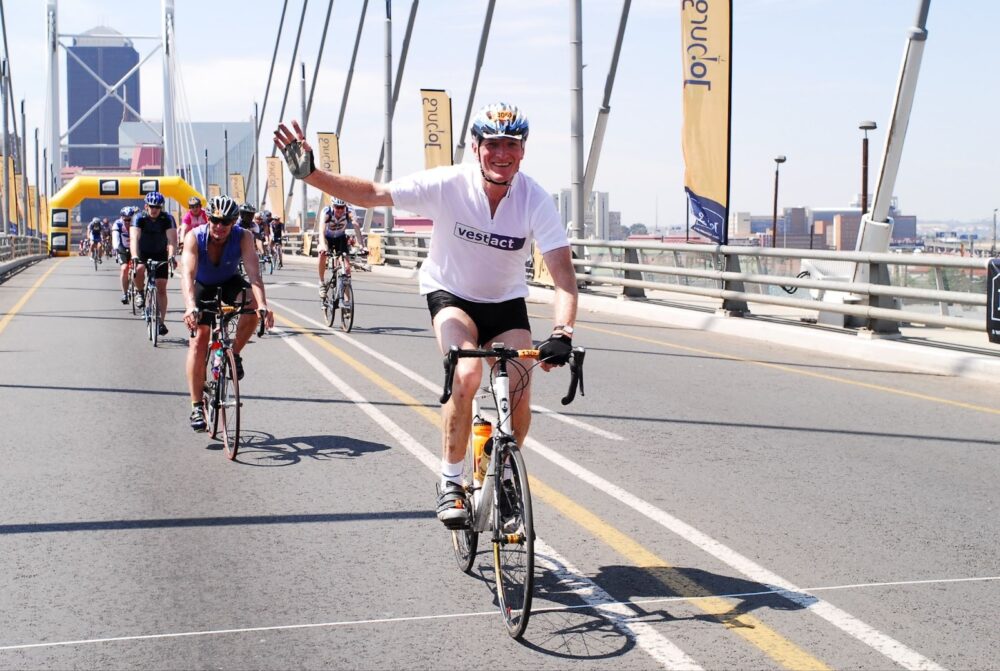
“I lead a healthy lifestyle and yet I had blockages in my cardiac arteries. I got three stents [small tubes which help keep blood flowing in blocked vessels] in 2017. I’ve got high blood pressure, all of it controlled. And then this year, I had atrial fibrillation, which means that your heart starts beating irregularly. I’m enormously grateful that I have access to the quality of medical care that is keeping me healthy. But, all of that to say, I have a sense of vulnerability.”
Studies have found that the sooner someone starts treatment, the better. The inflammation from HIV causes those with the virus to age faster. ARVs help reduce inflammation. But that means the longer you wait to take them, the quicker your body ages.
Cameron lived with HIV for 12 years before he could start treatment. At the time, ARVs were prescribed based on how low a person with HIV’s CD4 count was, a measurement of the white blood cells that help your immune system fight infections. Over the years, as scientists learnt more about the virus, it became clear that the faster someone is put on treatment after infection, the better. Since 2017, ARVs in South Africa have been given as soon as someone tests positive, to keep their viral load (how much HIV is in their blood) low enough so the virus cannot be transmitted.
Cameron looks back to that day in November, 28 years ago, when he cradled his first dose in his hands.
“I feel a very profound and quite humble sense of deep gratitude for living and for the medical science that brought ARVs and most importantly, for the activism that insisted that these drugs be developed. Without the angry rage of queer men like myself in North America and without the activism of Zackie in starting the Treatment Action Campaign in December 1998, we would not be able to say that in South Africa, more than six million people like myself are now on ARVs and owe their lives and wellness and healthiness to ARVs.”
A blot, a scar, a stain
HIV has shaped Cameron’s career as well as his life. Before Nelson Mandela appointed him as a judge to the high court in 1994, he was a human rights lawyer at the Centre for Applied Legal Studies (Cals) at Wits University, where he founded the Aids Law Project (which would become SECTION27), co-founded the Aids Consortium and helped draft the Charter of Rights on Aids and HIV.
“Being gay, living with a radical virus, which could flare up again if I didn’t have my meds, it shapes your life. It becomes part of your self-conception,” he says.
Part of his identity, though, came with the stigma attached to it.
“Worse than the loss of a vision of your life ahead was the internal shame I felt. That’s why I speak about internalised stigma — because I blamed myself. I believed that, you know, I shouldn’t have had so much sex or sex with x or y or z. So, there’s a level of self-blame that is terribly debilitating.”
It was his work at Cals that helped him partly come to terms with that. There, while working with the National Union of Mineworkers on Aids/HIV legal codes as the epidemic was exploding in South Africa, he began meeting others with HIV. People who weren’t gay, white men like him.
“They were black, they were women, they were married to opposite sex partners who were mineworkers who were away for substantial periods of the year. Some of them told me that they’d never had sex with anyone apart from their husbands. Yet they felt the same shame that I did.
“I’m not comparing our situations because I was enormously privileged. I was an advocate with a salary and a home but that made me see things differently. It made me see that it was not about queerness or gayness or having gay sex or having too much sex.”
Stigma was one of the reasons he waited as long as he did to speak out about his HIV, which he announced in 1999, when he was up for consideration for the Constitutional Court.
Lines in his 2005 book Witness to Aids speak painfully to some of that fear:
“Aids is stigma disgrace discrimination hatred hardship abandonment isolation exclusion prohibition persecution poverty privation. Aids is metaphor. It is a threat a tragedy a blight a blot a scar a stain a plague a scourge a pestilence a demon killer rampant rampaging murderer. It is made moral. It is condemnation deterrence retribution punishment, a sin a lesson a curse rebuke judgement. It is a disease.”
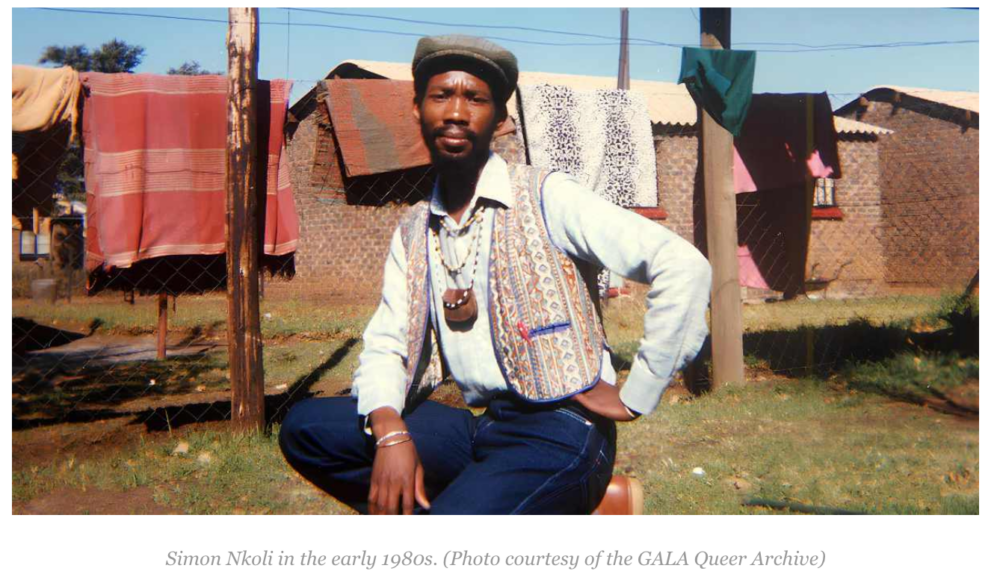
His coming out followed two pivotal deaths: Simon Nkoli, the openly gay anti-apartheid and gay rights activist, who died because of Aids at 41; and soon after, HIV activist Gugu Dlamini, a 36-year-old who died, not because of Aids but was attacked and killed three weeks after publicly announcing she had HIV.
“The deaths of those two people, both of whom spoke about their own HIV, made it impossible for me to keep on remaining silent. But, of course, by the time I spoke out, I was healthy and well. It was a couple of years after I started ARVs, so I was able to say, I’m living. I’m here because of ARVs. I’ve survived death, an inevitable and certain death.”
Cameron knows first hand how difficult it is to come out and say you have HIV. Still, he cannot conceal his disappointment in some of South Africa’s “silent people”, the public figures who have not declared their status, “our elite, our politicians, our soccer players, our entertainers, our public figures, our professors at university”.
“Should someone speak out about having survived breast cancer, cervical cancer, liver cancer? I would never say you should speak out about having had any life-threatening disease but it would be enormously helpful and normalising in what is in our country a normal disease. Because when 13% of people are living with a potentially life-threatening disease, it’s normal.”
And it is what, he says, would help get us past the stigma that keeps people away from clinics, from being tested, from taking the medicines that can save their lives. From keeping that past scourge of certain death at bay.
Witness to Aids
His memories of Saturdays at Soweto’s Avalon Cemetery, where the earth surrendered to receive the scores of bodies lost to Aids, are alive in him. It is palpable in his writings in Witness to Aids.
“Aids is mouth and tongue and scar and nerve and eye and brain and skin and tum and gut. Aids is smell and feel — of sweat and grime and snot and breath and bowel and secretion, discharge, pus, putrescence, disintegration, excrement, waste. Human waste. Aids is feeling — painful sharp tingling burning heavy dull weakening wasting enervating diminishing destroying bereaving. Aids is fear. It is breathless and nameless.”
The prospect of having those days return because of US funding cuts frightens him.
“It is not an overstated word to say carnage. We might be able to afford the actual medications but what we are losing is the research, the recruitment — where you send people into Hillbrow to talk to the sex workers, to talk to the young people, to say to them: ‘Are you aware of the risk of HIV? Do you know someone who’s got HIV? Send them to the clinic. We will put them on ARVs.’ All of that we’re losing. And it is catastrophic.”
The ingrained sense of responsibility for the South African project is one reason why Cameron continues his work. Since stepping down from the Constitutional Court in 2019, he’s been an inspecting judge of prisons and served as chancellor of Stellenbosch University until December 2025. He continues to lecture, hold seminars and talk to journalists like us. It’s part of his own constitution.
“[Having HIV has] made me deeply conscious — in a life and death sense — of how important social activism and civic action are. Our institutions of government and our instruments of government are important, but they have to be shaped and pressured and demanded upon by civil society action.
“That’s one of the beneficial legacies of apartheid — not that they were because of apartheid — but the response to apartheid from civil society was to create educational organisations, resistance organisations, secret organisations, organisations in alliance with the exiled liberation movement, organisations for drama and art. That legacy lives on into our democracy, with a vibrant, independent civil society and NGO sector.”
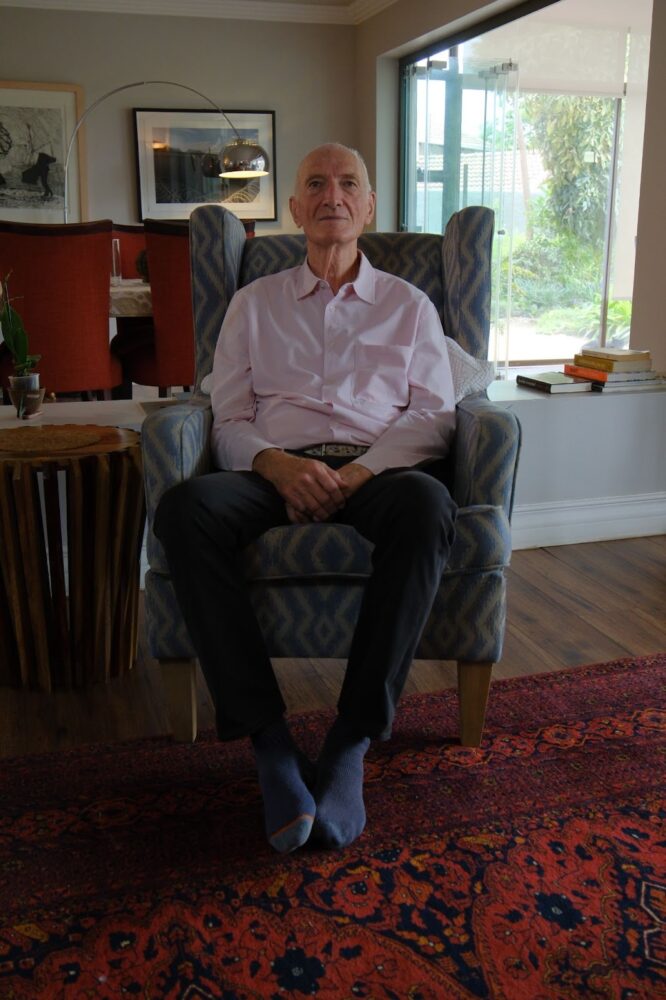
As we spoke in his living room, his cat wandering in and out, Cameron, in a dress shirt and slacks, spoke from his armchair in his socks — a man clearly comfortable yet understated in his outsized achievements. It’s a reminder of his groundedness, that he does not take himself so seriously, even if what he has done in his life, what he represents, is serious indeed.
In 2019, he told a story to South Africa’s LGBTQI publication MambaOnline that’s worth repeating here.
The journalist asked him what it was like to be an icon. His response sums up that side of Cameron well: “A few years ago, my friend said, ‘First you were Mr, then you were advocate, then you were professor, then you were judge, now you are justice. I’m just going to call you madam!’
“I think the nice thing about LGBTQI life is that we’ve perfected the art of self-irony or spoofing ourselves and I’m never very far from spoofing myself. So when you ask me that question, I immediately roll my eyes … iconic! So, it’s very good that we don’t get too serious about ourselves. The struggle is serious — but not ourselves.”
This story is based on an interview with Mia Malan, which was broadcast on Bhekisisa’s monthly television programme Health Beat in January. Additional support by the Health Beat team: Anna-Maria van Niekerk, Jessica Pitchford, Justin Barlow, Tim Wege and Jeannine Snyman.

This story was produced by the Bhekisisa Centre for Health Journalism. Sign up for the newsletter.
At 33, the retired Constitutional Court justice thought he had, maybe, seven years left. His story traces the arc from certain death because of Aids to a chronic, manageable condition at 73. He asks what happens when the generation who fought for life finally get to grow old