
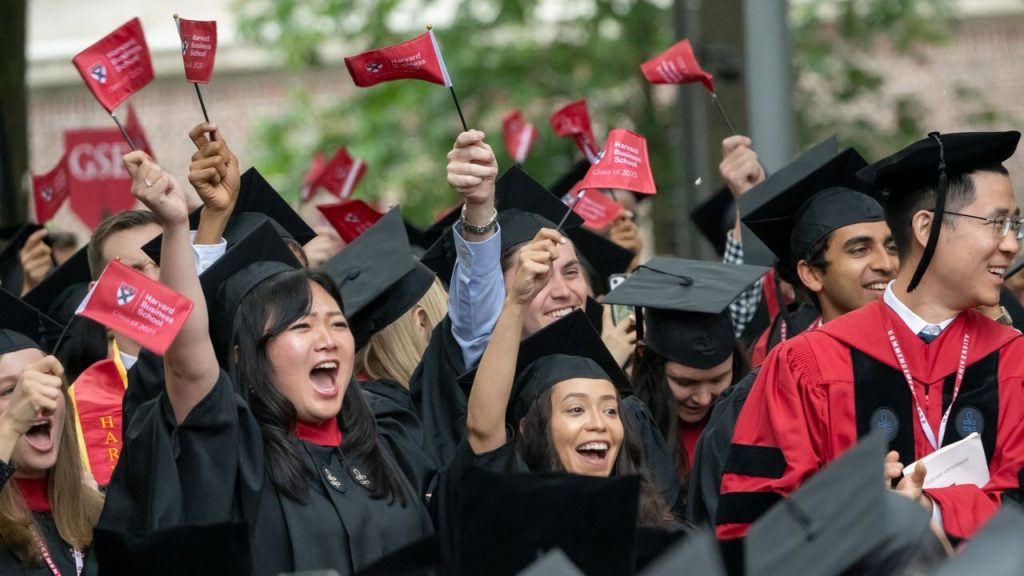
Good news for college grads, who “are finally catching a break in this job market,” said Ray A. Smith and Te-Ping Chen in The Wall Street Journal. After years of difficult hiring prospects for those leaving the comfort of campus, recent data suggests the tide may be turning. Unemployment among 20-to-24-year-olds with degrees dropped to 5.3% in March, down from a decade high—excluding the pandemic’s early months—of 8.9% last fall. “A widely watched survey by the National Association of Colleges and Employers” (NACE) recently showed that employers are expected “to boost new-graduate hires by 5.6% this spring,” well above the 1.6% expected. And another survey from ZipRecruiter found that “nearly a third of employers planned to hire a greater number of entry-level workers this year,” perhaps a sign that after years of cuts to the lowest rungs of the labor market, more businesses “feel the need to replenish their pipelines.”
Notably, 90% of the NACE survey respondents said hiring college grads was now “important to their success,” said Bruce Crumley in Inc. Businesses may be starting to learn a hard lesson after turning over their entry-level jobs to artificial intelligence that isn’t yet up to the task. “Many are now more inclined to use the tools to improve the performance of new hires in those positions rather than replace them.” Small businesses are leading the way with college grad hiring, said Sherin Shibu in Entrepreneur. Owners say they are “looking for recent graduates specifically for their digital fluency,” and hands-on roles, like field manager and service technician, are growing fast “as demand shifts toward work that’s harder to automate.”
There’s no shortage of available jobs for young people, said Jason Altmire in The Washington Post. There were 6.9 million job openings in February, even as 7.6 million Americans were filing for unemployment. What gives? Most of the openings were in trades that today’s young workers aren’t equipped to fill. “Placing the four-year degree on a pedestal for decades has limited the interests of students and misaligned workers and jobs, exacerbating workforce shortages across trade professions.” This problem will only worsen as older electricians, mechanics, welders, and many others retire. These jobs “keep the economy running.” Why can’t more young people do them?
Don’t blame the kids, said Ryu Spaeth in New York. They’ve been “cursed.” Not only was their high school experience “wrecked” by the coronavirus but now they’re entering the labor market during “AI’s job-killing, human-replacing revolution.” A school of thought holds that, “whatever challenges lie in the future, people will manage to adapt and flourish.” But let’s take some pity on those trying to start a career now.
New-grad hires are expected to jump 5.6%