
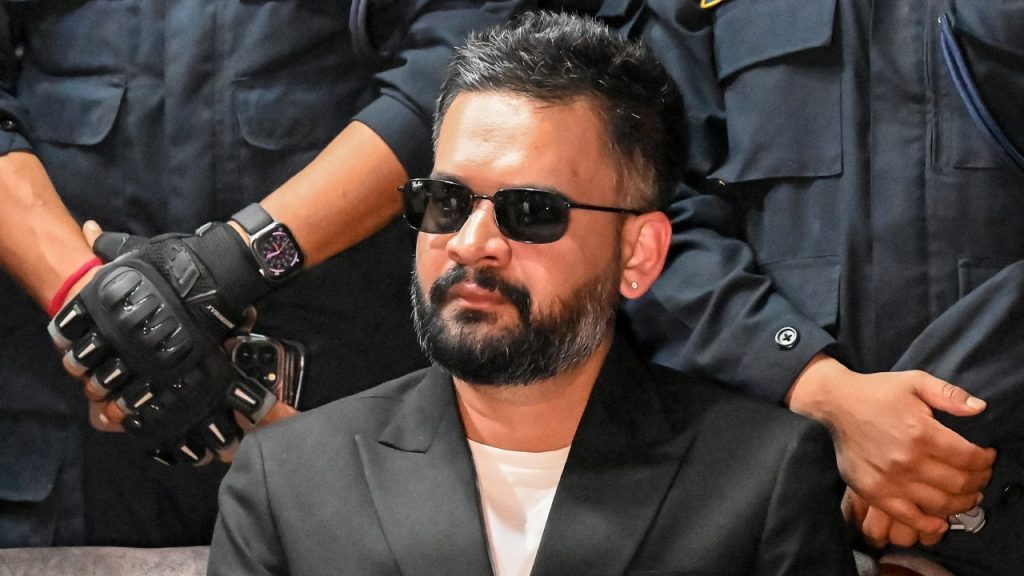
Although he’s still only 35, Balendra Shah has already lived many different lives, said Hannah Beech et al. in The New York Times. He has been an engineer, a rapper and – until he stepped down this January – mayor of Nepal’s capital city, Kathmandu. But Balen (to give him the name by which he’s popularly known) now faces his biggest test yet, as Nepal’s youngest-ever prime minister.
The “pugnacious” millennial – who has made a habit of ranting against his critics on social media and coming up with startling political observations (he has even praised “the managerial acumen of dictators like Hitler”) – hasn’t formally been declared the next leader of the Himalayan nation, but following the sweeping victory on 5 March of his centrist Rastriya Swatantra Party (RSP), the party he joined in December, he’s all but a shoo-in.
Defying the odds
Balen’s success didn’t come out of the blue. As Kathmandu’s mayor, he cultivated the image of a no-nonsense politician keen to slash red tape. But his appeal skyrocketed after he voiced support for the violent youth demonstrations – the so-called Gen Z protests – that toppled the communist-led government of K.P Sharma Oli last September. People between the ages of 16 and 40 make up about 40% of the population – and younger voters turned out en masse for the RSP.
Balen’s spectacular victory has “fundamentally changed” Nepali politics, said Biswas Baral in The Diplomat (Washington DC). Defying an electoral system that typically produces coalition governments, he achieved the “almost impossible” by helping the RSP, a party only founded in 2022, to win 182 out of 275 seats. The old political guard suffered a drubbing so severe that the country’s two main parties – the centre-left Nepali Congress and the Communist Party of Nepal (Unified Marxist–Leninist) – were left with just 38 and 25 seats respectively. They paid the price for endemic corruption, chronic political instability and high youth unemployment – issues Balen has promised to address.
If anyone is to blame for the scale of their defeat, it’s Oli, said Jiba Raj Pokharel in The Himalayan Times (Kathmandu). It was the 74-year-old communist PM who imposed the social media ban that triggered the Gen Z demonstrations last September, a ban that morphed into a broader movement against state corruption. The security forces opened fire on the crowd and, in the ensuing violence, 76 people died; parliament, the supreme court and other historic buildings were torched. By refusing to take “moral responsibility” for the killings, Oli guaranteed his own “political demise”. Balen stood against him in his seat in Jhapa and, unsurprisingly, beat him by some 50,000 votes.
‘Delicate balance’
This election should be seen as a “youthquake”, said The Kathmandu Post. For decades, Nepalese politics has been dominated by sexagenarians and septuagenarians, in a country where the median age is now just 26. But things are changing fast. In 2022, just 6% of Nepal’s politicians were aged under 40. Now 43% of the 165 directly elected MPs are (the rest are selected by parties in a PR list system). Although their election is, of course, a welcome development, this inexperienced new cohort must “transcend the lure of social media populism in favour of substantive, research-driven legislative reform”.
The RSP victory and the trouncing of the old guard is a boon to India and a blow to China, said the Tibetan Review (New Delhi). Nepal is strategically situated between Asia’s two largest powers, both of which compete for influence there. India is by far Nepal’s biggest trade partner, but under the premiership of Oli, an “unabashedly pro-China figure”, Beijing gained the upper hand. The precarious path Balen will now have to tread is maintaining “a delicate balance” between these regional super powers, said Sanjay Upadhya in the Nepali Times (Kathmandu). “The challenge is to protect Nepal’s sovereignty while gaining the economic aid needed for growth.” It will be no easy task.
Millennial ex-rapper has brought a ‘pugnacious’ energy to Nepal’s geriatric political establishment