
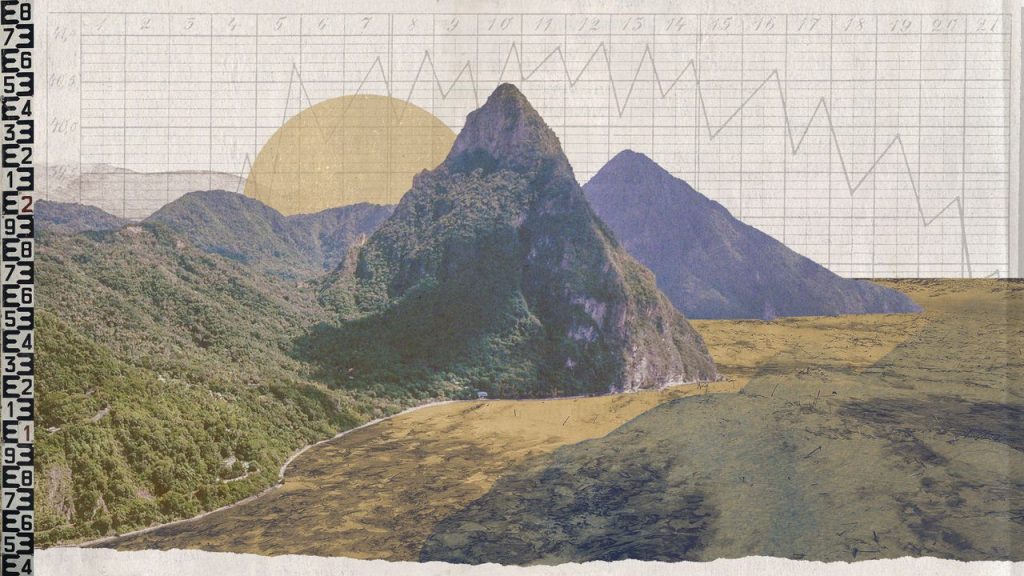
On the small Caribbean island of St Lucia, a crisis is brewing. For “more than a decade”, residents have lived with an “intermittent water supply”, said The Guardian. But the most recent emergency has upended day-to-day life for thousands, turning everything from “normal hygiene” practices to “food preparation” into a struggle.
And despite “millions of dollars of investment”, including $80 million (£60 million) from World Bank financing, funds have merely “scratched the surface” when it comes to tackling the water supply issues pushing islanders “to the brink”.
‘Complex mix of challenges’
Water supply is among St Lucia’s “most politically contentious issues”, with the two major political parties, Labour and the United Workers Party, “routinely trading accusations” that resources have been “mismanaged”, said The Guardian. The island has a sole water company – the Water and Sewerage Company (Wasco) – which therefore has the monopoly on supply.
Wasco’s provision of water to homes and businesses is hampered by service issues including leaks, blockages “and damage to key transmission lines”, said the St. Lucia Times. But there is also a “complex mix of challenges” at play, ranging from climate change to the island’s “ageing infrastructure”. Rainfall patterns are now far “less predictable” and the island grapples with “drier years alternating with wetter ones”.
The “severe” water shortage even led the island’s government to consider the “unprecedented” measure of importing water from nearby Dominica at the peak of its tourist season, said Caribbean National Weekly. While the return of rainfall in May ultimately tackled the issue, many fear the implications for future supply issues.
The ‘new norm’?
While the “popular imagination” may lend itself to believing the “paradise” islands of the Caribbean would not struggle with supply, “water scarcity may become the new norm” in the region, said PreventionWeb in 2024. In fact, the Caribbean as a whole is “one of the most water-stressed regions in the world”. Trinidad and Grenada have grappled with drought, St Vincent and St Kitts have both had to ration water, and Barbados has previously implemented “water bans” to curb usage.
In the meantime, “urgent but carefully planned intervention” is required to keep the island’s water system afloat, said the St. Lucia Times. As a temporary solution, citizens have been urged to “engage in rainwater harvesting”. In the longer term, the government has already promised “significant investment” along with a “dedicated committee” to examine Wasco’s future. The supplier’s slogan declares that “water is life”, said the newspaper. If that is the case, it is also true that “clearly the company and its systems are gravely ailing”.
Costly effort to overhaul supply has yet to solve the everyday struggle for reliable water