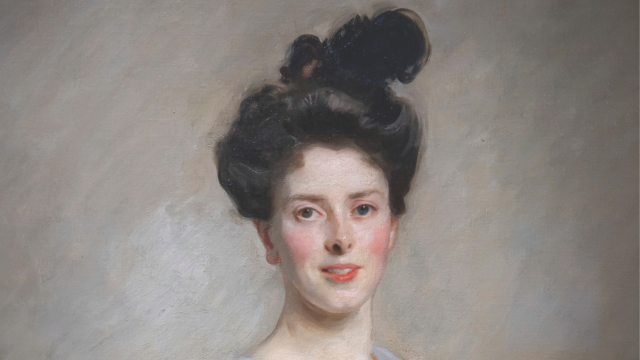
John Singer Sargent was the pre-eminent society portraitist of the late Victorian and Edwardian eras, said Andrew Pulver on Air Mail. Indeed, “sitting for – and paying for – a portrait by Sargent was a mark of social clout in itself”. And the American expatriate painter (1856-1925) was well placed to become the chief artistic chronicler of a “phenomenon” that thrilled fin de siècle London: dozens of “wealthy American heiresses” arriving in Britain to marry into the aristocracy.
Collectively – and somewhat dismissively – known as the “dollar princesses”, these women “were the reality-TV stars of their day”, stalked by gossip columnists and satirised by novelists and songwriters. They were often regarded with snobbery by the British upper classes, and castigated for disloyalty back home. But Sargent, “never slow to spot an opening in the market”, painted 30 of them. This show at Hampstead’s Kenwood House (briefly home to the “dollar princess” Daisy Leiter, later the Countess of Suffolk) features 18 portraits – eight in oil, ten in charcoal. It is the first exhibition ever devoted to this side of Sargent’s career, and gives a “revelatory” glimpse into the Belle Époque.
The social history is certainly “riveting”, said Laura Cumming in The Observer. We read about the heiresses’ fascinating life stories: there’s Grace Hinds from Alabama, who married Lord Curzon and later became the lover of Oswald Mosley (who married one of her stepdaughters and slept with two others); and there’s Nancy Astor, Britain’s first female MP, depicted here in both youth and in old age. And everything is “beautifully displayed”. What a shame, then, that the pictures themselves are often “as glib as Sargent could be when churning them out”. His charcoal drawings “make every sitter look roughly the same: pert nose, expensive jewels and hairdo”. The works feel “transactional”, and sometimes plain bad: the hands in a likeness of Louisiana heiress Cora Smith, for example, “are so casually botched, you’d think she would have asked for her money back”.
Yet “when Sargent was good, he was really good”, said Waldemar Januszczak in The Sunday Times. All the pictures here are skilful and “pleasing”. And some “are genuine Sargent triumphs of old-style portraiture”: his “eye-storming” likeness of Edith, Lady Playfair, originally from Boston, sees her “calm and confident”, looking down on us from “divine painterly heights”, and wearing “an apricot top in shiny satin that stings the eyes with its tangy orange intensity”. For decades, Sargent was unfashionable: though his talent was obvious, he was seen as out of step with the modern art of his time, lightweight, decadent – a “flashy, quick-wristed, heiress-hunting society lapdog”. Now opinion has shifted; he is recognised as “the van Dyck of the Edwardian era, an old master among the modernists”. This “elegant event” represents another step on that “reputational journey”.
Kenwood House, London NW3. Until 5 October; englishheritage.com
Kenwood exhibition shines a light on the American ‘dollar princesses’ who married into the English aristocracy