
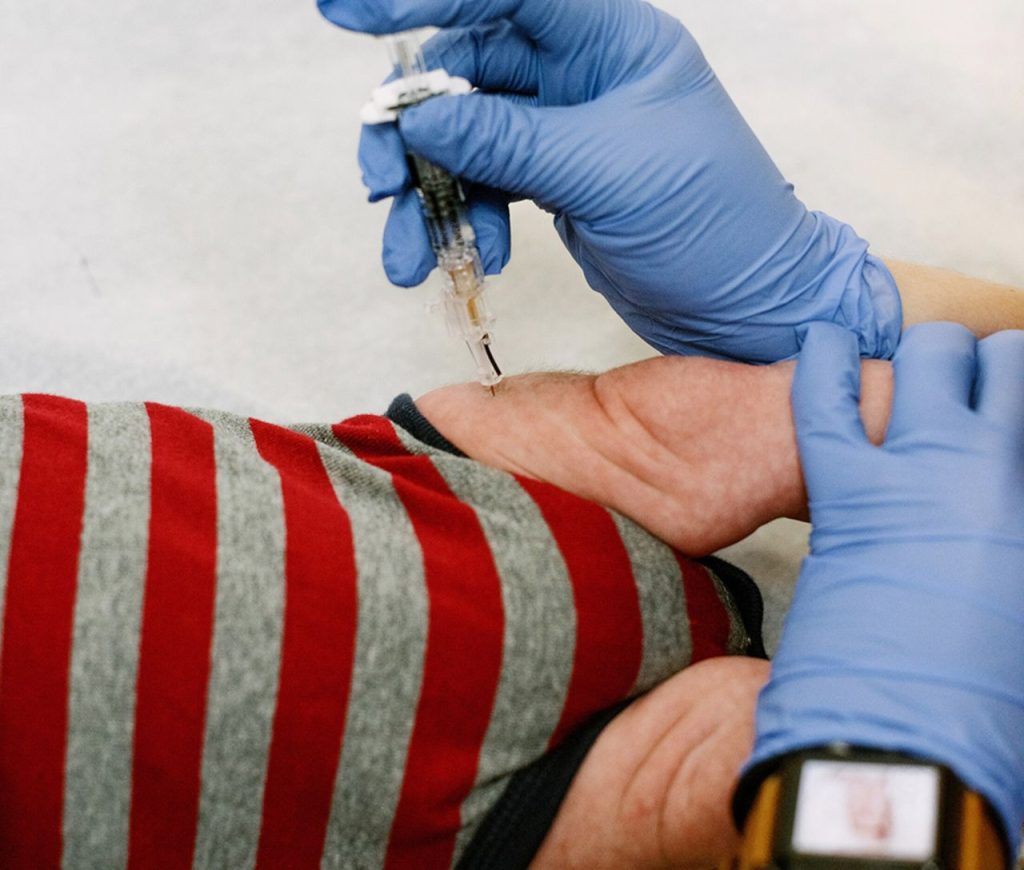
“A seismic shift in the nation’s approach to public health occurred,” said Leana S. Wen in The Washington Post, and American children will suffer for it. Since 1991, the Centers for Disease Control has recommended all babies be immunized at birth against hepatitis B, a virus that attacks the liver. About 90% of infected babies develop the chronic version of the disease, which often culminates in fatal liver cancer. Under the CDC’s “universal birth dose” policy, mercifully, pediatric cases of hepatitis B have fallen from 18,000 in 1991 to only 20 a year now. But the CDC’s Advisory Committee on Immunization Practices—packed with anti-vax allies of Health and Human Services Secretary Robert F. Kennedy Jr.—voted 8-3 to undo this miracle of public health. If acting agency director Jim O’Neill accepts the panel’s decision, the CDC will recommend that only the babies of mothers who test positive for hepatitis B be vaccinated at birth. Those who test negative will be advised to talk with their doctors about “when or if” to vaccinate and will have to wait two months to start the three-dose regimen. “Why change a policy that has been so effective?” Because Kennedy and his allies share a gut feeling, unsupported by science, that vaccines are not “lifesaving tools” but rather “a source of harm.”
Kennedy has claimed that hepatitis B is spread only through sexual activity and needle sharing, said Jonathan Cohn in The Bulwark. If true, that would obviously reduce the urgency of vaccinating newborns…but it’s not true. This highly contagious virus can survive up to a week on surfaces, and infants contract it by sharing toys or utensils with infected family members. Other critics of the current CDC guidelines, including members of the panel, also cite the example of Denmark, which recommends vaccination at birth only for babies of infected mothers. But unlike the U.S. (population 340 million), Denmark (population 6 million) has a “well-tended universal health care system” that can identify those infected mothers before they give birth.
Expect to hear more about Denmark, said Lauren Gardner in Politico. After the vote, Trump ordered Kennedy to review “best practices” in “peer, developed countries” and to update the U.S. vaccine schedule accordingly. No prizes for guessing what this review will conclude, said Tom Bartlett in The Atlantic. Among the supposed experts who presented to the panel last week was Kennedy ally Aaron Siri, a lawyer who has petitioned the government to stop distributing the polio vaccine. “He used his time to spell out his doubts about the childhood-vaccine schedule.” And the panel has other ways to weaken childhood vaccinations: Its chair said it will examine the aluminum salts added to many vaccines to trigger a stronger immune response. The amount of aluminum in shots is paltry, less than what naturally occurs in breast milk, and a ban would “upend childhood immunization in the U.S.” But that, of course, is what Kennedy and his “allies have wanted all along.”
It isn’t just children, said Dylan Scott in Vox. The CDC has already “walked back” its recommendation that most adults get Covid shots, and the FDA announced this week it was investigating “deaths potentially related to Covid vaccines.” Is there evidence of such deaths? Not that the FDA has shared. But evidence hardly matters to people whose goal is the dismantling of medical science. Maybe a surge in pediatric hepatitis cases will spark a backlash and end this nightmare. For now though, “America’s vaccine playbook is being rewritten by people who don’t believe in them.”
‘America’s vaccine playbook is being rewritten by people who don’t believe in them’