
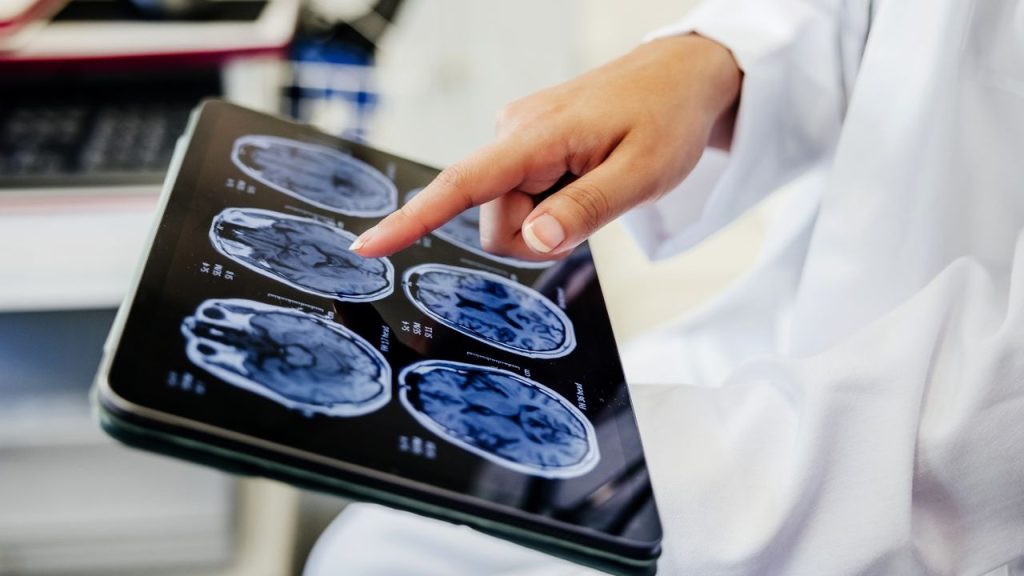
Researchers have created one of the most realistic “mini-brains” yet, reports New Scientist, growing a tiny version of a developing human cerebral cortex, complete with a network of blood vessels that closely mimics those found in real brains.
Such brain organoids, lab-grown clusters of human brain cells, are used to study conditions such as autism, schizophrenia, and dementia. Most organoids resemble the brains of fetuses but usually stop developing after a few months because they lack blood vessels to deliver oxygen and nutrients to their core.
To overcome that issue, a team at University of California, San Francisco grew cortical organoids from human stem cells alongside separate organoids made of blood-vessel cells. They then fused the two, placing vascular organoids at either end of each mini-brain. Within weeks, blood vessels had spread evenly throughout the tissue.
Crucially, imaging revealed that the vessels formed hollow tubes, or lumens—a defining feature of real blood vessels that previous attempts had failed to reproduce. The vessels also showed genetic activity and physical properties similar to those seen in the developing human brain, including features of the blood-brain barrier, which regulates what enters and exits brain tissue.
Madeline Lancaster from the University of Cambridge, who first developed brain organoids, says that while we are still a long way from creating “truly functional” blood vessels, this breakthrough is a “major step.”
It’s a tiny version of a developing human cerebral cortex