
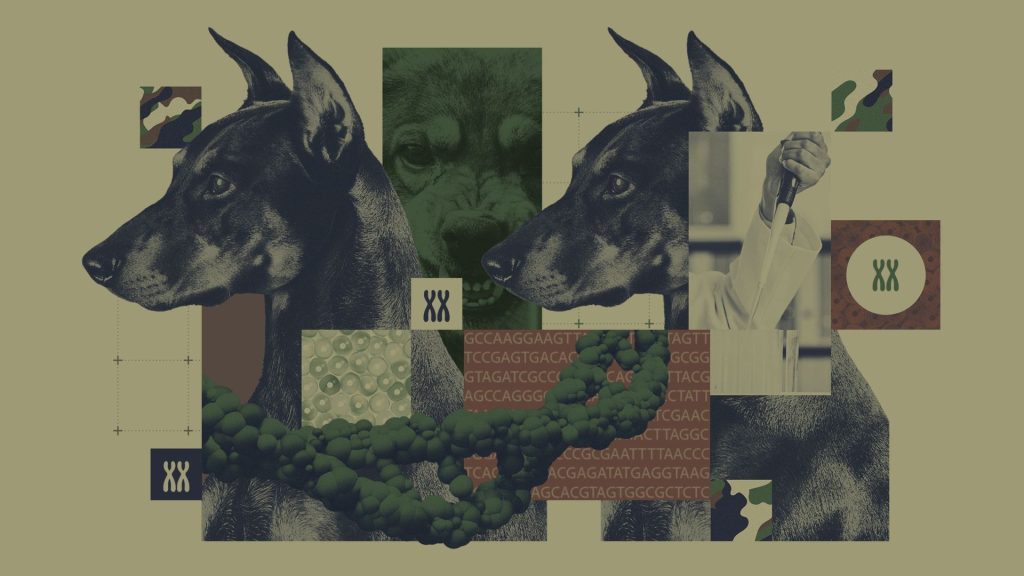
A biotechnology firm, Warhound, wants to clone and genetically modify military dogs to be used for tasks like bomb detection, searches and policing. The company is working to ensure the process is humane, though some experts are concerned.
Copy and pasting dog DNA
Warhound will “find top dogs that have finished training and biobank their genetic material,” said Fortune. Then, through genetic engineering, the company will “focus on eliminating common health conditions that impact these breeds,” said Wired. In the future, more advanced changes might be made, like “incorporating olfactory receptor genes from wolves.” The company was created by Palmer Luckey, the founder of the military defense company Anduril Industries, and Ben Lamm, the co-founder of the genetic engineering company Colossal Biosciences.
The new startup will combine Colossal’s “breakthroughs in genetics, cloning and animal biology” with Anduril’s “advanced defense technology,” said a press release by Warhound. Colossal Biosciences previously gained notoriety for its deextinction efforts, like trying to bring back the dire wolf, dodo and wooly mammoth. Anduril will “provide software and hardware, such as protection vests and goggles, to assist the dogs and their handlers with situational awareness and coordination,” said TechCrunch.
Controversial ethics
The company claims “animal welfare is central to the program” and is working with the American Humane Society, said the release. “By improving health, durability and training success,” Warhound will reduce the number of dogs needed for assignments and “enable safer, more effective missions.” We “ask dogs to put their lives on the line to protect ours,” said Lamm in the release. “Yet we are still relying on outdated approaches to breeding and training.”
While the “science the company proposes is possible,” it is “prone to error, inefficiencies and a slew of ethical concerns,” said Scientific American. The process “requires a lot of dogs to have invasive things done to them and to be killed in order to produce one cloned puppy,” said Lisa Moses, a veterinarian and bioethicist at Harvard University, to the outlet.
The process could be helpful or harmful