
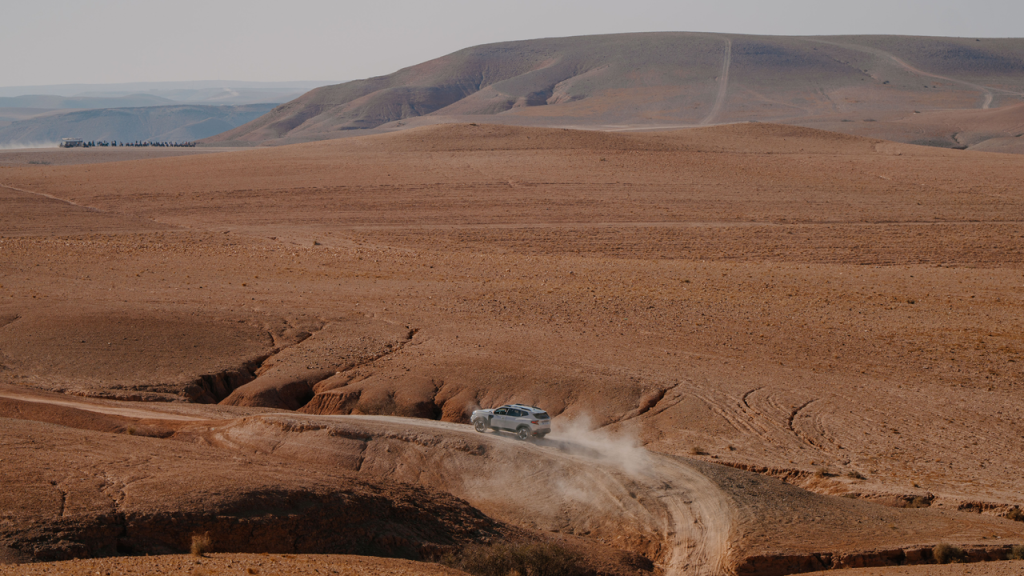
The chaotic drive out of Marrakech gave little hint of what lay ahead. Just an hour later, the traffic thins and the road dissolves into the Agafay Desert. Pale, rocky and otherworldly, with the snow-capped Atlas Mountains fixed on the horizon some 20 miles to the south, it feels like another planet entirely. This was the setting for a 24-hour off-road adventure and a real-world test of the newly launched Dacia Duster Hybrid-G 150 4×4.
On paper the challenge was simple: leave the city, navigate across the desert using a pre-loaded route on the car’s infotainment system, and reach a remote camp in time for sundowners. But Agafay isn’t the Sahara of sweeping dunes and postcard views. It’s harsher and technical: hard gravel plains stretch into the distance, broken by rocky climbs, dry riverbeds and sudden drop-offs. Pick the wrong line and you’re stuck. Push too hard and you risk damage.
It’s also where the Duster began to impress. Sitting at the heart of Dacia’s new line-up, the SUV pairs a turbocharged 1.2-litre petrol engine with hybrid assistance and four-wheel drive, producing 150hp. It was my first time behind the wheel of a Dacia and, if I’m honest, I arrived with a degree of scepticism. Yet out here, crossing rock, gravel and washouts hour after hour, it proved quietly capable and entirely up to the task.
Capable, but fun
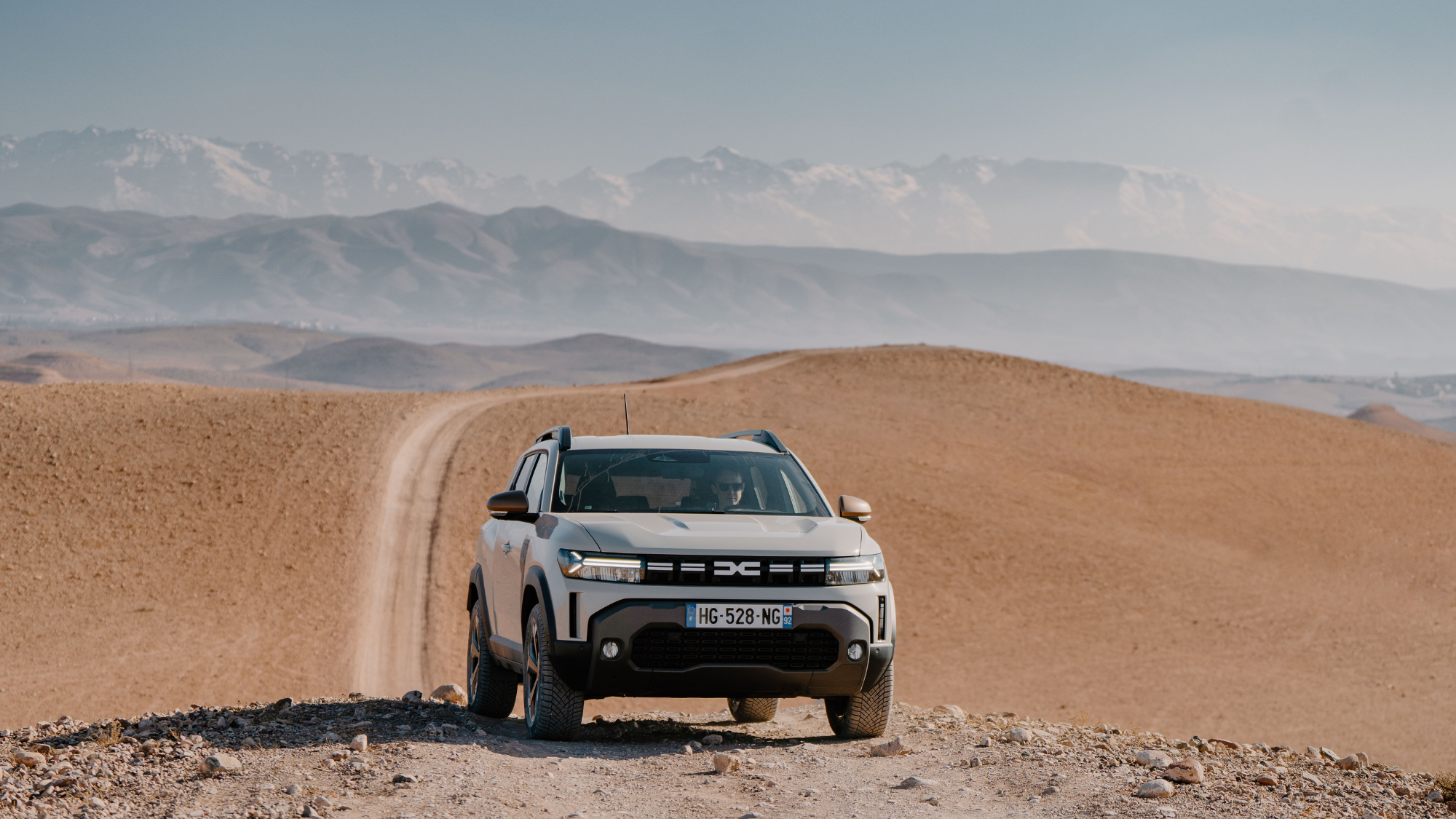

It wasn’t long before we reached our first proper test. Slowing to a crawl, we edged down a steep, boulder-strewn track, the car momentarily balancing on two wheels at angles that felt improbable from the driver’s seat. It was genuinely nerve-jangling. With blind faith in the car, there was very little driving skill involved on my part. Torque was calmly fed to where it was needed, the Duster stayed poised, and we eased smoothly back onto firmer ground.
Once we’d taken a well-earned pause for mint tea and camel-spotting, the terrain opened up and everything changed. On wide, fast gravel tracks, I could really put my foot down. My mind drifted to the World Rally Championship as the Duster skimmed across the surface with unexpected pace and stability. Despite the small engine and deliberately low kerb weight, it never felt underpowered or twitchy. More than that, it felt completely in its element, and genuinely good fun to drive.
Its confidence is helped by six drive modes: Auto, Eco, Snow, Mud, Lock and Hill Descent. These aren’t marketing add-ons. In the desert, you use them constantly. Lock mode proved invaluable on loose climbs, Hill Descent took the stress out of steep drop-offs, and Auto seamlessly shuffled between two- and four-wheel drive as conditions changed. The hybrid system itself was smooth and unobtrusive, underpinned by Renault Group engineering that inspires trust when you’re hours from help.
Design that makes sense
The Duster’s LPG model accounts for roughly one in three global sales – they’re hugely popular in mainland Europe – and the dual-fuel hybrid we drove paired unleaded and LPG tanks for a staggering range of up to 1,500km. That specific configuration won’t come to the UK, where LPG never truly caught on, but the principle remains. This is a car designed to go far and keep going, removing one of the biggest mental burdens of remote travel.
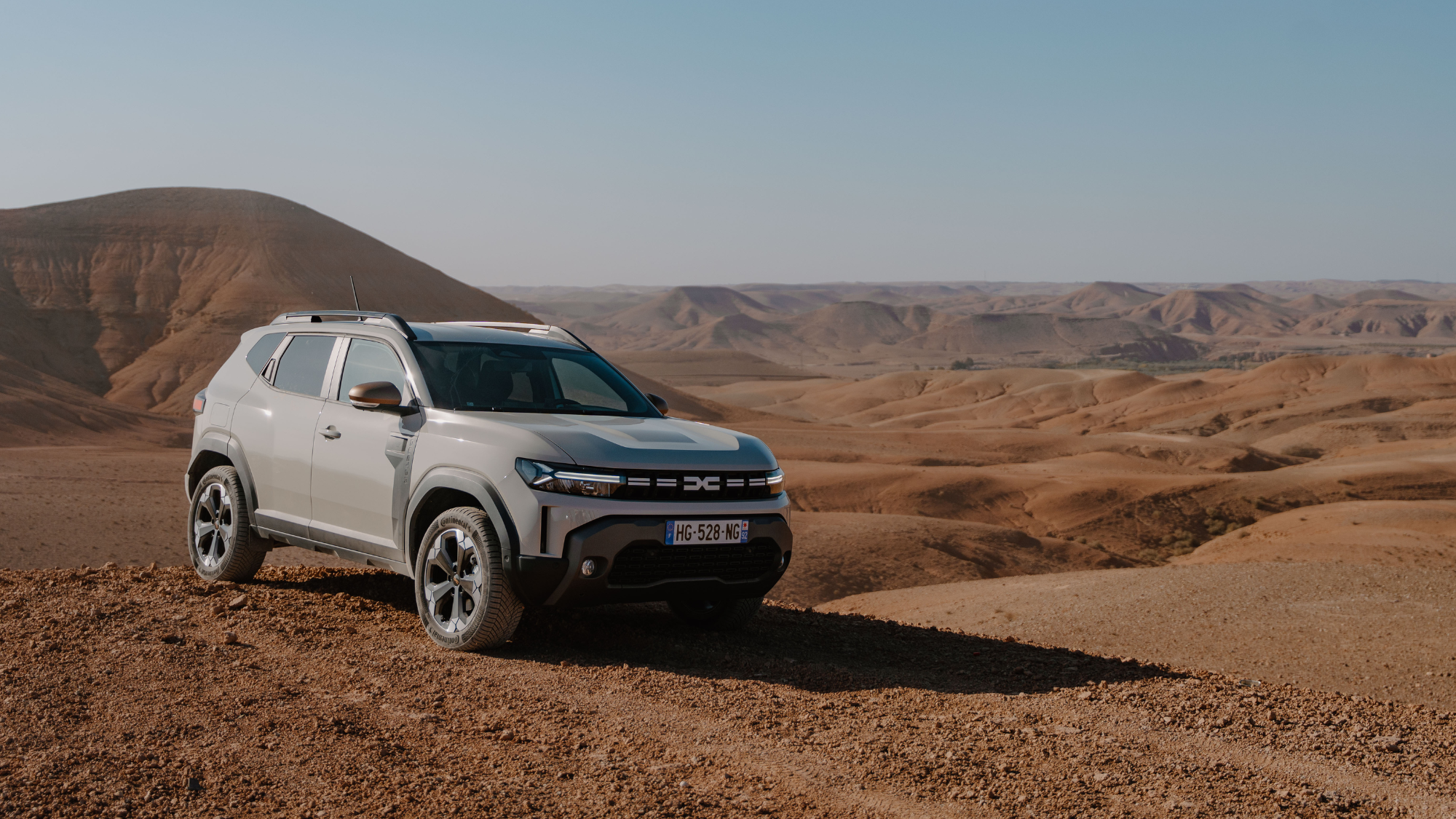
What stood out just as much as the capability was what Dacia chooses not to include. There’s no chrome or leather inside, reducing both cost and environmental impact. The bumpers are designed for durability and recyclability, while wipe-clean surfaces and all-weather tyres as standard encourage use rather than preciousness.
Even the details feel considered. The modular roof bars rotate 90 degrees to become proper crossbars when needed, while the alloy wheels are subtly recessed to sit within the line of the tyre, helping avoid scrapes from inevitable encounters with kerbs or rocks. It’s thoughtful, practical design, shaped by how people actually use their cars rather than how they photograph.
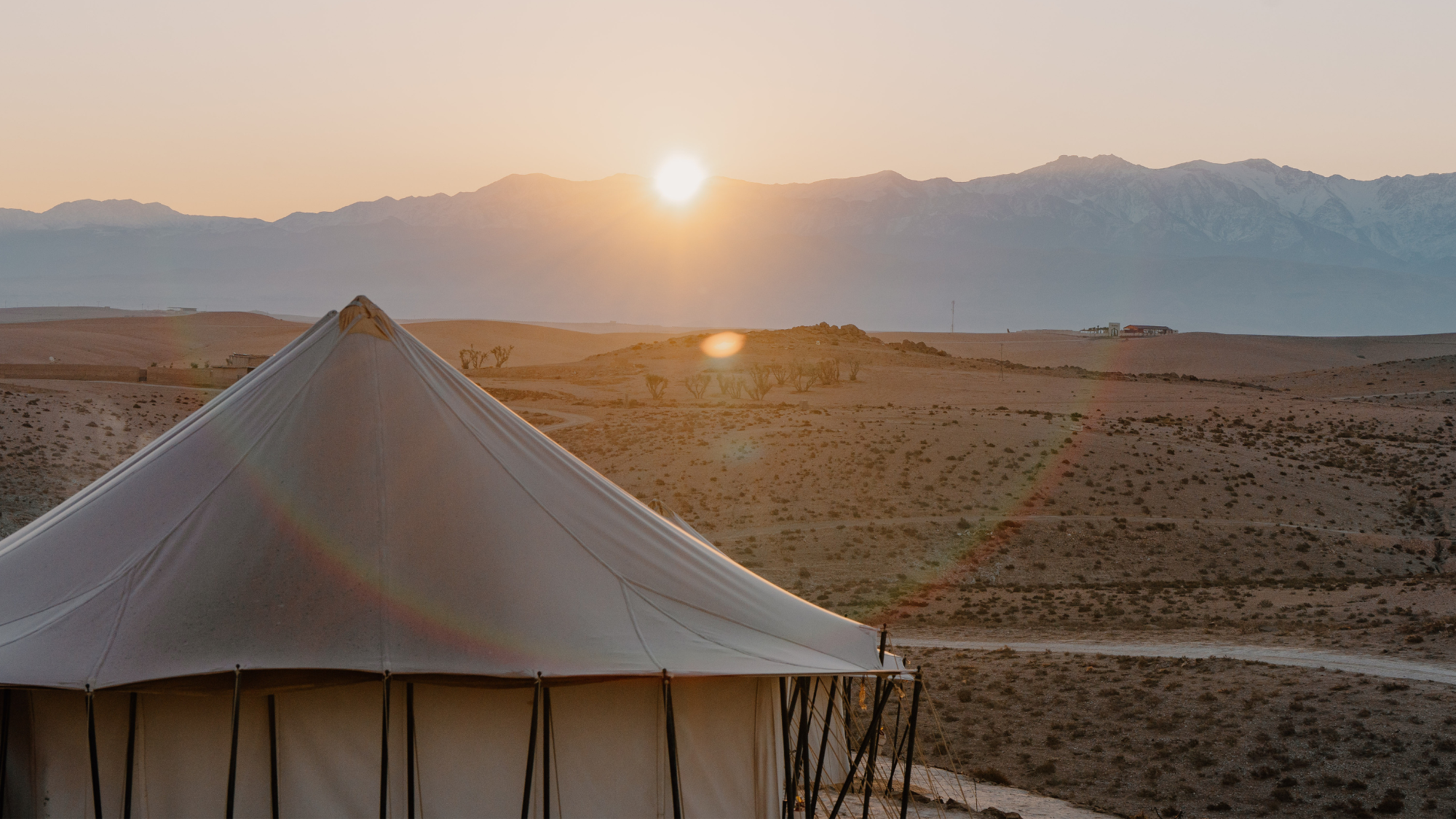
As the sun dropped and the temperature fell, Scarabeo Roches Noires emerged on the horizon, a small cluster of white tents perched on a rocky escarpment. After a day navigating Agafay’s unforgiving terrain, fires were lit and a well-earned drink under a sky full of stars marked the end of an exhilarating day in the desert.
Why the Duster works
Time spent in Agafay clarifies what the Duster is really about. It’s Dacia’s best-selling model, with one sold every few minutes globally since its launch 15 years ago. With pricing under £20,000, it remains one of the most affordable SUVs on sale, yet at this price point it’s a genuinely compelling package. A three-year warranty comes as standard, extendable to seven years via Dacia’s Zen plan for around £20 per month.
By the time we turn back towards Marrakech, dust-covered and tired, the desert feels far less intimidating than it had the day before. The Duster was the perfect companion, building confidence behind the wheel, helping turn a harsh landscape into something navigable and genuinely fun.
Back home, that same thinking makes the Duster hard to ignore. It’s a car that now sits firmly on my radar for family life in London: practical, reliable, easy to live with, and with looks that don’t feel out of place alongside the neighbours’ Volvos and Mercedes. Add in the sensible pricing, and it feels less like a compromise and more like a smart, realistic choice for everyday life, with the added bonus of being ready for the occasional escape.
An off-road adventure in Morocco provided the perfect opportunity to test drive the newly launched hybrid SUV