
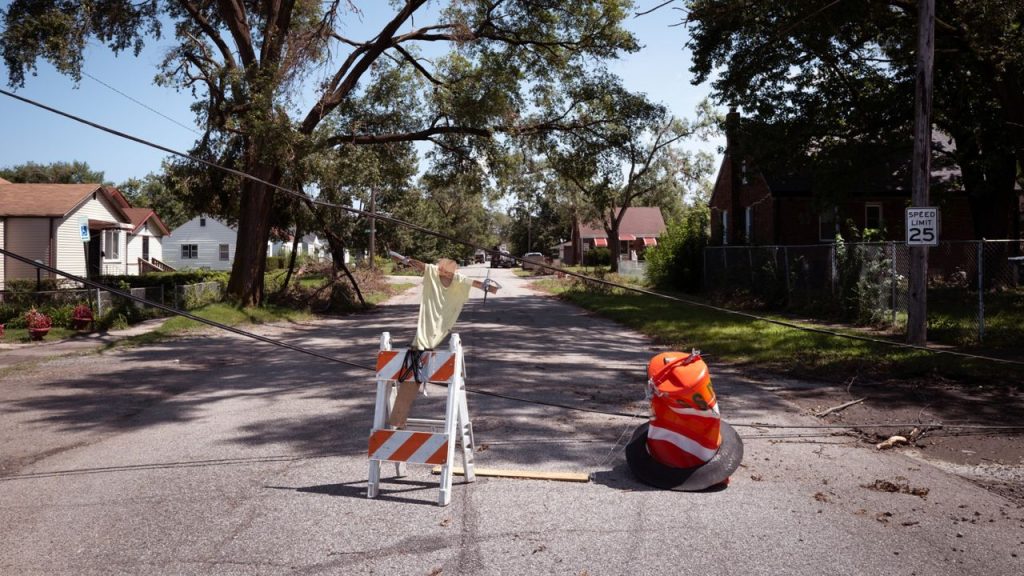
‘Two weeks. No power. Gary, Indiana, failed Black citizens.’
Kofi Mframa at USA Today
For “two weeks, the people of Gary, Indiana, have been forced to weather the late summer heat without electricity,” says Kofi Mframa. Gary “didn’t just experience a freak weather event.” There were “layers upon layers of systemic failures that left a vulnerable population to fend for themselves.” Marginalized groups “being failed by systems in the wake of a natural disaster is no strange occurrence in America, but as our country’s cracks widen, tragedies like these seem more and more inevitable.”
‘Stores are selling Halloween stuff in August. Time has lost all meaning.’
Dave Schilling at The Guardian
Even “though I love Halloween, I’m mad because our glorious big-box overlords have declared, via careful inventory selection, that Halloween season has begun,” says Dave Schilling. It “feels like a violation of the natural order, a realignment of one of the few glorious constants left in the world.” At “most, Halloween celebrations should start in late September,” not a “month after Independence Day.” But if the “data says we want Halloween in the heat, then data shall be respected.”
‘In France, long summer breaks mean not just relaxation — but reinvention’
Elizabeth Svoboda at The Boston Globe
France’s “most chaotic stretch of summer is the one that most reveals the nation’s commitment to quiet and retreat,” as “vacationers luxuriate for long stretches of time uncluttered by appointments or prior commitments,” says Elizabeth Svoboda. “Month-long summer breaks, which the French call ‘congés annuels,’ are as sacrosanct as the Marseillaise national anthem, and their benefits go well beyond relaxation.” Americans “often assume that focus and persistence drive transformation,” but “opening up mental space is just as crucial.”
‘The myth of Eurasia’
Ayse Zarakol at Foreign Affairs
The “frontlines of the war in Ukraine run not just through floodplains and shattered towns but also through a more nebulous kind of terrain: the realm of civilization,” says Ayse Zarakol. From the “outset, Russian President Vladimir Putin has cast his invasion as part of a cultural struggle, a view shared by some of his adversaries on the Western side.” But it is “misguided to believe that Putin acts as he does because he follows in the footsteps of Eurasian emperors.”
Opinion, comment and editorials of the day