What happened
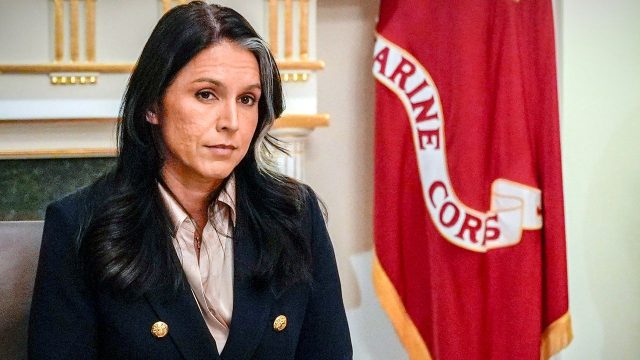
Director of National Intelligence Tulsi Gabbard said Monday that President Donald Trump ordered her to Atlanta last week for a controversial FBI raid to seize 2020 ballots and voter information from Fulton County. She also acknowledged, in a letter to the top Democrats on the House and Senate intelligence committees, that she “facilitated a brief phone call” between Trump and the Atlanta FBI team working on the politically charged case, part of the president’s effort to relitigate his 2020 loss to former President Joe Biden. Trump on Monday suggested Republicans “take over” and “nationalize” voting, in contravention of the Constitution.
A lawyer for an intelligence community whistleblower also accused Gabbard of withholding from Congress a complaint about her conduct filed eight months ago. Gabbard’s spokesperson said the number of classified details in the complaint made it “substantially more difficult” to clear it for congressional review.
Who said what
The whistleblower complaint, “which is said to be locked in a safe,” evokes a “cloak-and-dagger mystery reminiscent of a John le Carré novel,” involving not just Gabbard but also another federal agency and perhaps the White House, The Wall Street Journal said. Gabbard “has been an enigmatic figure in the Trump administration, sidelined from major national-security matters and tasked with investigating the results of the 2020 election.”
After a “rocky start,” Gabbard has been “boosting her standing within the administration” by “pursuing Trump’s election integrity priorities,” CNN said. But it is “unusual for America’s top intelligence official to be included in a domestic law enforcement operation” like the Atlanta raid, Reuters said. In her letter to Sen. Mark Warner (D-Va.) and Rep. Jim Himes (D-Conn.), Gabbard said she was observing the FBI operation at Trump’s request and “under my broad statutory authority to coordinate, integrate and analyze intelligence related to election security.” Warner’s office said Gabbard’s letter “raises more questions than it answers.”
What next?
The Atlanta FBI squad leader “primarily fielded” Trump’s queries during Gabbard’s “outside the bounds” speakerphone call, The New York Times said, citing three people with knowledge of the meeting. Gabbard said in her letter that Trump “did not ask any questions, nor did he or I issue any directives.” But by speaking “directly to the frontline agents doing the granular work of a politically sensitive investigation in which he has a large personal stake,” the Times said, Trump “may have provided significant ammunition to any future defense should the investigation yield criminal charges.”
This comes as Trump has pushed Republicans to ‘take over’ voting