It’s an overused term, but Frida Kahlo “has become an icon”, said Laura Freeman in The Times. Her likeness is now inescapable and her story, too, is familiar: born in Mexico City in 1907, she took up painting as a teenager, while recovering from a traffic accident that would lead to her losing a leg below the knee.
She had a short but difficult life, compounded by health problems and her tumultuous marriage to the philandering muralist Diego Rivera. She died in relative obscurity in 1954, aged 47; but her works have since become “objects of mass worship and private devotion”.
“The brand, the brow, are unmistakable”; even before this exhibition opened, Tate had sold 35,000 advance tickets – the greatest number in its history. The show brings together around 30 of Kahlo’s own works alongside 150 by her contemporaries and admirers, in an attempt to track her arc from neglected painter to global phenomenon. I’m “no Frida fangirl”, and as an exhibition this is in some respects unsatisfying, but I left “reeling” from the “dizzying singularity of her vision”.
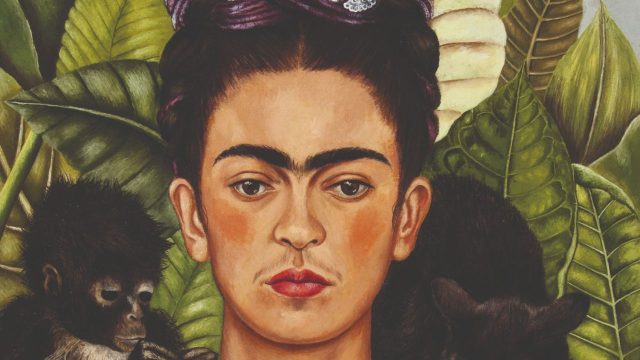
“There are few faces as familiar,” said Chloe Ashby in The Independent. Yet as the show demonstrates, she “had multiple selves: avant-garde artist; political activist; devoted wife; bisexual; disabled person; intellectual”. Her father was German, her mother “mestiza” (part Indigenous). In art and life, she “projected her shifting identity”. Among the “big hitters” here is a self-portrait painted in 1940, shortly after her divorce. It sees her “surrounded by greenery”, a “black cat and spider monkey peeking over her shoulders, a thorn necklace pricking her skin”.
There are some nice surprises, too: “The Chick” (1945) is an “exquisite” vision of “a fluffy, white fledgling”. Unfortunately, Kahlo’s own work represents only the first half of the show. Her “icon” status has made it hard to borrow her works, said Jonathan Jones in The Guardian. “Kahlo’s collectors, it seems, don’t care about supporting museums or sharing their treasures – I’m talking to you, Madonna.” The curators compensate for this “thin haul” by adding works by her contemporaries, and by artists who have been inspired by her one way or another.
Kahlo “was a sort of creative patron saint” to many artists, said Alastair Sooke in The Telegraph. Yet when we see homages here, we rarely see the original image that inspired them. This shifts the focus “from Kahlo to her imitators”; and much of their work is “boring and second-rate”. There’s a room concentrating on “Fridamania”, featuring everything from editions of a “canonical” 1980s biography, to a Frida Barbie doll – a tribute controversially manufactured “with lightened skin”. This could have been a “fascinating” exploration of the artist’s latter-day cult, but there’s too much padding here. The show feels like a “festive get-together at which the guest of honour is only intermittently present”.
Tate Modern, London SE1. Until 3 January 2027
The Tate’s record-breaking show lets viewers revel in ‘Fridamania’